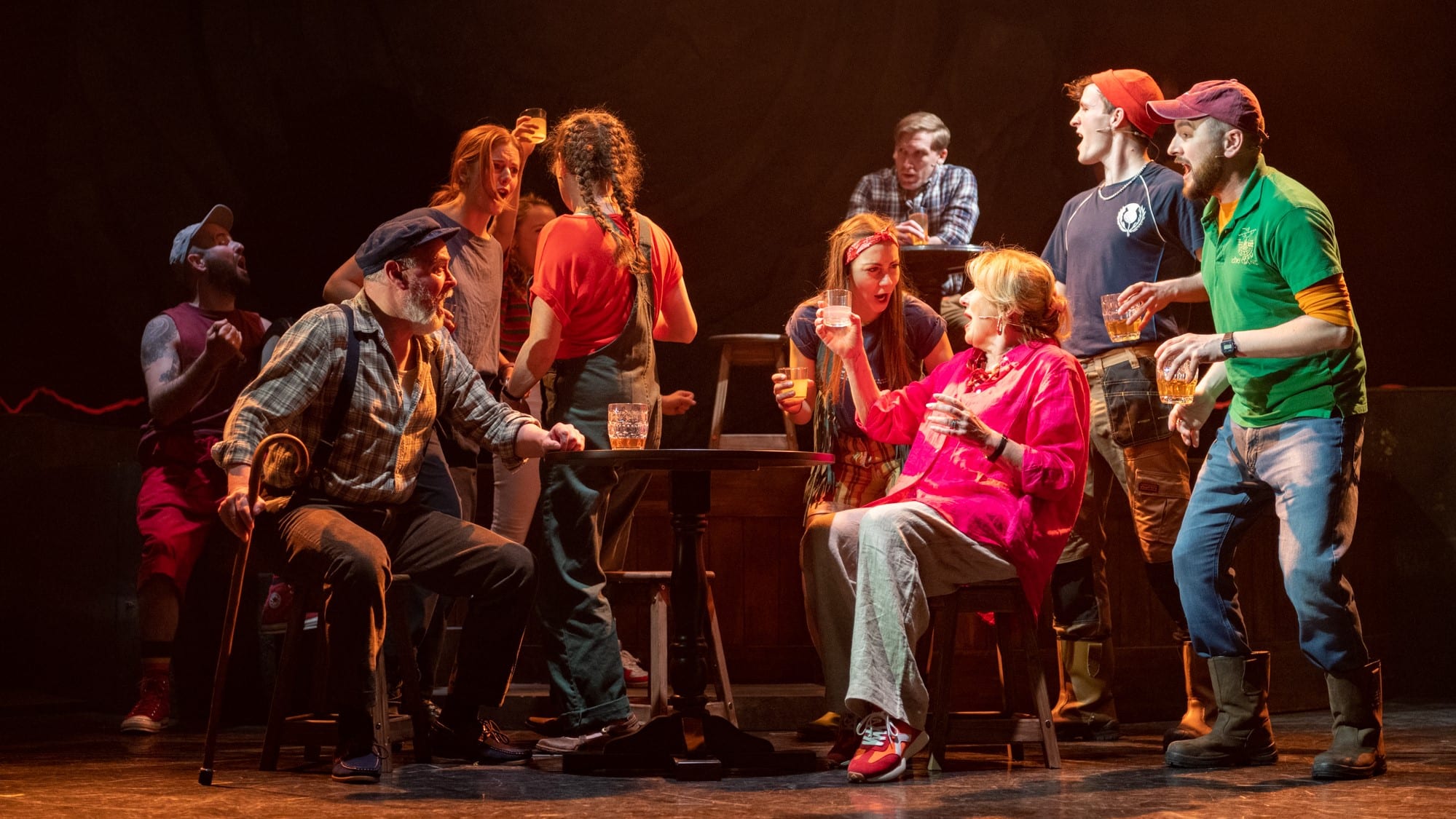
Annie Grace

Eilidh, Eilidh, Eilidh

18/03/25

Traverse Theatre, Edinburgh

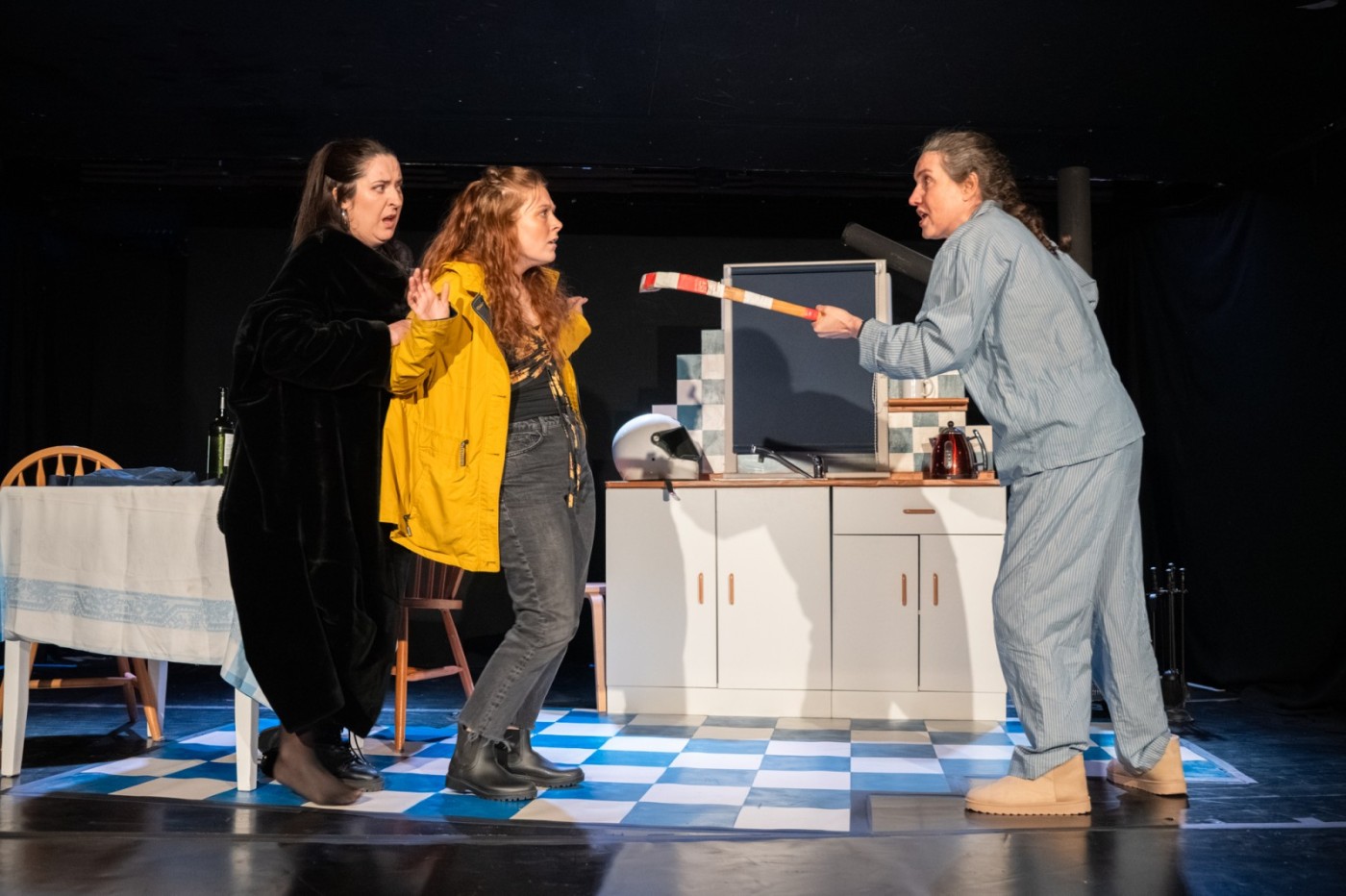
This three-hander, written and directed by Lana Pheutan, explores the rural housing crisis through the lens of drunken cousins, Eilidh (MJ Deans) and Eilidh Bheag (Chelsea Grace). The two women are in their late twenties, ready to embrace their adult lives but thwarted by the prevalence of AirBNBs on their native island, Skye. “I’m a teacher!” wails Eilidh. “I deserve my dream home…” While her sense of entitlement is quite comical – she’s been working for just a few years and her unemployed boyfriend isn’t even looking for a job – she’s not wrong in her assessment of a broken housing market, where flats are snapped up by remote investors before locals can even get a look in. But living back at her mum’s is starting to wear her down…

Her solution? To persuade Eilidh Bheag to break into a holiday let with her and then… um… Well. She hasn’t really worked out what should happen next. It just seemed like a good idea half an hour ago, when the pub landlord refused them a lock-in.

MJ Deans imbues Eilidh with lots of sass and self-righteousness, while Chelsea Grace’s Eilidh Bheag provides a calmer foil, tempering the former’s outrage with a few gentle home truths. After all, Eilidh Bheag is the one who’s stayed on Skye, while her cousin’s been living the high life in Glasgow for the past eight years. How dare she come back to the island and accuse her of pandering to tourists, being “part of the problem”? “You only care when it directly affects you,” snaps Eilidh Bheag at last, tired of being hectored. 

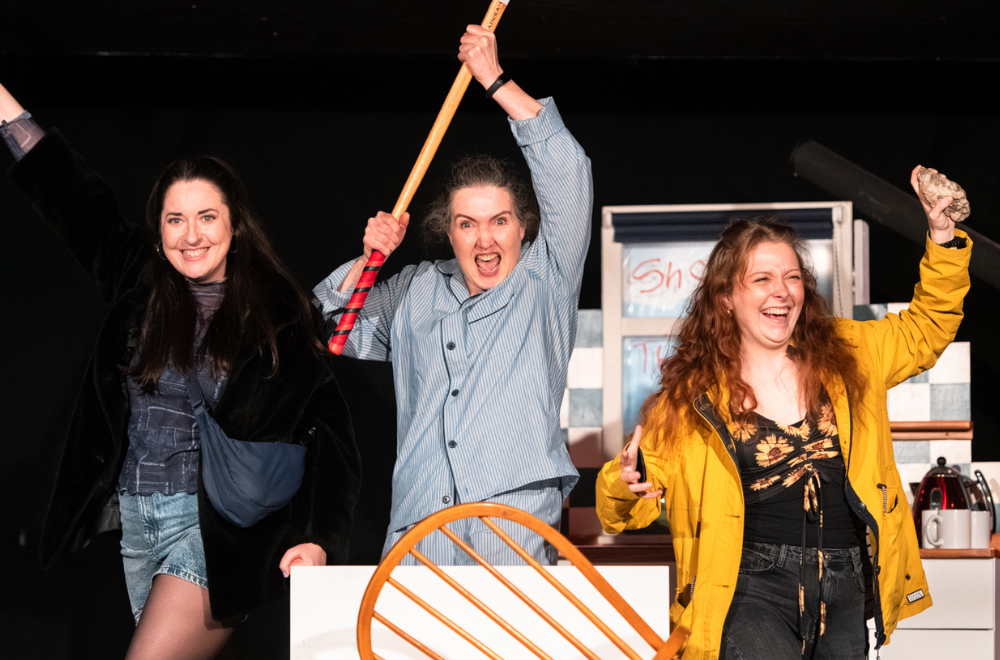
The altercation is disrupted by the unexpected arrival of Miss Nicille Mhicheil (Annie Grace), an elderly local resident. The dynamic changes, and an inter-generational element is added to the polemic, injecting more nuance. 

Pheutan’s direction is sprightly and the pace never drops, although the dialogue occasionally sounds a little too much like rhetoric, the issues taking precedence over the characters and their immediate situation. On the plus side, the occasional use of Gaelic serves as a reminder of the culture the community stands to lose, and also sounds very authentic (I’m from North Wales, so the pattern is a familiar one: it feels very natural to me to speak English with a smattering of Welsh phrases). 

Eilidh, Eilidh, Eilidh succeeds in raising awareness of an important problem – and even moots an answer, albeit a little simplistic.  All in all, this is a heartfelt and ultimately heartwarming piece of drama. 

4 stars

Susan Singfield
The Stamping Ground

24/05/23

Festival Theatre, Edinburgh

As jukebox musicals go, The Stamping Ground – inspired by the back catalogue of the near legendary (and now, sadly defunct) Gaelic rock band, Runrig – is more coherent than most. Writer Morna Young has skilfully repurposed twenty of the band’s songs into the story of a community of contemporary villagers struggling to save their way of life.

Euan (Ali Watt) is the author of a series of bodice-ripping novels set in the Scottish Highlands, but his career has stalled. After his teenage daughter, Fiona (Caitlin Forbes), is beaten up by a gang of bullies, he and his wife, Annie (Jenny Hulse), decide to relocate from their home in London to Glenbeag, (‘Little Valley” in Gaelic), the remote village where they were raised, and where his widowed mother, Mary (Annie Grace), still lives. But Euan is horrified to discover that Mary is now close friends with Summer (Naomi Stirrat), the daughter of the man who, years ago was responsible for Euan’s father’s death.

The family have arrived at a turbulent time for the village. The local inhabitants, who have already lost their cafe and post office, are now reeling from the news that their beloved pub may be the next thing to go, repurposed into holiday flats for visiting tourists. They all put their heads together to think of ways to raise money and it’s Annie who comes up with the idea of hosting a harvest festival. But when bad weather intervenes, its clear that a solution to the problem is not going to be easily found…

The Stamping Ground is, quite simply, a love letter to Scotland, a paean to the concept of people’s relationship to the land in which they live. It’s bold and vivacious, filled with likeable characters and fuelled by a mixture of plaintive melodies and rousing reels powered along by Stuart Semple’s propulsive drumming, John Mckenzie’s guitar and John Kielty’s keyboards. Members of the talented cast regularly grab other instruments to augment the songs as the story unfolds. While events occasionally come perilously close to sentimentality, I’d be lying if I denied filling up during Summer’s emotive ballad about leaving her friends – and, likewise, if I denied laughing out loud at some of the villager’s mischievous banter.

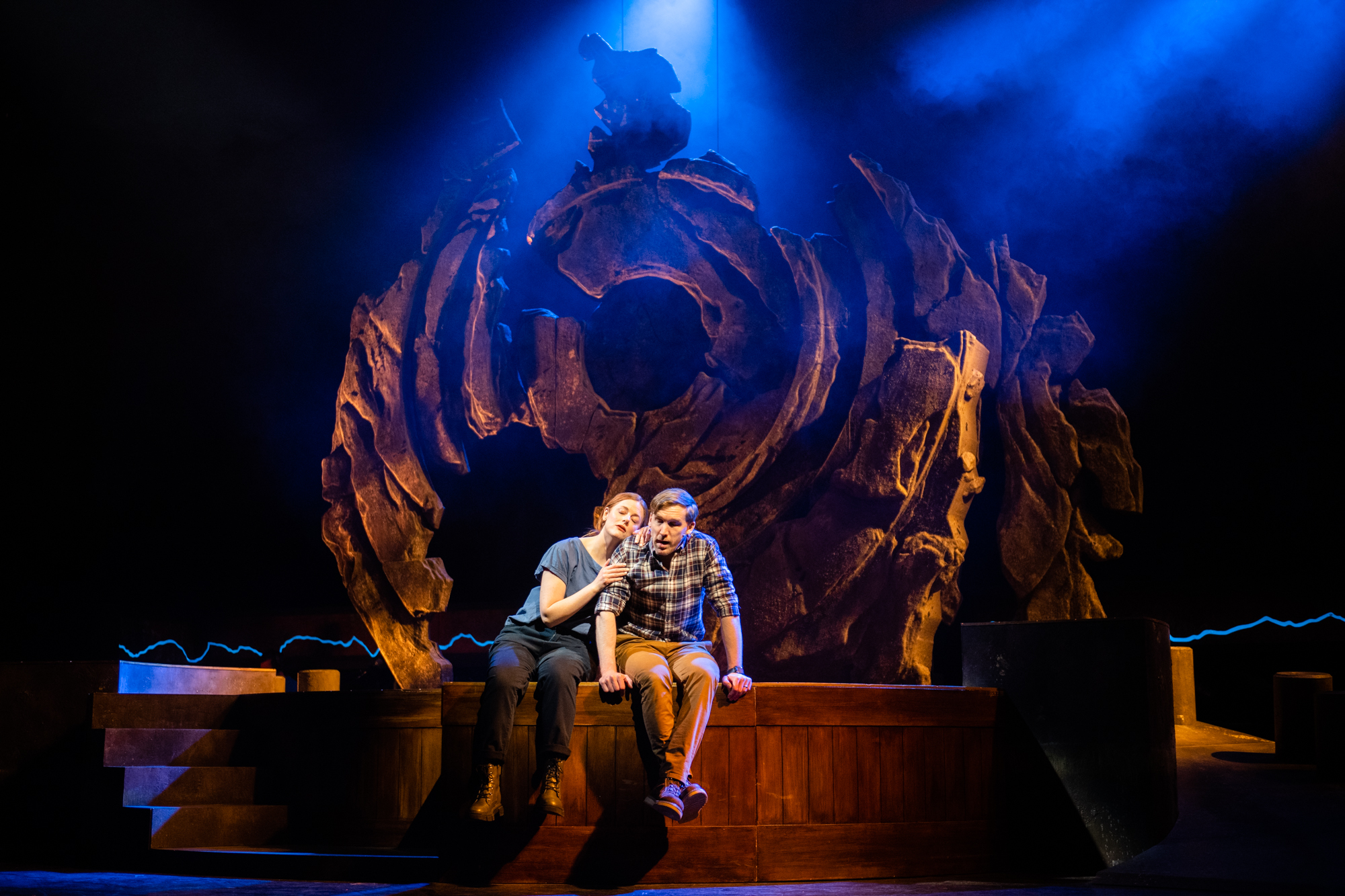
There’s a lot more here to enjoy. Kenneth McLoud’s fabulous set design, centred around the broken remains of an ancient standing stone, is a particular delight, while Jade Adams choreography and Luke Kernaghan’s direction keeps the whole enterprise bubbling to its stirring conclusion. By the end of the night the audience is on its feet clapping joyfully along to a rousing rendition of Loch Lomond.

The Stamping Ground is Scottish to its roots and never shies away from proudly saying so.

4 stars

Philip Caveney