Ana de Armas

Ballerina

12/06/25

Cineworld, Edinburgh

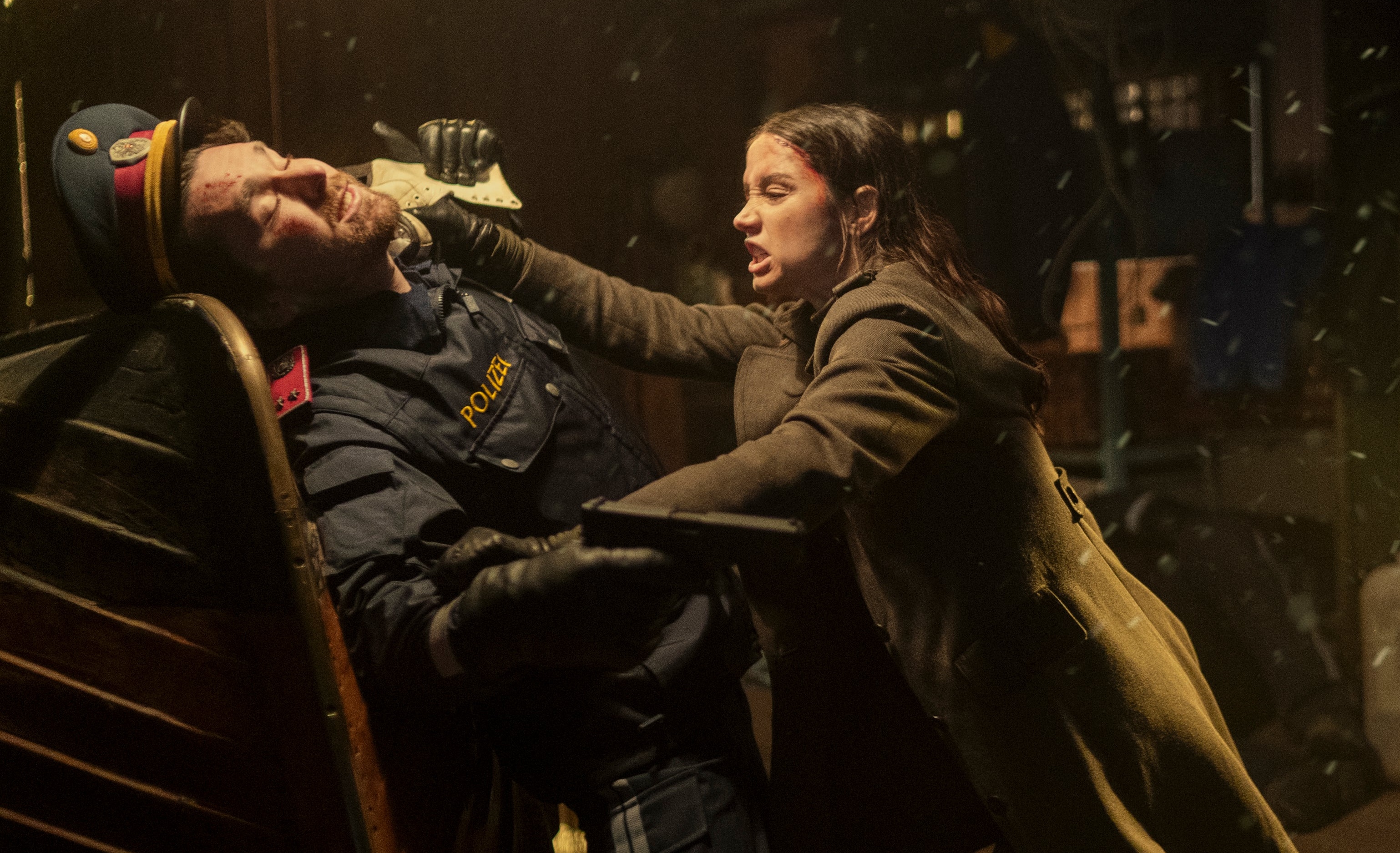
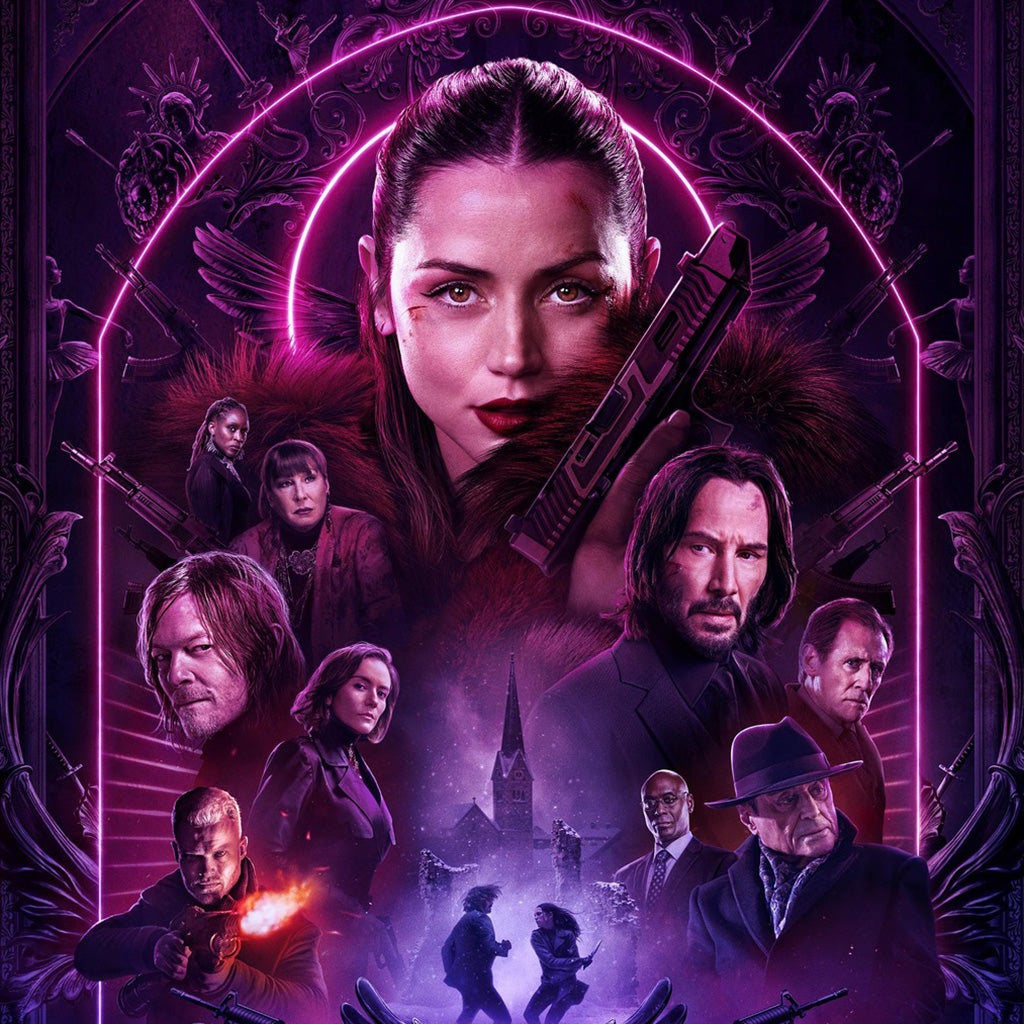
The John Wick films are okay in a propulsive stabby-shooty sort of way. Ballerina – which we are informed is from ‘The World of John Wick’ (i.e. it features a cameo by Keanu Reeves) centres on Eve Macarro (Ana de Armas), who, when we first encounter her, is just a little girl (Victoria Comte). She carries a wind-up ballerina toy everywhere she goes because, you know, she’d like to be a dancer when she grows up. But before that can happen, she’s obliged to witness the brutal murder of her father by trained assassins. (Well, these things happen.)

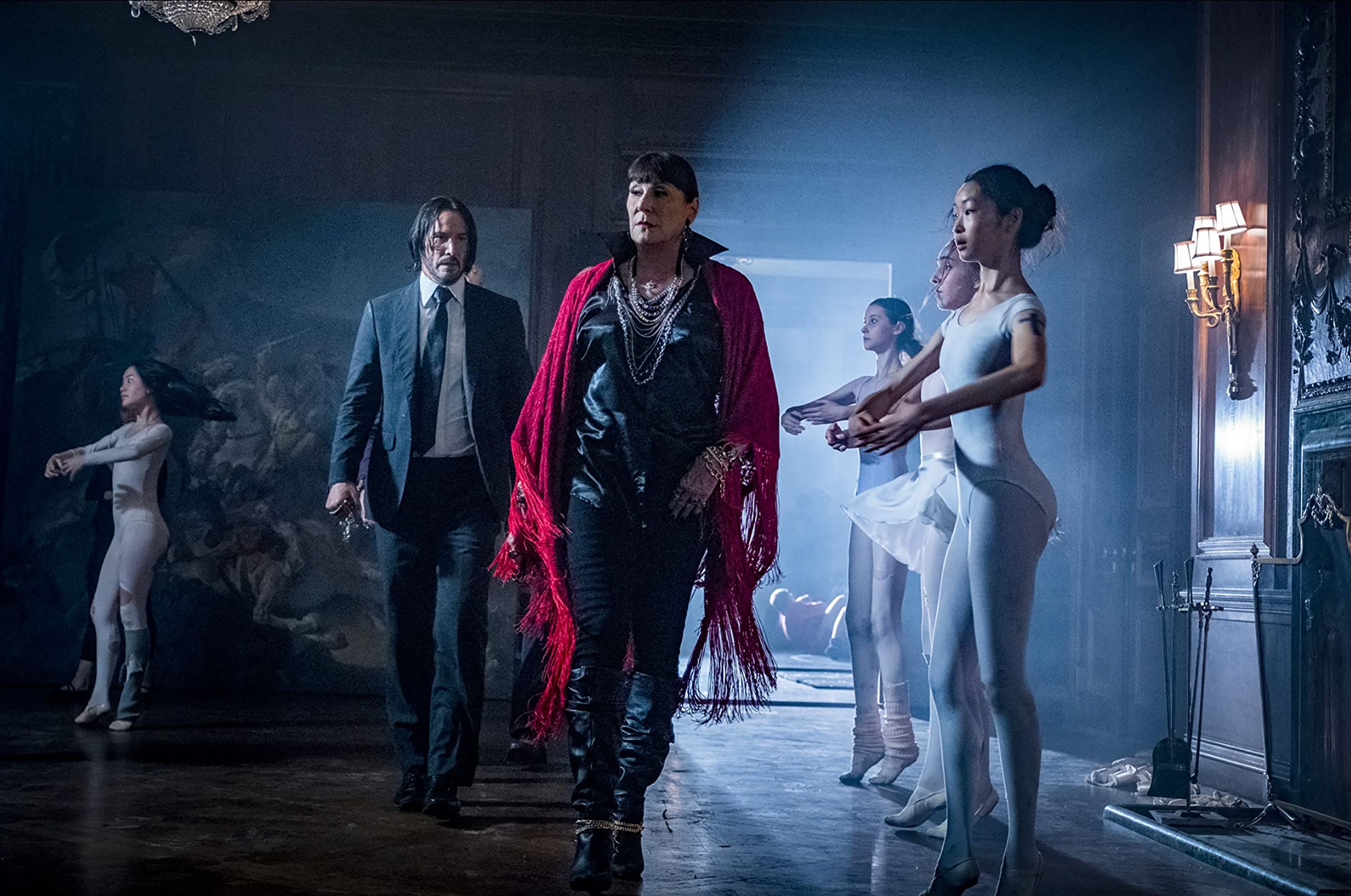
After his death, she’s collected by Winston (Ian McShane), who leads her from the hospital waiting room – without anybody even asking him what he’s up to – and ensures that she’s enrolled in a mysterious ballet school run by The Director (Anjelica Huston). Eve does train to be a ballet dancer, leaping about until her toes bleed but – just in case she doesn’t make the grade – she also takes extra classes in assassination. Well, you never know, it could come in handy.

Fully grown up and able to take down a whole room full of adversaries without turning a hair, she’s finally entrusted with her first mission. She must go and… you know what, I’m still not entirely sure what the first mission actually is. All I know is that it involves a massive punch-up in the world’s least convincing disco and then it escalates. More and more bad guys and gals keep coming out of the woodwork, and Eve eventually winds up travelling to the picturesque town of Halstatt, where The Cult are based. These are the people who killed her daddy, so naturally she wants revenge…

If I’m honest, even recounting this much of the plot is making me weary, but the basic premise is that everyone who lives in Halstatt – I mean everyone – is a trained killer, regardless of age, gender or occupation. They can be called up at the drop of a hat by The Chancellor (Gabriel Byrne) and instructed to kill whoever he’s taken a dislike to. And… well, you’ve probably worked out who’s next on his naughty list. Here’s a clue. Her name begins with an E.

From this point, the film becomes one extended brawl. Eve doesn’t just kill the people who attack her, she punches, stabs, decapitates, burns, bludgeons, explodes and dismembers them. (As you do.) Her opponents tend to emerge from such interactions in pieces, while she just has a discreet scratch on one cheek. You’d think, wouldn’t you, with all that frantic action going on, this would be exciting stuff? But somehow it really isn’t. The fight scenes are turgid and wearisome, and – aside perhaps from one sequence where Eve and an assailant indulge in a flamethrower duel – they’re tropes I’ve seen too many times before. There’s also a Chekhovian tendency to use any object glimpsed in a scene as a murder weapon. A frying pan? Why not? A glass vase? Go for it!

Mind you, the fight scenes are punctuated by occasional lines of dialogue and that’s where things get really horrible. Characters talk extremely slowly and offer portentous insights. A coin has two sides! Who knew? A woman can only beat a man if she fights like a girl! Really?

Well, the warning signs were there. Delays, reshoots and a change of director. I know this franchise has its fans and perhaps even a fleeting glimpse of Keanu will be enough to keep hard-core followers happy, but Ballerina has a running time of more than two hours and I find myself checking my watch after just fifteen minutes. Whats up next, I wonder? John Wick: Watching Paint Dry? Don’t laugh, it could happen.

2.5 stars

Philip Caveney

Blonde

03/10/22

Netflix

Andrew Dominik’s Blonde, based on a novel by Joyce Carol Oates, is an art film with a capital ‘A’. Given a running time close to three hours and presented in a whole variety of aspect ratios, it purports to be the inside story of Norma Jeane Baker – or Marilyn Monroe, as she’s better known. One overriding message comes through loud and clear: if there were any joyful moments in the star’s life, they were few and far between. This is the tale of a young woman who is repeatedly betrayed and brutalised by just about everybody she comes into contact with.

We first encounter her as a little girl (Lily Fisher), living with her abusive, disturbed mother, Gladys (Julianne Nicholson), who nearly ends both their lives by driving headlong into the midst of a bush fire. As an opening, it’s powerful and arresting – but from this point, the story takes a seismic jump through time, where we discover Norma/Marilyn (Ana de Armas) chasing roles in Hollywood, largely by allowing herself to be thrown down onto the casting couch and horribly abused by unnamed ‘producers’. The problem here is that Dominik, who also wrote the screenplay, seems to assume that everybody watching is going to be so well versed in Monroe’s career that we’ll instinctively know who’s who. It’s not always easy to follow and, for those not in the know, it’s hard work.

The overall theme here is about father issues. From the beginning, Norma Jeane’s Mother shows her photographs of a mysterious man who, she claims, is her father, once a big star in Hollywood movies. Norma Jeane consequently spends most of her life searching for him, even calling her various partners ‘Daddy’. The story leaps back and forth in time and we’re given insights into her doomed marriage to Joe Di Maggio (or ‘Ex-Athlete’, as Bobby Cannavale’s character is billed) and her equally ill-fated relationship with ‘The Playwright’ (Adrien Brody, looking the dead spit of Arthur Miller).

This is hardly a fun-filled ride. We see a harrowing abortion scene, which definitely feels pitched as an anti-abortion polemic, and there’s an equally horrible account of the miscarriage Monroe suffers while married to Arthur Miller. A brief and sordid encounter between Monroe and ‘The President’ (Caspar Philipson) is about as repugnant a sex scene as I’ve ever witnessed.

As if in an attempt to lighten the mix, there are accomplished recreations of several of Monroe’s most iconic film roles, but the swings in tone are extreme and it feels suspiciously like being alternately sprinkled with sugar and dragged through a cess pit.

Ana de Armass offers an accomplished performance in the lead role, inhabiting Monroe’s manic persona with great skill – but Blonde feels increasingly like a big bumper pack of fireworks, occasionally shooting off fabulous cinematic dazzlers but, more often than not, offering a selection of damp squibs. What’s more, the film would benefit I think, from a more stringent edit, cutting out those slower sections where the story is allowed to drag.

It’s worth seeing, but be warned – it’s not the straightforward biopic that you might expect.

3.6 stars

Philip Caveney

Knives Out

25/11/19

Rian Johnson’s Knives Out is an Agatha Christie-inspired whodunnit for our times. Although reliant on the tropes and clichés of the murder-mystery, the delivery makes this a thoroughly modern thriller.

The cast is stellar. Christopher Plummer is Harlem Thrombey: a successful eighty-five-year-old novelist with a penchant for games and a vast fortune to bequeath. The morning after his birthday party, he is found dead, his throat cut in an apparent suicide. But just as the police (LaKeith Stanfield and Noah Began) are ready to finalise the cause of death, enigmatic private detective Benoit Blanc (Daniel Craig) turns up, hired by an anonymous client to investigate further.

Thrombey’s children and grandchildren are all present, and it turns out each of them has a motive for his murder – although I won’t reveal the details here. His daughter, Linda (Jamie Lee Curtis), is a forbidding businesswoman, visiting with her husband, Richard (Don Johnson), and their feckless son, Ransom (Chris Evans). Thrombey’s son, Walt (Michael Shannon), is a gentle soul, but a hopeless case, incapable of making it on his own. He has a wife too (Riki Lindome), and an alt-right-leaning teenager (Jaeden Martell), who spends his time perusing questionable websites on his phone. And finally, there’s Thrombey’s yoga-and-crystal-loving daughter-in-law, Joni (Toni Collette), and her student daughter, Meg (Katherine Langford).

As you might expect of the genre, the setting is a remote country house, and so – of course – there are staff too: housekeeper Fran (Edi Patterson) and nurse Marta (Ana de Armas), both of whom prove central to the plot.

There’s an appealing playfulness here, with zingy dialogue and witty repartee, and the performances are as sprightly and assured as you’d expect from these marvellous actors. But the plot is a little predictable: there are no real surprises here, mainly because the various ‘twists’ are too heavily signalled. The middle third sags under the weight of a lengthy red herring, where the focus drifts from the larger-than-life characters and their shenanigans, following instead a more muted, less engaging thread.

Nonetheless, this is a lively and eminently watchable film – just not the masterpiece I hoped that it would be.

3.8 stars

Susan Singfield