22/11/24
Cineworld, Edinburgh
It’s gratifying to see the cinema so busy on this icy cold November evening. There’s been a lot of speculation recently about movie-goers being averse to musicals – indeed, there was a notable absence of songs in the trailer for this very film. But, if tonight’s showing is anything to go by, there’s plenty of life in the genre yet. Just not, perhaps, when it strays into the DC universe (Joker: Folie a Deux, I’m looking at you).
Oddly, considering how often I’m at the theatre, I’ve never actually seen Wicked on stage, so the movie is my introduction to the tale. This is clearly not the case for most of the audience: there’s an abundance of green clothing and nail varnish, a lot of excited pre-film chatter and groups of women in the loos afterwards discussing where the film diverges from the show they know and love. Thankfully for the industry, the reactions I overhear are universally positive.
For me, there are a couple of negatives. First, I’m not super-happy about the fact that this is just ‘Part One’. I always feel cheated by movies that only tell me half a story and, although the central relationship between Elphaba and Galinda has a satisfying arc, the dark hinterland – the genocidal capture and destruction of speaking animals – is barely developed at all. Second, with the exception of Defying Gravity, none of the songs seems particularly memorable.
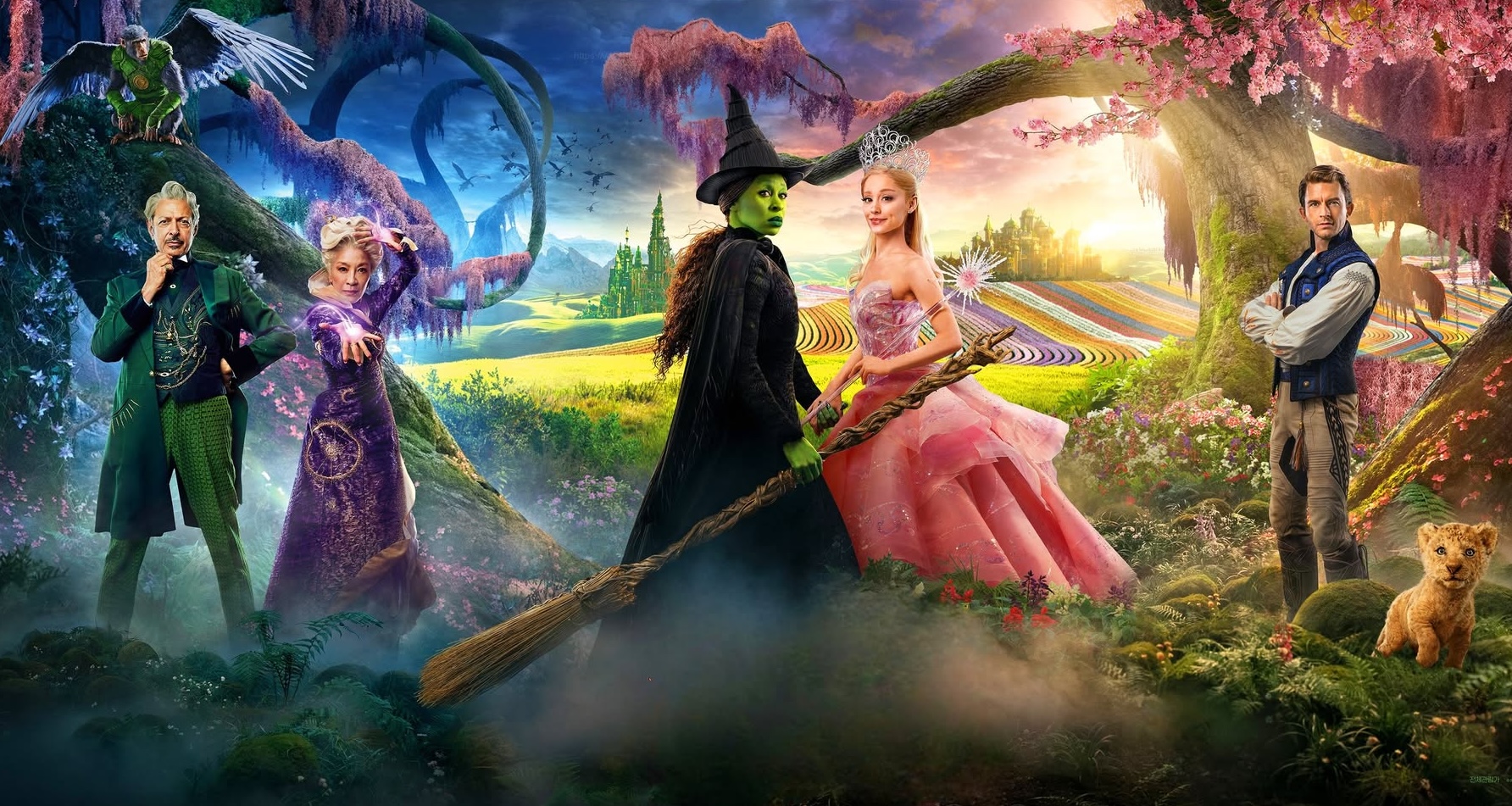
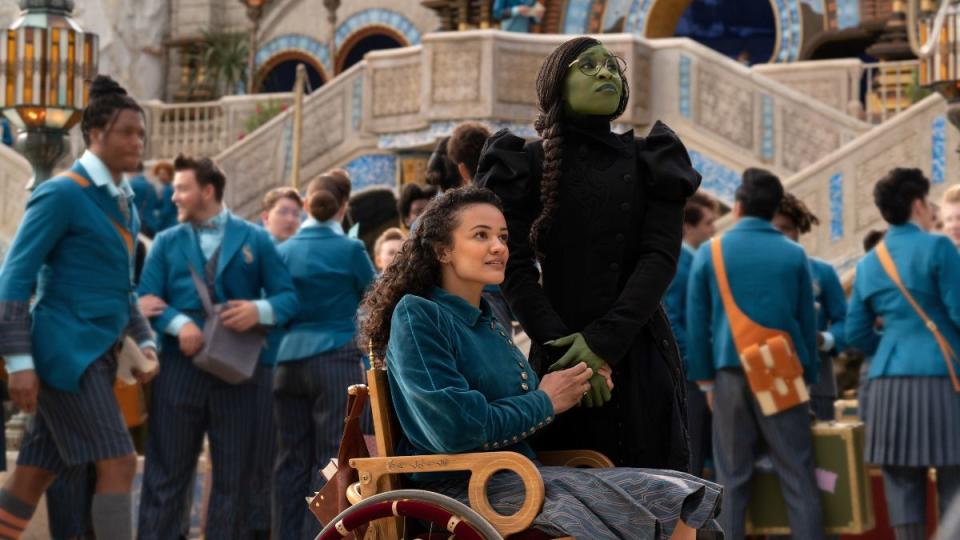
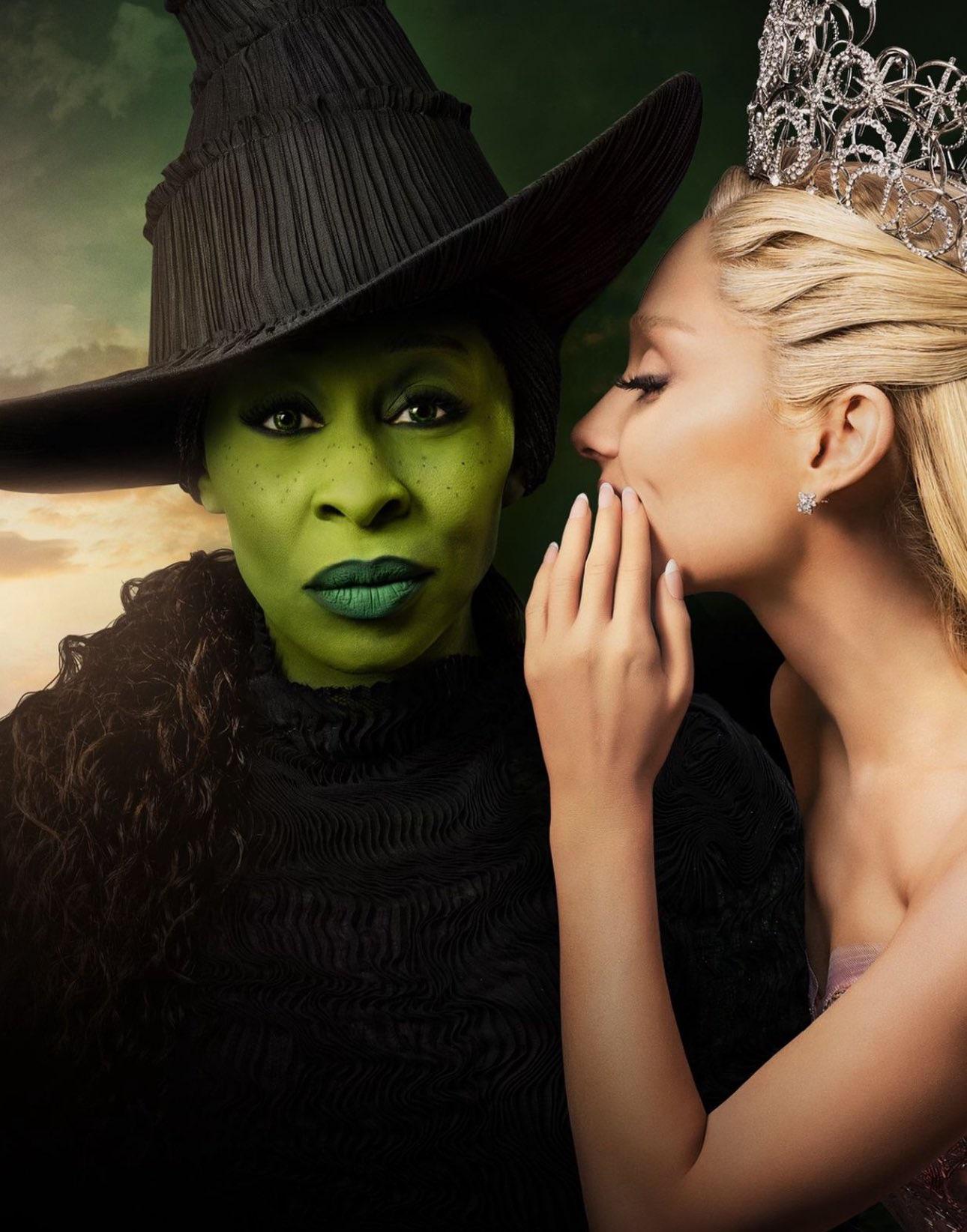
For the most part, though, Wicked is great. For those not in the know, it’s the origins story of the opposing magical forces of good and evil from The Wonderful Wizard of Oz, i.e. The Wicked Witch of the West and Glinda, the Good Witch of the North. In this prequel to L Frank Baum’s novel, Elphaba (Cynthia Erivo) and Galinda (Ariana Grande) meet at boarding school, where they are forced to share a room. Initially, they despise one another: Elphaba is powerful, studious and green, while Galinda is rich, popular and, well… blonde. But opposites attract, and over time they learn to see the good in one another, forging a strong friendship – which even survives the strain of their attraction to the same guy, Fiyero (Jonathan Bailey). When their history professor, a goat called Dr Dillamond (Peter Dinklage), is arrested and forcibly removed from their classroom amid nefarious plans to cage all speaking animals, Elphaba’s sorcery teacher, Madame Morrible (Sandra Yeoh), encourages her to go to the Emerald City, to plead with the Wonderful Wizard (Jeff Goldblum). But all is not as it seems…
Erivo and Grande are perfectly cast as the mis-matched pair, both utterly captivating in their roles. While Erivo provides the emotional depth – Elphaba is a study in suppressed yearning – Grande is the comic relief, all fluffy self-absorption and steely sweetness. It’s a delightful pairing.
Thanks to Alice Brooks’ cinematography, the film looks sumptuous. Oz has been gloriously rendered by designer Nathan Crowley: it’s a little bit steam-punk, a little bit Middle Earth, a truly fantastical land. I love the repeated cog motif, in Shiz academy’s library, on the Oz train and – naturally – in the Emerald City’s Royal Palace. Director Jon M Chu has created a superb stage-screen hybrid, combining established musical theatre-style choreography with a very modern filmic sensibility. LGBTQ+ themes are brought to the fore, with many explicitly queer-coded characters, and lots of deliberate ambiguity, so that we – along with the Ozians involved – are made to ponder where the line is drawn between platonic and sexual attraction, between friendship and love. It works well, emphasising the teenage protagonists’ heightened emotions. No wonder young adults love this story so much.
Judging by tonight’s screening, Wicked: Part One looks certain to be a box office success. I just wish I didn’t have to wait a year for Part Two.
4.1 stars
Susan Singfield
,

 Bouquets & Brickbats