Alice Birch

Die, My Love

16/11/25

Filmhouse, Edinburgh

Die, My Love, based on Ariana Harwicz’s acclaimed novel, is another irresistible movie from Scottish director, Lynne Ramsay. With a script by Ramsay, Enda Walsh and Alice Birch, this unflinching study of a woman’s postpartum psychological breakdown is as compelling as it is harrowing – and Jennifer Lawrence is frankly wonderful in the lead role.

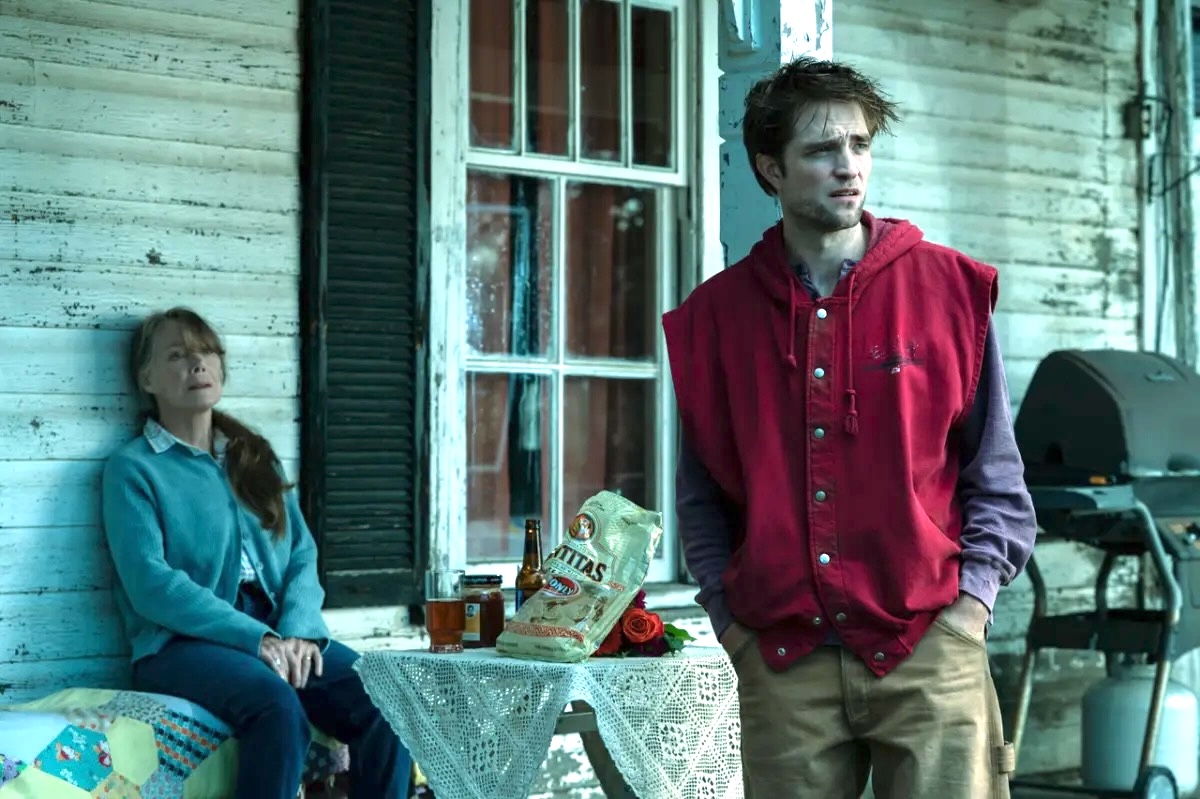
Grace (Lawrence) and Jackson (Robert Pattinson) are expecting their first baby and, in preparation for this new chapter of their lives, they move into Jackson’s deceased uncle’s house. They’re not fazed by the piles of leaves in every room, the old-fashioned decor or even a minor rat infestation: they’re young, excited and in love. They’ll make it work.

But once Grace gives birth to Harry, the spark between her and Jackson dies. She’s stuck at home: bored, resentful and unable to cope. Jackson’s job means that he can escape from the oppressive confines of their isolated house, but Grace’s work is writing; it doesn’t get her out and she can’t focus on it anyway. “I don’t do that any more,” she says.

She loves her baby but she feels trapped and abandoned. Jackson never wants to have sex with her any more, although the box of condoms in his car seems to be getting lighter by the week. She refuses to be just Harry’s mother: why can’t she also still be Grace-the-writer, Grace-and-Jackson, Grace-the-wild, the-impulsive, the-let’s-have-fun? With only Jackson’s bereaved mother, Pam (the fabulous Sissy Spacek), for company, Grace’s mental health begins to deteriorate, her behaviour becoming ever more erratic and dangerous.

Ramsay’s film is undoubtedly dark, but it’s bleakly funny too. Grace’s blunt responses to the platitudes she’s offered often fall into the “things-we-all-wish-we-could-say-but-can’t” category, and – if it weren’t for all the damage they cause – her devil-may-care actions are almost inspirational. I feel sorry for both Grace and Jackson, a couple trapped in a relationship that no longer works, dragging each other down in their attempts to meet society’s expectations of them. “Let’s get married,” says Jackson in desperation. Maybe a wedding is the glue they need to stick them back together?

Or maybe not…

More than anything, this movie reminds me of Charlotte Perkins-Gilman’s The Yellow Wallpaper; indeed, there are several overt references here to the 19th century short story, not least in Grace’s frantic stripping of the heavily-patterned wallpaper with her fingernails, or her crawling through the long grass just like Perkin-Gilman’s “creeping woman”. It’s not just the remote house and the remote husband, nor even the medicalisation of female emotions or the retreat into a fantasy world. More than any of that, it’s the mind-numbing boredom of the protagonist’s existence, and her refusal to accept this as her lot.

A real contender for my film of the year, Die, My Love is a bravura piece of movie-making: stark, beautiful and as uncompromising as its heroine.

5 stars

Susan Singfield

The End We Start From

21/01/23

Cineworld, Edinburgh

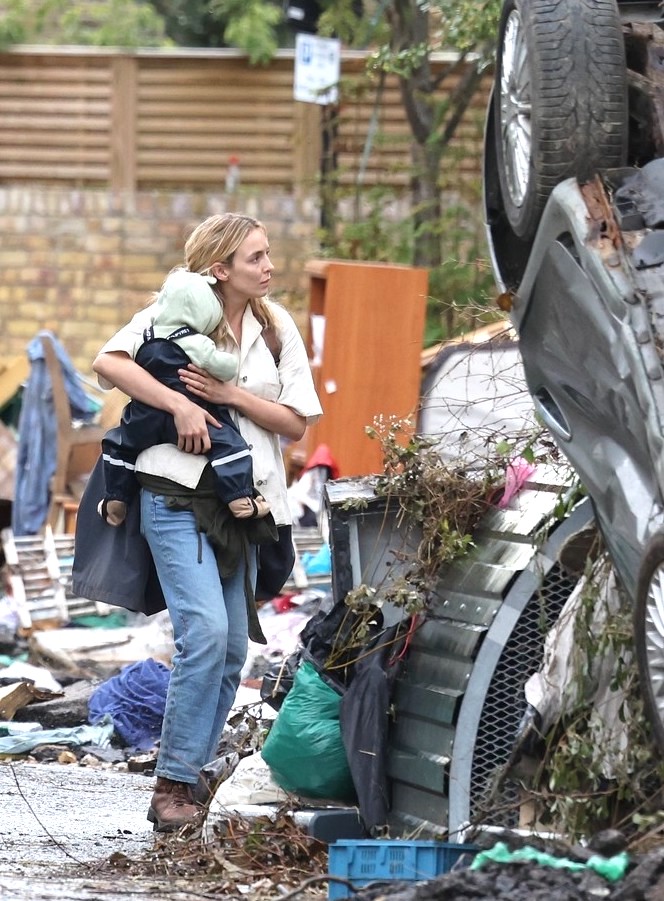
The End We Start From – with a screenplay by Alice Birch based on the novel by Megan Hunter – comprises two distinct stories in a single telling. On the surface, we have the literal tale of an apocalyptic flood rendering much of the UK uninhabitable. Underneath, there is a metaphorical account of a new mother drowning under pressure.

Directed by Mahalia Belo and starring Jodie Comer, the allegory is not subtle. As the Woman takes a bath and caresses her heavily-pregnant belly, the camera inverts: her whole world is about to be turned upside down; as the Woman’s water breaks, so the flood smashes through her kitchen window, engulfing her and changing everything. She’s nameless, billed only as ‘Woman’; she is clearly supposed to be an archetype, a universal Everymother.

But it doesn’t need to be subtle. This works.

Comer is luminous; she has that elusive quality we used to call the ‘X’ factor until the phrase was hijacked by Simon Cowell’s karaoke nights. The camera loves her, and she is a truly talented actor. The supporting cast (especially Joel Fry as her partner and Katherine Waterston as her friend) are great, but there’s no doubting whose movie this is. Comer imbues the Woman with a strong, relatable character, fighting for survival against the odds.

Birch’s script is spare and under-stated – and therefore terrifyingly believable. This isn’t a Zombie flick, where everyone suddenly becomes feral, but the prospects are just as bleak; this climate disaster is devastating but credibly so. People are flooded out of their homes so they take to their cars in search of somewhere safe. Before long, the roads are blocked; towns and villages on higher ground close ranks, scared of sharing and losing what they have. Shelters are set up, but spaces are limited. In the midst of all this is the Woman, wide-eyed with the shock of having just given birth, frightened for herself and for her baby. And desperate people do desperate things…

Belo’s low-key direction cleverly magnifies this awful plausibility. She never lingers on the violence we know is out there, its menace amplified by the fact it’s just out of sight. The aftermath of a broken, waterlogged London emerging from the storm is especially affecting. The tempestuous weather – beautifully, even languorously, shot by Suzie Lavelle – feels like a warning, a case of ‘when’, not ‘if’. We can almost feel the strength of nature and our powerlessness against it.

Indeed, emerging from the cinema into the wild wind and rain of Storm Isha, the storyline seems scarily prescient as we battle our way home.

4.3 stars

Susan Singfield

Lady Macbeth

27/04/17

The ancestral origins of this movie are vaunted by its title, which leads us from Shakespeare’s ruthless anti-heroine to Nikolai Leskov’s Lady Macbeth of the Mtensk District. This film, adapted from Leskov’s 1865 novel by Alice Birch and set, this time, in the northeast of England, is a dark and unnerving piece of work, as chilling as it is spare.

Florence Pugh is Katherine, a young Victorian woman sold into marriage. Her husband, Alexander (Paul Hilton), has no interest in her at all, and his father, Boris (Christopher Fairbank), is a brutal tyrant. Both men are often absent from home, and Katherine is alone and bored. At first she sleeps the days away; then she seeks solace in alcohol. And then she encounters Sebastian (Cosmo Jarvis), a farmhand, and they begin a passionate affair. So passionate, in fact, that it is dangerous, in a Heathcliff-Cathy kind of way; it’s surely no coincidence that these two women share a name. There is nothing Katherine won’t do to protect her illicit relationship,  and no one she won’t sacrifice. Even Sebastian himself isn’t safe: “I’d rather kill you than not have you with me,” she says.

This is an extraordinary debut by director, William Oldroyd (he’s made a couple of critically acclaimed shorts in the past, but this is his first full-length film), one of stark originality. It looks like other costume dramas, but it doesn’t feel like them at all. There’s no sound track, which is oddly disconcerting, and accentuates every noise in the horribly quiet house: the cat chewing, the floorboards creaking; everything grates and enervates. Katherine’s frustration is palpable.

This isn’t an easy watch: there is violence and savagery throughout. Katherine’s response to oppression is spirited to say the least; she refuses to be confined. Race and class are important themes here too: mixed-race Sebastian knows he – not she  – will be hanged if their crimes are discovered; black housemaid, Anna, is abused and exploited throughout. Katherine might be isolated, forced into a marriage she doesn’t want, but she has far more power and privilege than those with whom she spends her time.

Unlike her namesake, Katherine never wavers, never feels remorse. She’s powerful and subversive: loud when she’s supposed to be quiet; rebellious to the very end. Florence Pugh has an earthy vitality, and her performance is the foundation on which this remarkable film is built.

4.4 stars

Susan Singfield