
Alia Shawkat

Blink Twice

01/09/24

Cineworld, Edinburgh

Actor Zoë Kravitz’s directorial debut comes with a trigger warning. ‘This story features sexual violence.’ It’s a tale of toxic masculinity and wealth and the ways in which both things can go hand-in-hand. It’s impossible to watch this and not think about certain high-profile sex scandals from recent history. But Blink Twice is also an assured and intriguing thriller with a labyrinthine plot that makes a lot more sense in retrospect than it seems to as it unfolds.

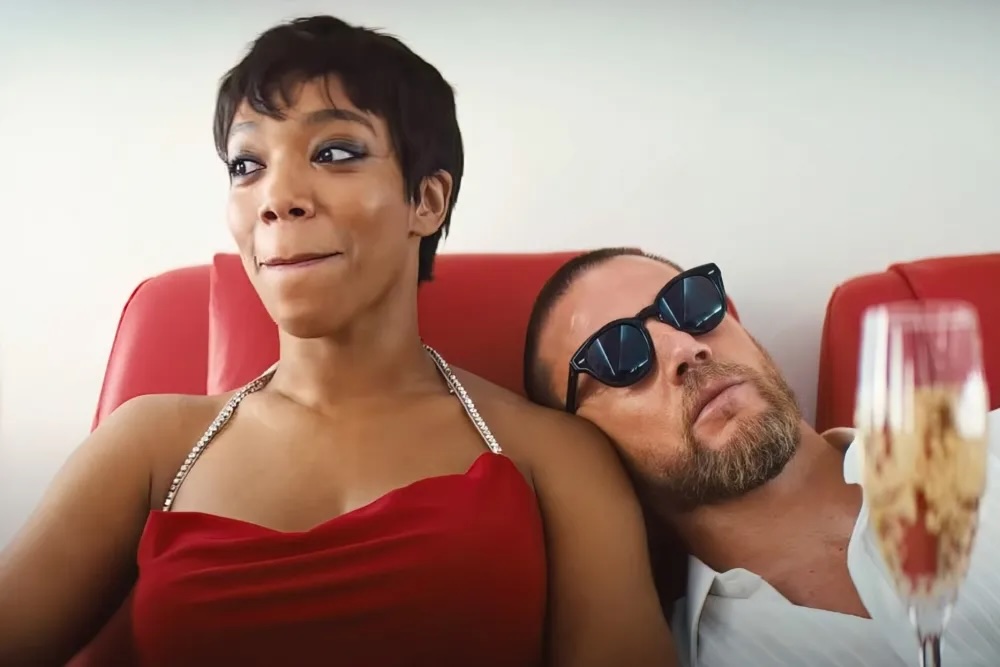
Frida (Naomi Ackie) and her flat mate, Jess (Alia Shawkat), live a hard-scrabble life in New York, working as cocktail waitresses to make ends meet. But a rare ray of sunshine comes with a yearly charity event where they have the opportunity to mingle with the rich and famous, hosted by the reclusive tech billionaire, Slater King (Channing Tatum). After a scandal, a year ago, Slater disappeared from public view and even stepped down as CEO of his own company, but he’s recently been in the news apologising for his bad behaviour. He now lives on his own private island, where he claims to be living a quiet and blameless life.

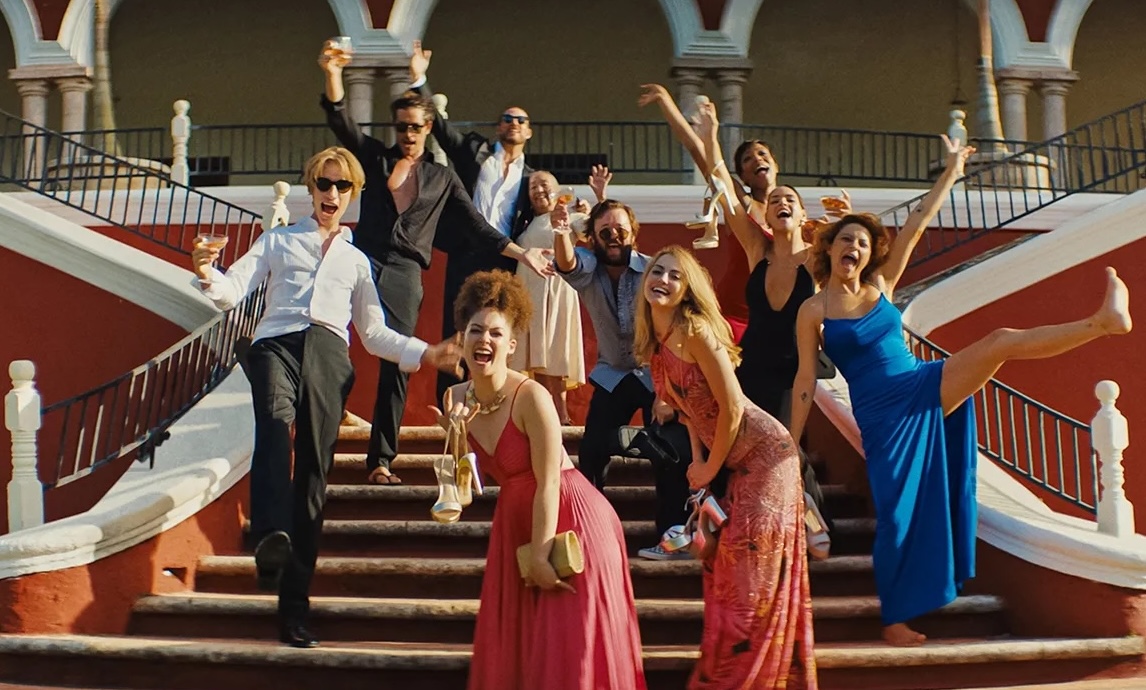
When Naomi unexpectedly hits it off with the Slater at the event, she and Jess find themselves invited on a trip to his island and, almost before they know it, they – and a bunch of other young women – are living the high life, nights of unfettered hedonism where champagne and drugs flow like water. Naomi seems to be developing a genuine relationship with Slater, much to the annoyance of another female guest, Sarah (Adria Ajona), the star of a survivalist game show. Slater’s male friends, Vic (Christian Slater) and Tom (Haley Joel Osment), seem like nice guys and his private chef, Cody (Simon Rex), creates wonderful feasts for them to enjoy every night. It’s all brilliant… isn’t it?

But it gradually begins to dawn on Naomi that something here is wrong. Why do none of the women know what day of the week it is? Why are her dreams so weird? And, in a rare moment of clarity, an even more troubling question emerges: what’s happened to Jess?

It would be criminal to reveal any more about the plot of this assured psychological thriller, other than to say that, as the tale unfolds, it moves inexorably deeper into the realms of horror. Frida is terrific in the central role and Arjona (who made such a good impression in Hit Man) is clearly destined for stardom. Geena Davis has a small but pivotal role as Stacy, Slater’s right hand woman, generally too stoned to stop and think about what she is complicit in. (Remind you of anyone, Ghislaine?)

The script, by Kravitz and E T Feigenbaum, is cleverly put together, liberally sprinkled with clues that only fully add up in the final scenes. The story takes some wild swings in its latter stages but they are all subtly signalled along the way. Adam Newport-Berra’s dazzling cinematography and Kathryn J Schubert’s slick editing ensure that the film always looks sumptuous, even when what’s happening onscreen is rotten to the core.

As the story sprints into its nerve-shredding conclusion, I find myself holding my breath as the tension steadily mounts – and how you will feel about a late-stage revelation will really depend on your faith in human nature, or your lack of it.

Either way, this signals Kravitz as a director of great promise.

4.4 stars

Philip Caveney
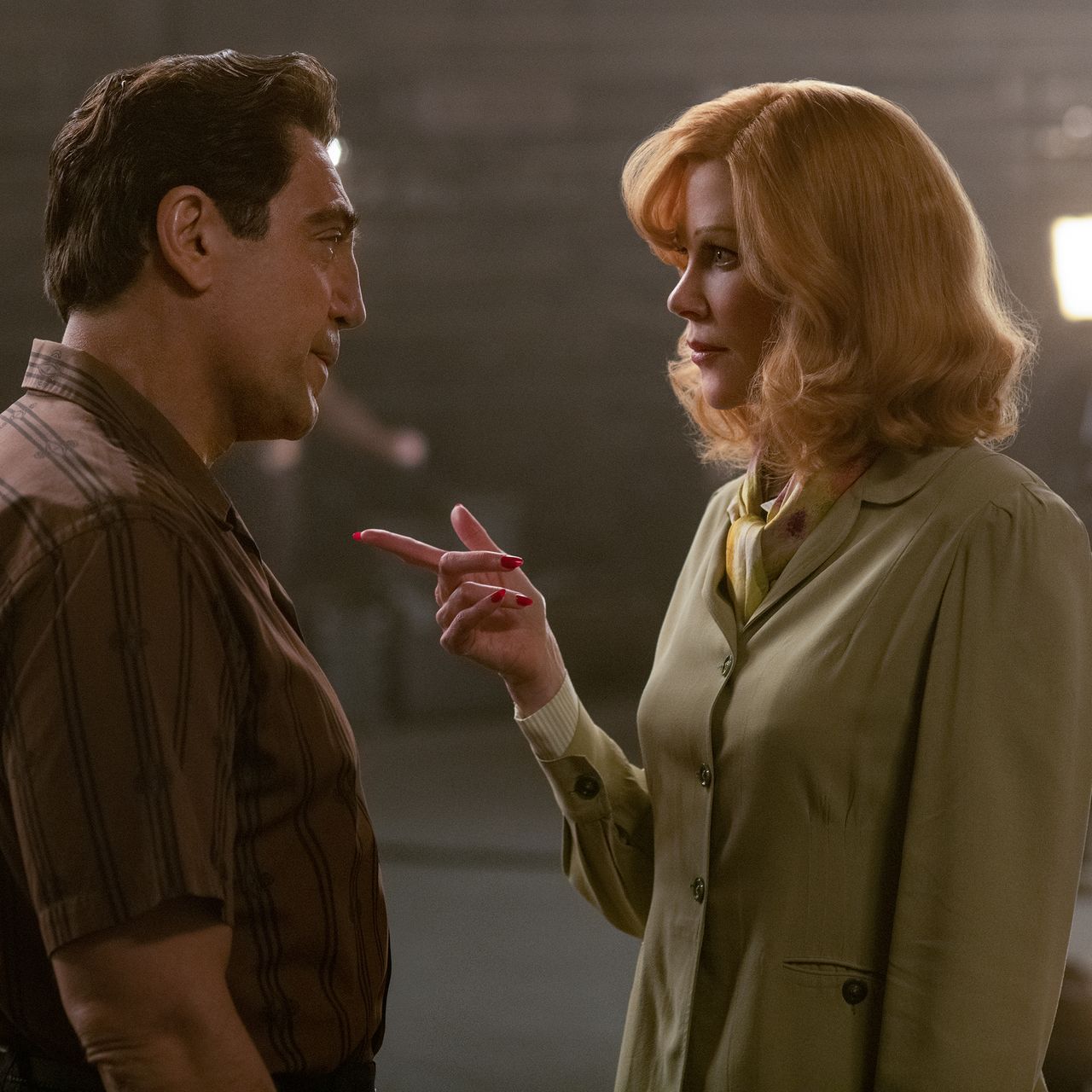
Being the Ricardos

11/01/22

Amazon Prime Video

I am actually old enough to remember watching I Love Lucy as a child – and can recall laughing out loud at the onscreen antics – though a quick glance at Wikipedia tells me that the show only launched in the year of my birth and ended in 1957, so I was probably already viewing re-runs. It was a game changer in many regards, the first scripted TV show to be filmed in front of a live audience using a (then) unique three-camera system. At the peak of its powers, it pulled in sixty million viewers.

Being the Ricardos is a fascinating look at the husband and wife duo on which the series was loosely based, as they approach a major flashpoint in their joint career. Midway through recording their second series, Lucille Ball (Nicole Kidman) and Desi Arnaz (Javier Bardem) are hit by potential disaster. Ball has been investigated (and cleared) by the House Un-American Activities Committee, but the newspapers are now accusing her of being a communist. Also, she has just discovered she is pregnant with her second child and there’s no way her sponsors are going to allow a visibly pregnant woman onto the television screens, because viewers are going to start thinking about how she got pregnant in the first place and – well, not to put too fine a point upon it, her husband is Cuban…

I know. You could be forgiven for thinking that the series actually originated in the middle ages, but no, in the 1950s, such mundane revelations could stop a series dead in its tracks. So it’s going to take some nifty dance moves to get Lucy and Desi out of this one.

Writer/director Aaron Sorkin adopts a multi-faceted approach to telling his story, introducing it via a series of interviews with the show’s original writers and producer (all played by actors) and then cutting gleefully back and forth between Ball And Arnaz’s first meeting; their early experiences in radio, film and music; the recreation of the recording of a live show and all points in between.

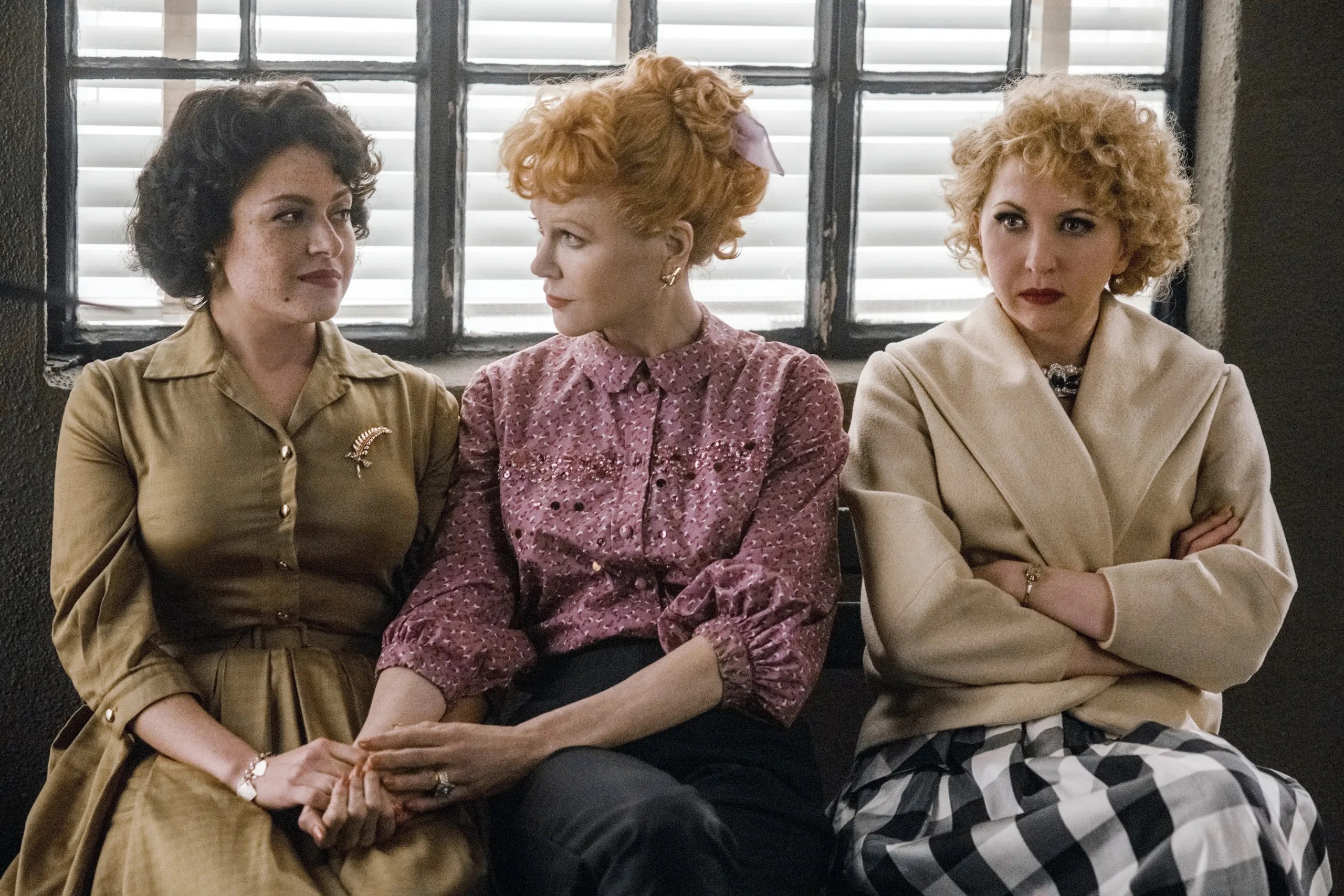
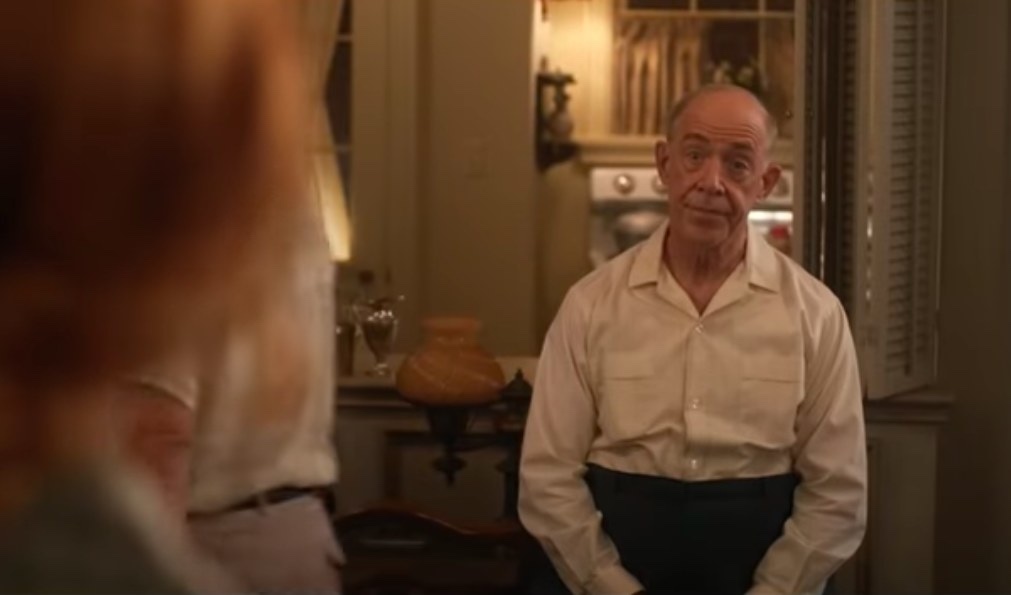
We learn fairly quickly that Ball is an inveterate micro-manager, who trusts nobody’s instincts as much as her own, and that Arnaz is an astute businessman with an eye for self-preservation and a yen for booze, card games and female company. We also meet the duo’s regular co-stars, William Frawley (JK Simmons) and Vivian Vance (Nina Arianda), whose careers are inextricably entwined with those of their employers, and who are not slow to express their dissatisfaction with the way they’re expected to play second fiddle. There’s also an appealing rivalry between the show’s two main writers, Madelyn Pugh (Alia Shawkat) and Bob Carroll (Jake Lacy).

The script positively crackles with witty putdowns and snarky one-liners and Kidman’s performance (which has already been rewarded with a Golden Globe) is extraordinary, nailing Ball’s look, voice and presence in seemingly effortless fashion. Mind you, the cast are uniformly good and the era convincingly evoked. As the story switches expertly back and forth, no scene is allowed to outstay its welcome.

So much more than just another biopic, Being the Ricardos sneaked quietly straight onto Amazon Prime in the UK, but, with a strong Oscar buzz behind it, expect to hear a lot more about it in the days to come.

4.2 stars

Philip Caveney

Animals

16/07/19

A big hit at this year’s Sundance Festival, Animals is an engaging film about friendship and hedonism. Written by Emma Jane Unsworth, based on her novel, and directed by Sophie Hyde, it’s the story of two women living in Dublin – coffee shop baristas by day and dedicated party animals by night. The two of them have a fierce and loyal friendship and they share a predilection for wine, drugs and casual sex with random strangers.

Indeed, Laura (Holliday Grainger) and Tyler (Alia Shawkat) have elevated the act of getting wasted into a fine art. The trouble is, they are now thirty-ish and the people around them – including Laura’s older sister, Jean (Amy Molloy), herself a former wild child – are taking their feet off the accelerator and settling down. What’s more, Laura has long-nurtered a desire to be an author but, after years of sporadic work, she’s only managed to produce ten pages of decent writing.

She thinks she’s hit a turning point when she meets Jim (Fra Fee), a talented and dedicated classical pianist, who rarely takes a drink and consistently avoids late nights. The two of them fall for each other, and Laura starts to seriously consider marrying him, but this drives a wedge between her and Tyler, who is admant that she will not change her spots. And then louche would-be poet, Marty (Dermott Murphy), a man not unfamiliar with booze and drugs, wanders into the scenario and casts his gaze in Laura’s direction. Things get even more complicated…

There are two superb performances at the heart of this belated coming-of-age story. Shawkat is a quirky delight but it’s Grainger who does most of the heavy lifting here, managing to convey Laura’s conflicted persona with consummate skill. Anybody who has experienced some debauchery in their youth – and let’s face it, that covers most of us – will identify with this story. Laura’s discovery that to be a successful writer requires hours of dedication is no great revelation, but it’s eloquently told and well worth saying.  This may be a well-trodden story arc, but it manages to cleverly avoid the clichés. Laura doesn’t need rescuing, she doesn’t need to take drastic measures, she merely needs to exercise a little control over her own life. It’s unusual to find a movie with two female leads and, after the poor performance of the fabulous Booksmart, let’s hope Animals does as well as it deserves. It is well worth your attention.

And you can discuss it afterwards… preferrably over a bottle of wine.

4.2 stars

Philip Caveney