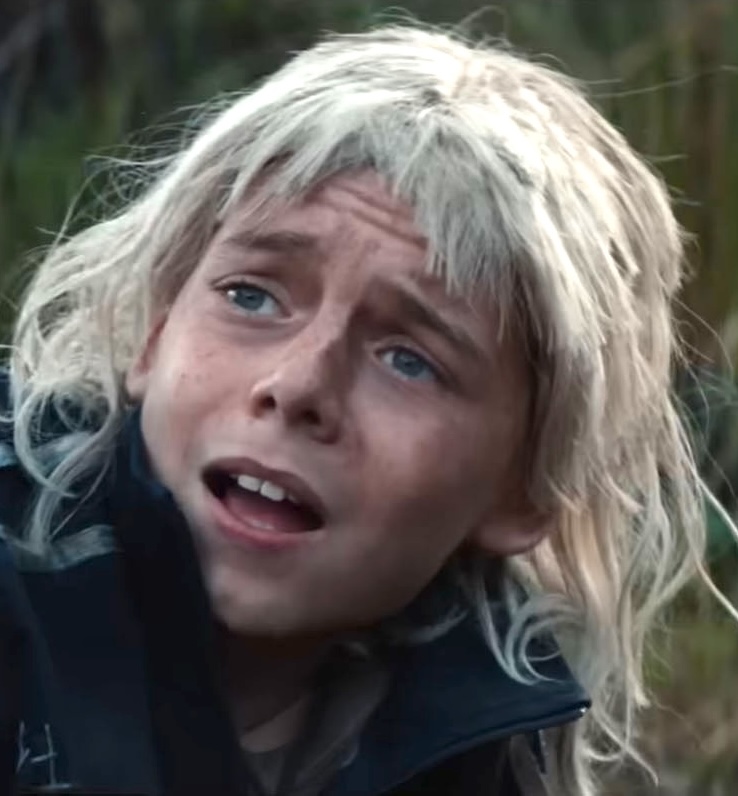
Alfie Williams

28 Years Later: The Bone Temple

15/01/2026

Cineworld, Edinburgh

The ’28 Years’ trilogy moves confidently into its second act, with Danny Boyle handing the directorial reins to Nia DaCosta. She rises to the challenge with her customary zeal and delivers a film that, for my money, comes close to equalling its predecessor. This time out there’s less emphasis on the blood and mayhem and more on the interplay between characters. Gore-hounds may complain they’ve been short-changed but, ironically, there’s still enough spine-ripping and brain-munching to ensure that this episode earns itself an 18 certificate. Young actor Alfie Williams is, once again, unable to officially attend the film’s premiere. (He was thirteen for the last one’s 15 classification.)

Did he get a private viewing? I hope so.

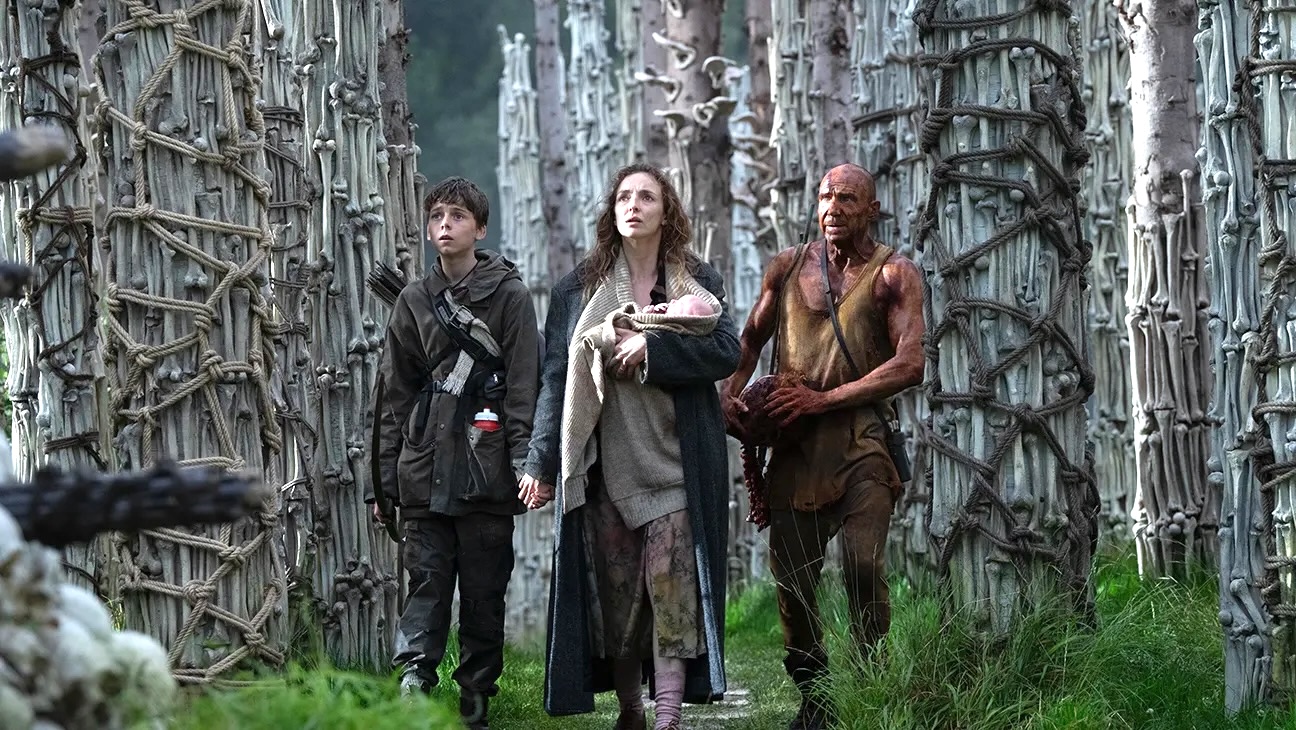
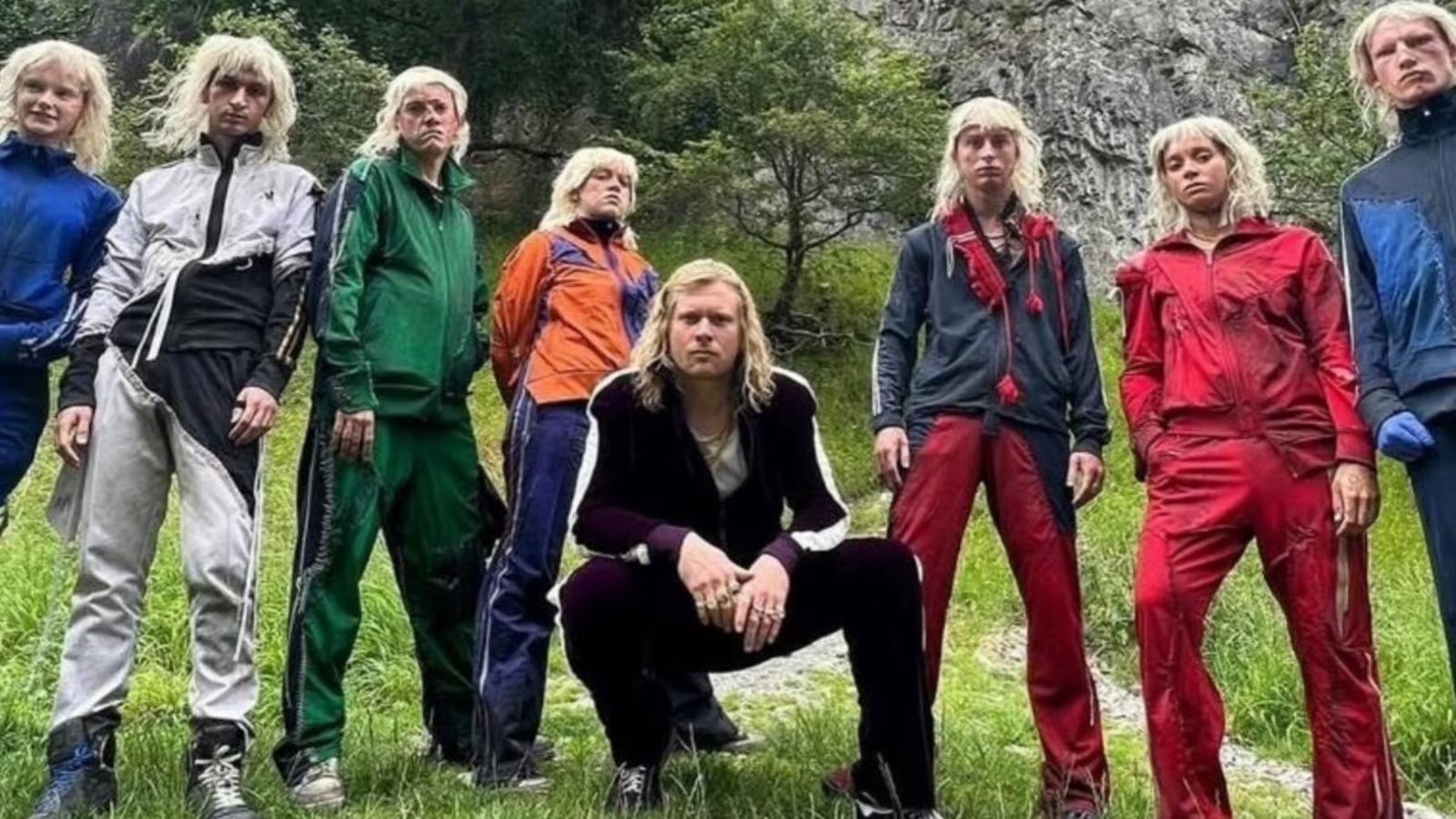
We pick up pretty much where we left off with Alfie (Williams) now a captive of ‘The Jimmys,’ the track-suited, blonde-bewigged followers of Sir Lord Jimmy Crystal (a malevolent Jack O’Connell, sporting a pretty convincing Scottish accent). Alfie soon learns that, if he wishes to remain alive, he’s going to have to fight for his place in the gang and, once a member, somehow embrace the heinous cruelty that Crystal likes to inflict on anyone he encounters – including, if the mood takes him, his own followers. Luckily, one of the gang, Jimmy Ink (Erin Kellyman), seems to have taken a sisterly shine to Alfie.

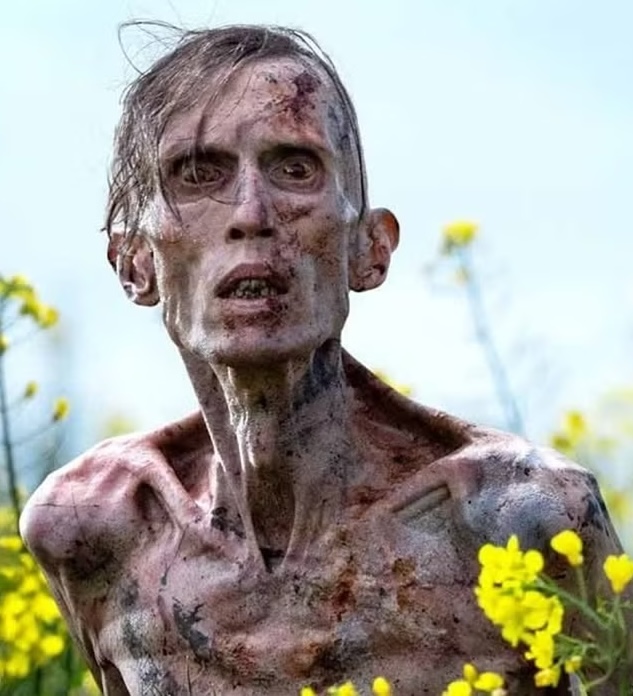
Meanwhile, Dr Ian Kelson (Ralph Fiennes) continues his gruesome work in the titular temple, with particular emphasis on trying to develop his growing ‘friendship’ with Samson (Chi Lewis-Parry), an infected Alpha. Kelson is attempting to tame the angry giant with regular doses of morphine, applied via a strategically-aimed blowpipe. Could it be that these experiments are leading Kelson tantalisingly closer to finding a cure for the deadly infection that has overtaken the world? More bafflingly, why is he listening to so much Duran Duran?

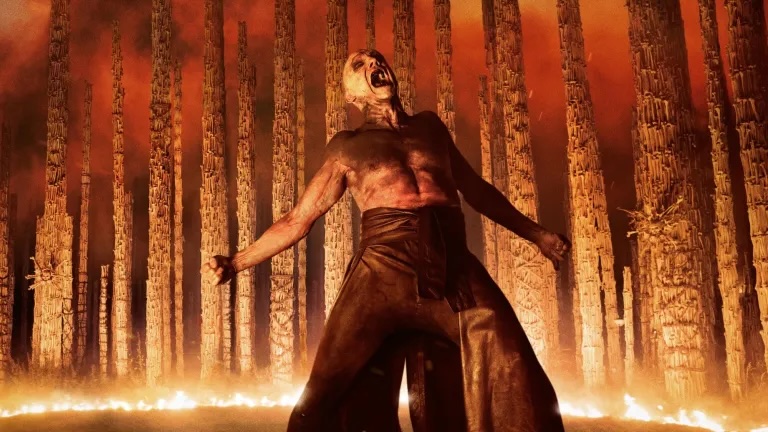
If the two main story strands are frankly bonkers, they nonetheless make for riveting viewing. DaCosta’s strong visual style combines with Alex Garland’s storytelling and the powerful music of Hildur Guǒnadóttir, to exert an almost hypnotic spell. There are kinetic action sequences, some astutely-handled flashbacks (Samson’s recollections of a childhood experience on a crowded train is particularly powerful), and Fiennes’ outrageous climactic dance routine, backed by Iron Maiden’s The Number of the Beast, is something I never expected to see – a slice of pure theatre writ large on a cinema screen. I also respond strongly to the film’s obsession with religion and the way that Kelson cleverly uses it to his own advantage.

And then, just when you think it’s all over, we’re treated to a short coda which neatly flips the whole concept back to its origins and reintroduces a character I had pretty much given up hope of ever seeing again – all of which ensures that I leave the cinema already looking forward to part three.

Job done. Bring it on.

4.6 stars

Philip Caveney
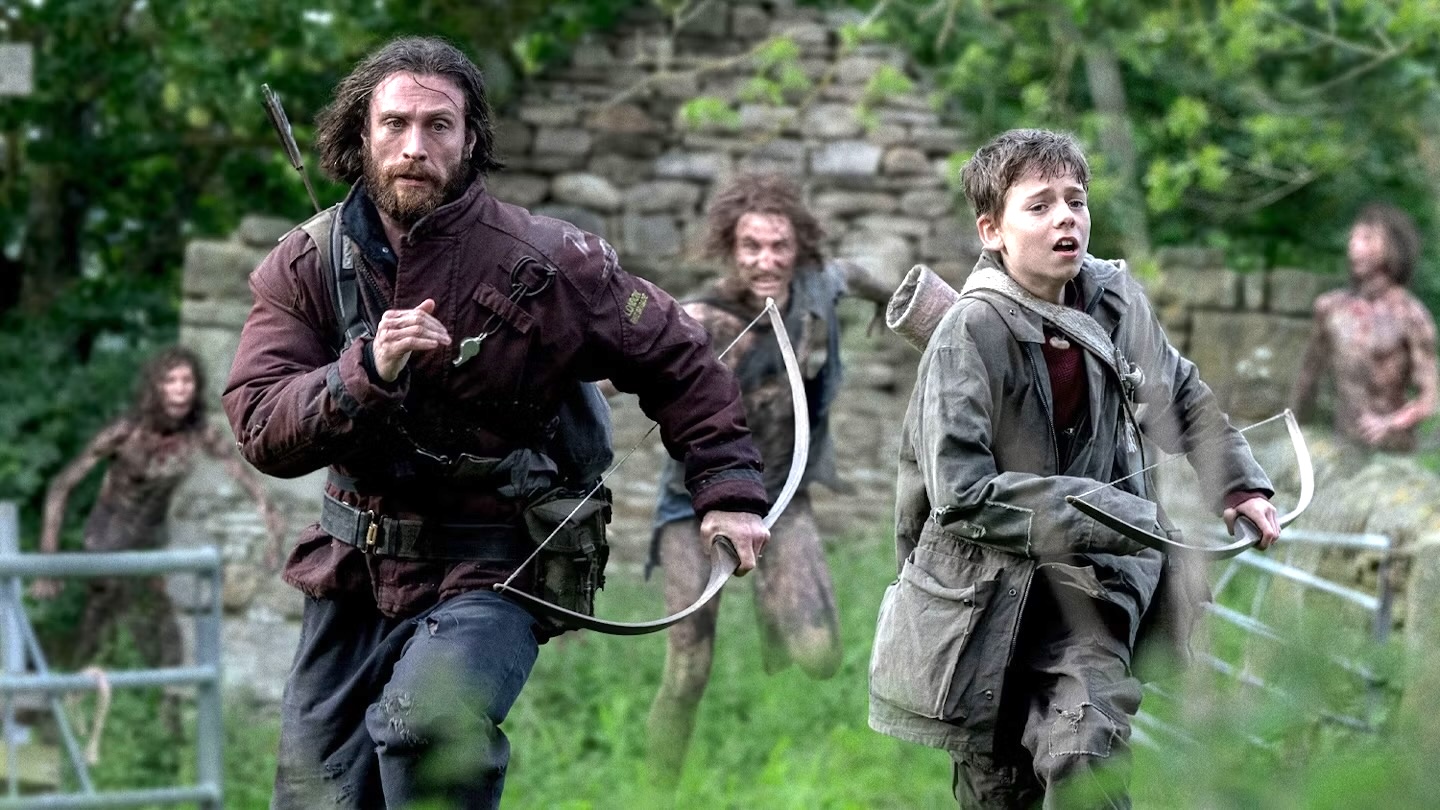
28 Years Later

22/06/25

Cineworld, Edinburgh

The release of 28 Days Later in 2002 was something of a game-changer. A ‘sort of’ zombie movie, it made the idea of a powerful, rage-inducing virus – accidentally released from a secret laboratory – seem queasily credible, and was a monstrous hit at the box office. Director Danny Boyle and star Cillian Murphy were too embroiled in their sci-fi epic, Sunshine, to take on the 2007 sequel, 28 Weeks Later – so they handed the directorial reins to Juan Carlos Fresnadillo. I missed that film on first release, but caught up with it earlier this week and thought it was actually pretty decent. It introduced the idea of a quarantined UK, taken over by American military forces, who act with brutal force when everything goes tits-up – which, given recent world events at the time of viewing, has a chilling new sense of prescience.

So, what’s left for part three? Plenty, as it turns out, with Boyle and original screenwriter Alex Garland stepping back into the proceedings with fearless assurance. The time-honoured tradition with long-running franchises is to retread familiar territory, thus ensuring that original fans will stay on board. But Boyle and Garland have clearly had plenty of time to develop a new story arc, and – provided this opening instalment puts the requisite number of bums on seats – have two sequels waiting in the wings.

Time has moved on – by 28 years to be exact – and a community of survivors has been established on a remote island in the North East, connected to the mainland by a narrow causeway. This can only be crossed for a few hours each day at low tide, and the entrance gates are guarded around the clock. Spike (a strong performance from newcomer Alfie Williams) is thirteen years old and his father, Jamie (Aaron Taylor-Johnson), is preparing to take him to the mainland, where, in a long-established custom, he will kill his first ‘Infected’ with a bow and arrow. Spike goes along with the plan, even though he’s desperately worried about his mum, Isla (Jodie Comer), who is afflicted by a strange illness that makes her prone to forgetting who (and where) she is.

When Alfie hears talk of a mysterious doctor living somewhere out on the mainland, he decides to take his mum off the island in search of a cure…

This is a fabulous piece of cinema, shot almost entirely on iPhones, and crammed with so many references and allegories that it’s hard to take them all in with just one viewing. The community of uncompromising Geordies, proudly waving their St George flags and getting on with the basics of everyday life have completely shut themselves off from everything that’s happening over the water – and the filmmakers have taken considerable pains to establish the world building, making it all seem entirely credible. It’s very hard not to read this as a searing condemnation of Brexit and, in my opinion, that’s the filmmakers’ intention.

There are elements of folk horror woven into the script and the eerie atmosphere is beautifully accentuated by the music of the Young Fathers and the use of an old recording of Rudyard Kipling’s militaristic poem, Boots.

The first part of the story feels the most familiar. That hunting trip on the mainland gets out of hand and plunges Spike and Jamie headlong into the terrifying world of the Infected, where a new, faster, more powerful breed – The Alphas- are ruling the roost. These scenes are brilliantly handled with the suspense ramped up to almost unbearable levels. However, the second section heads off in an entirely different direction, introducing a detachment of Swedish Navy troops, who have been patrolling the UK coastline, and whose boat has run aground nearby. When Spike and Isla bump into young soldier, Erik (Edvin Ryding), the only survivor of his group, he provides some much-needed weaponry to help them to their destination.

The film’s third section adds a plaintive and poignant note to proceedings as Isla’s plight becomes ever-more heartbreaking. When she and Spike finally encounter Dr Kelson (Ralph Fiennes), he’s living a monastic existence in the midst of a self-constructed homage to death, which he calls his memento mori. The character’s powerful resemblance to Captain Kurtz (from Apocalypse Now) is too marked to be accidental and Fiennes gives the character a calm, solemn dignity amidst all the madness.

And then we’re handed a conclusion so off the charts that it is sure to be divisive. It immediately solves a puzzle, established in the film’s opening scenes, while also offering disturbing questions about a character who has (quite literally) somersaulted into the storyline.

28 Years Later is a dazzling, uncompromising slice of horror cinema, that does the seemingly impossible: both continuing an established franchise and simultaneously reinventing it. I can only say that I can’t wait to see where this goes next.

5 stars

Philip Caveney