Al Jolson

Sunset Boulevard

21/12/25

Filmhouse, Edinburgh

Hard on the heels of seeing one Billy Wilder masterpiece, The Apartment, comes an opportunity to see another, his 1950 film, Sunset Boulevard. I’m eager to watch it, as I haven’t seen it since I viewed it on TV in my youth. Whereas The Apartment looks forward to the new permissive era of the 1960s, this one takes its inspiration from the movies of the silent years, and the vast sea-changes that came in 1927, when Al Jolson became the first actor to talk onscreen in The Jazz Singer.

While the silent era has been revisited in a more lighthearted manner in movies like Singin’ in the Rain, Wilder casts a more meditative light on the previously-bankable stars suddenly left stranded by arrival of the talkies.

The movie is narrated by Joe Gillis (William Holden), a once promising young screenwriter, now struggling to make his way in the highly-competitive world of 50s Hollywood and quickly running out of options. Trying to evade some guys who are attempting to repossess his car, he pulls into the garage of a crumbling Hollywood mansion, assuming that the place is abandoned. But here he meets up with faded silent-movie megastar, Norma Desmond (Gloria Swanson) and her devoted butler, Max (Erich Von Stroheim). When Norma learns that Joe is a writer, she immediately invites him to stay in the guest room, telling him that she’s working on a screenplay of Salome, which she plans to star in when she makes her “return” (for some reason, she hates the term “comeback”). Joe realises she hasn’t a hope in hell of getting the movie financed, but he needs somewhere to kick his heels, so he reluctantly takes her up on her offer and agrees to help her write the script.

But as the days pass, he becomes her constant companion, and he starts to appreciate the full depths of her obsession – and realises that walking away from this situation isn’t going to be as straightforward as he initially supposed…

Of course, Wilder is writing about the same studio system that he himself progressed through, and his sharp, witty screenplay (co-written with Charles Brackett and DM Marshman Jnr) has about it the utter veracity of lived experience. Swanson had actually been a silent-movie star back in the day and exerts an extraordinary screen presence, portraying her possessive, vulnerable and ultimately-tragic character with consummate skill. Von Stroheim, meanwhile, was himself an influential director of silent films. There are also cameos from other real stars, like Cecil B DeMille and (very briefly) Buster Keaton. Holden, of course, is just embarking on his own long and monumental screen career and he makes the perfect foil, calm and measured despite all the madness that surrounds him.

The film’s final scene is one of the most enduring in movie history, as Norma Desmond takes her final prowl down a staircase for the camera and prepares for her close-up, so caught up in her own fantasy, that all the surrounding cops and news reporters somehow become her acolytes.

Sometimes, you return to a classic film after a long absence and wonder what all the fuss was about. But Sunset Boulevard is still a powerful and bitterly-spiced cinematic confection, as fresh and hard-hitting as it was all those years ago – and I feel privileged to have the opportunity to see it on the big screen.

5 stars

Philip Caveney
Singin’ in the Rain

23/01/25

Pleasance Theatre, Edinburgh

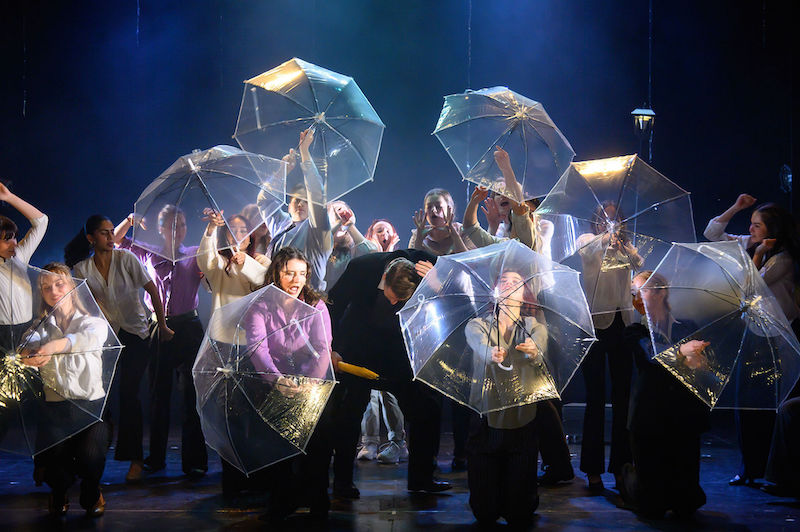
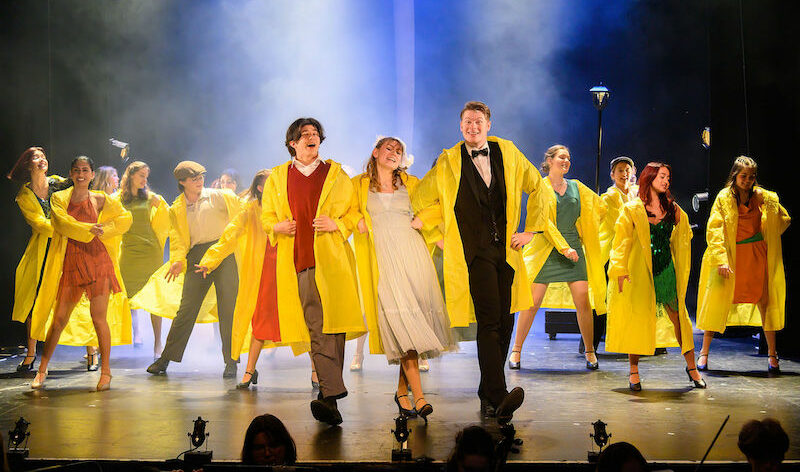
In Edinburgh, a storm’s a-comin’ in… but before it hits, there’s the chance to catch EUSOG’s delightful adaptation of this classic 1952 Hollywood Musical. Back in 2022, we saw the touring production at the Festival Theatre, which boasted a massive budget and gallons of real water bucketing down from the heavens. A high bar indeed. But we’ve seen enough EUSOG shows to know that these talented students will deliver something special – and we’re not disappointed.

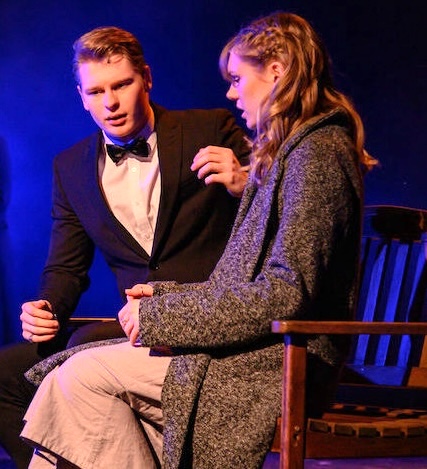
The year is 1927 and Dan Lockwood (Ewan Robertson) and Lina Lamont (Amelia Brenan) are the golden couple of silent cinema. Movie fans believe them to be an item and, for the sake of their own popularity, they allow this belief to flourish. Dan has steadily worked his way up the slippery pole of fame alongside his childhood friend, Cosmo Brown (Dan J Bryant), a wisecracking song-and-dance man. But of course a new film release – Al Jolson’s The Jazz Singer – is about to change the face of cinema forever. Lockwood and Lamont realise that they need to make a talking picture. But there’s a problem: Lina has a screeching voice with all the appeal of fingernails being dragged down a clapperboard.

And then Dan meets Kathy Seldon (Hannah Shaw), a theatre performer, who claims to never go to the cinema, and who plans to head off to New York to pursue a career on the stage – you know, real acting. She also has a lovely singing voice. And Dan is irrevocably smitten…

There are many good reasons why the original film still features in most critics’ lists of the greatest musicals of all time. It boasts a sparkling screenplay by Betty Camden and Adolph Green and a whole clutch of memorable songs by Nacio Herb Brown and Arthur Freed. What this production might lack in special effects is more than made up for by the dazzling and exuberant performances of its young cast, who take on the most demanding of roles with aplomb.

Robertson is the powerful anchor at the heart of the piece, singing up a storm, while Shaw is a delight in the ingenue role. Brenan is having the best time as Lamont, gleefully mangling her lines and performing What’s Wrong With Me? in tones that could shatter plate glass. And, as is the case in the film, it’s Cosmo who steals so many of the scenes: Bryant clowns with considerable skill and his performance of Make ’em Laugh even manages to rival Donald O’Connor’s most celebrated routine.

As ever with these productions, there is a large chorus and every performer gives it one hundred percent. Director Freya White and choreographer Rosalyn Harper have their huge cast moving effortlessly through a series of pratfalls and complex dance routines – and let’s not forget the input of musical directors Evie Alberti and Sebastian Schneeburger, who guide a seventeen-piece orchestra through that unforgettable score. The standing ovation from tonight’s packed crowd is genuine and well-earned.

Sadly, Storm Éowyn has already put paid to Friday night’s performance and fingers are currently crossed for the Saturday. If it does go ahead, then please take the opportunity to catch this captivating show, which to my mind personifies the very essence of pure entertainment. I’m willing to bet you’ll come out smiling and singing the title song, no matter what the weather’s doing.

4.8 stars

Philip Caveney

Singin’ in the Rain

27/04/22

Festival Theatre, Edinburgh

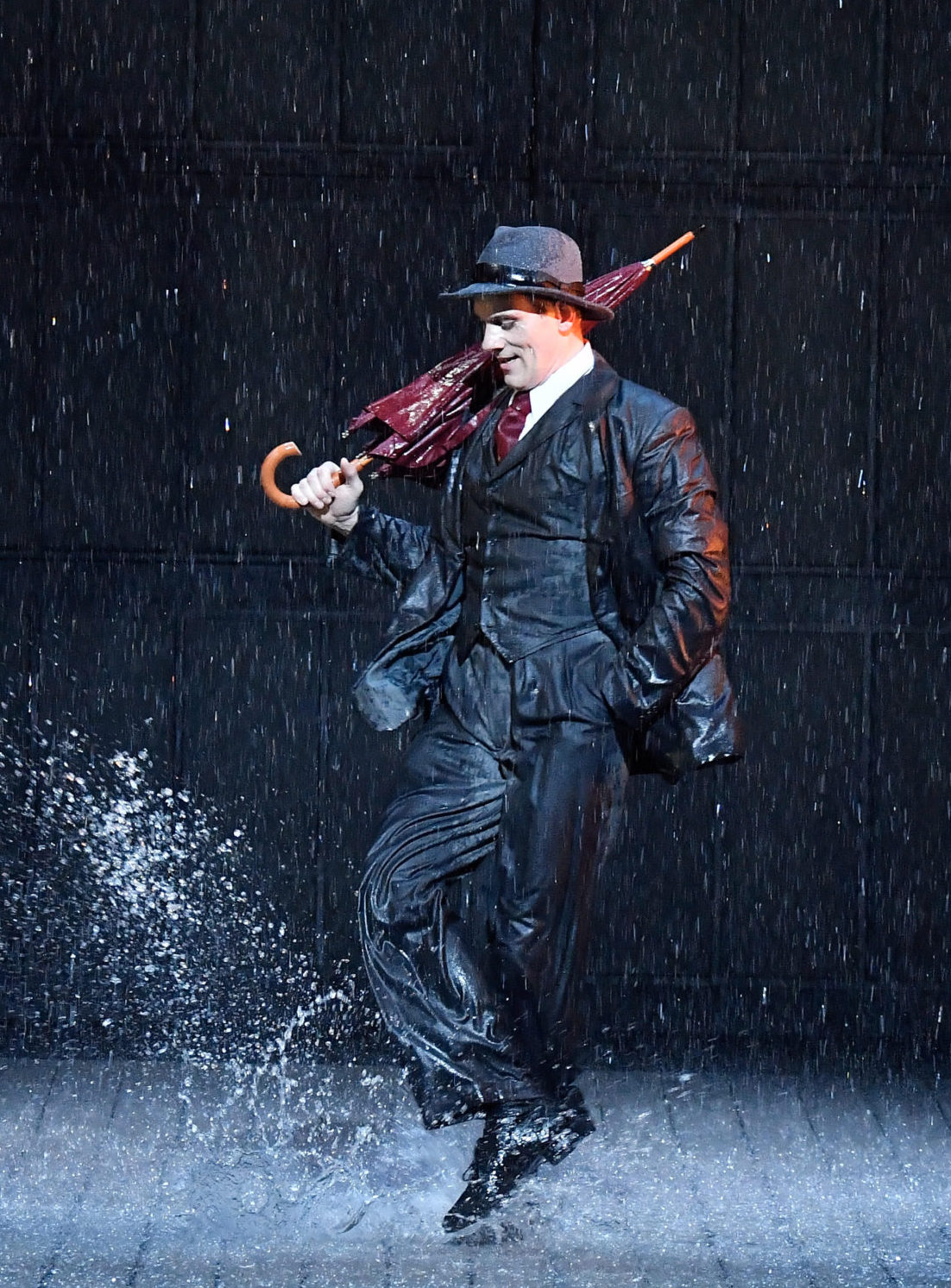
Of all Hollywood’s great movie musicals, only one has consistently featured in critics ‘best film’ polls down the years and it is, of course, Singin’ in the Rain.

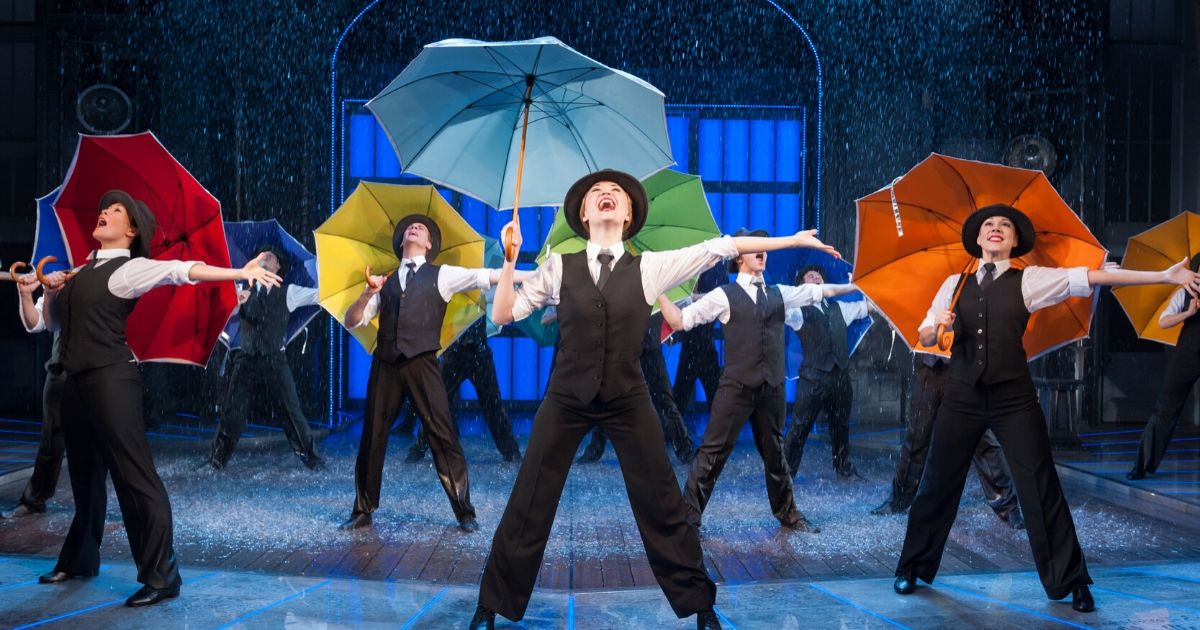
Released in 1952, at a time when the film industry was already starting to look back to its beginnings for inspiration, it had a lot going for it: Gene Kelly at the height of his terpsichorean powers, a nineteen-year-old Debbie Reynolds just beginning her ascent to stardom and the ever-dependable Donald O’ Connor providing inspirational comic relief. (Even now, if I’m down in the dumps, a viewing of his Make ’em Laugh routine is guaranteed to lift my spirits.) Throw in some top flight songs by Arthur Freed and Nacio Herb Brown, a sprightly screenplay by Betty Comden and Adolph Green, and and it’s no wonder that the film is so fondly remembered.

Of course a movie and a play are very different creatures. Suffice to say that any stage adaptation has some very big tap shoes to fill – so I’m delighted to report that this production, directed by Jonathan Church, is one of the most supremely entertaining shows I’ve seen in a very long time. Slick, assured, technically brilliant – it never puts a hoof wrong.

Don Lockwood (Sam Lips) and Lina Lamont (Faye Tozer) are the stars of a series of silent movies, swashbuckling romances beloved by the masses. Thanks to the publicity machine, everybody believes they are lovers in real life but, though Lina is under the impression this is actually true, Don is far from keen on the idea. As he tells his best friend, Cosmo Brown (Ross McLaren), he’s still looking for the right woman. He thinks he might have found her when he bumps into Kathy Selden (Charlotte Gooch), but is dismayed to discover that she’s not at all impressed by his movie star status. She tells him she’s a serious actor, who hopes one day to tread the boards of the New York stage. Ooh, hoity-toity!

But the year is 1927 and Al Jolson’s The Jazz Singer – the first talking picture – has just been released. Don thinks it’s a fad that will soon be forgotten but, of course, it signals a seismic change in the industry. Within days it is breaking box office records and it quickly becomes clear that the latest Lockwood and Lamont epic, The Duelling Cavalier, is going to need some drastic remodelling before it can be successfully released. The only problem is Lamont, who has a broad Brooklyn accent delivered in a screeching tone.

Actually, this is the one part of the story that could raise hackles. Making fun of a regional accent would be a no-go zone in the contemporary world, but the fact that this is a period piece just about excuses it – and Tozer plays her part with such adept comic timing that I find myself laughing uproariously at her mangled intonation, particularly when she’s working with her ‘dialect coach’ (Sandra Dickinson).

But that’s my only caveat. Both Lips and Gooch have splendid chemistry together and McLaren manages to own the Make ’em Laugh routine, without attempting to deliver a carbon copy of the original. There are some very funny film extracts, the ensemble dance numbers are thrillingly executed and even the film’s extended Broadway Melody sequence is lovingly recreated, right down to the vibrant costumes, with Harriet Samuel-Gray handling the Cyd Charisse role with aplomb.

And to have so many memorable songs in one show seems almost unfair on the competition.

But of course, you might argue, how can this hope to work onstage without any actual rain? Rest assured, rain there is, in abundance. I can only marvel at the ingenuity involved in taking a travelling production around the country and adapting each and every venue so that water can bucket down onto the cast without causing major devastation. It’s no surprise that the orchestra are safely located backstage instead of in their usual pit. Their brief unveiling during the second overture foreshadows Kathy Selden’s famous moment of glory, as well as highlighting the frantic unseen action that underpins any theatrical production.

Singin’ in the Rain is a delight from start to finish. It never falters, never loses pace and manages to honour the great film that inspired it. Wandering out of the Festival Theatre, humming that famous signature tune, I’m almost disappointed to discover that it’s a cold, clear evening, with no hint of rain.

Well, I did say ‘almost.’

5 Stars

Philip Caveney