Abigail Breslin

Stillwater

12/08/21

Cineworld, Edinburgh

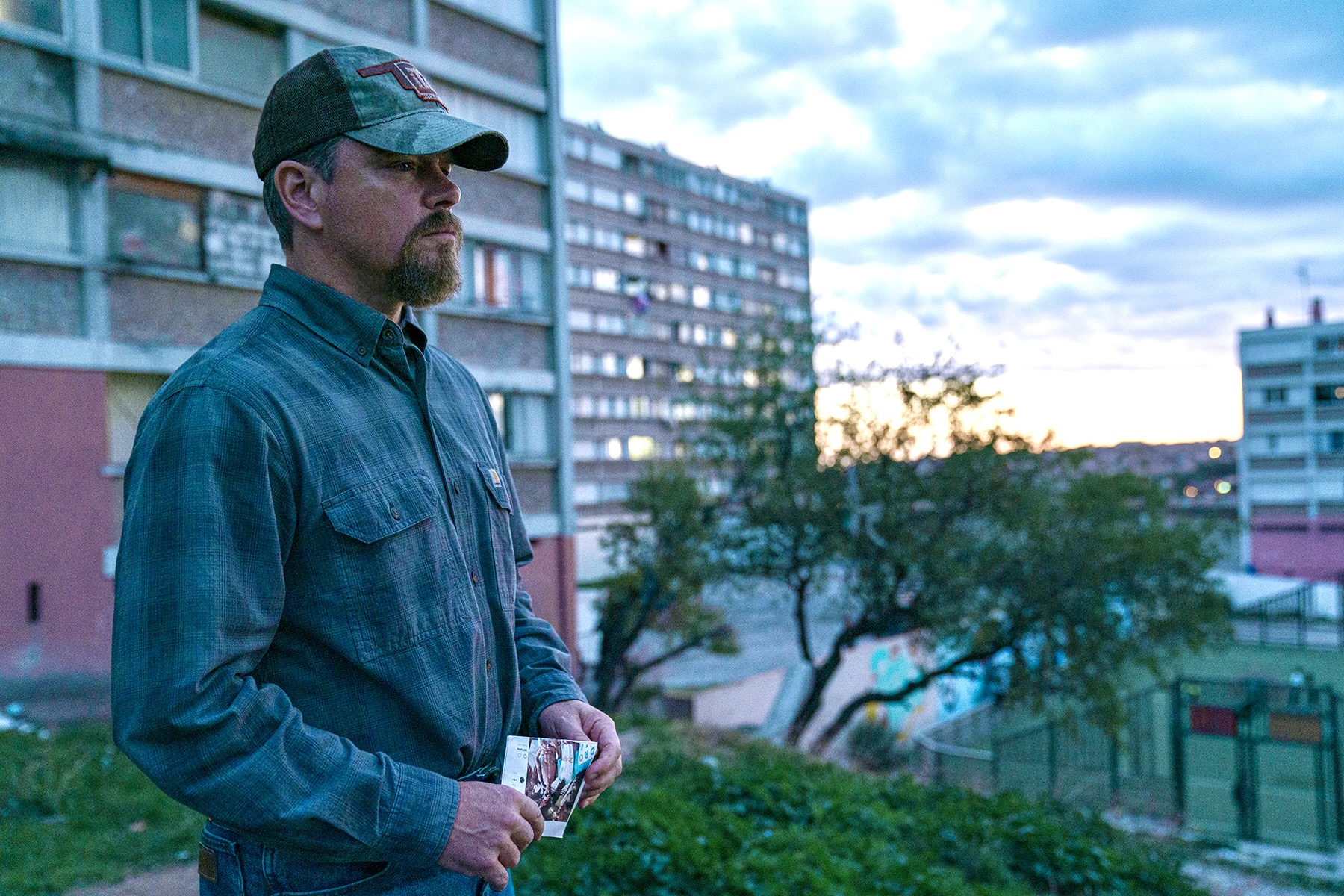
Director Tom McCarthy’s film is a slower, subtler version of the “vigilante-let-down-by-the-system-so-has-to-go-it-alone” genre, and it’s this considered approach that makes the piece both watchable and heartbreaking. Bill Baker (Matt Damon) is a flawed hero, with neither super-strength nor driving passion to propel him forwards. He’s just a guy in a difficult situation, trying his best to put things right. And, a lot of the time, failing.

Bill’s daughter, Allison (Abigail Breslin) is in prison in Marseilles. She’s been found guilty of murdering her girlfriend, fellow uni-student Lina, and has already been incarcerated for five years. Back in Oklahoma, Bill takes on all the casual labouring work he can find, and spends the proceeds making regular visits to France. He hasn’t always been the best dad – he has a history of drug and alcohol abuse – but he’s determined to be there for Alli now.

When the film opens, this is already routine. Bill’s prison visiting card is half-full of stamps; the staff at his hotel in Marseilles know him. This is just the way things are. But then Alli gives him a letter for her lawyer: a key witness, missing from her trial, has been heard bragging about getting away with murder, and Alli wants him found. But the lawyer sorrowfully dismisses her claim: it’s hearsay; it’s too late. So Bill is left with little choice but to investigate alone…

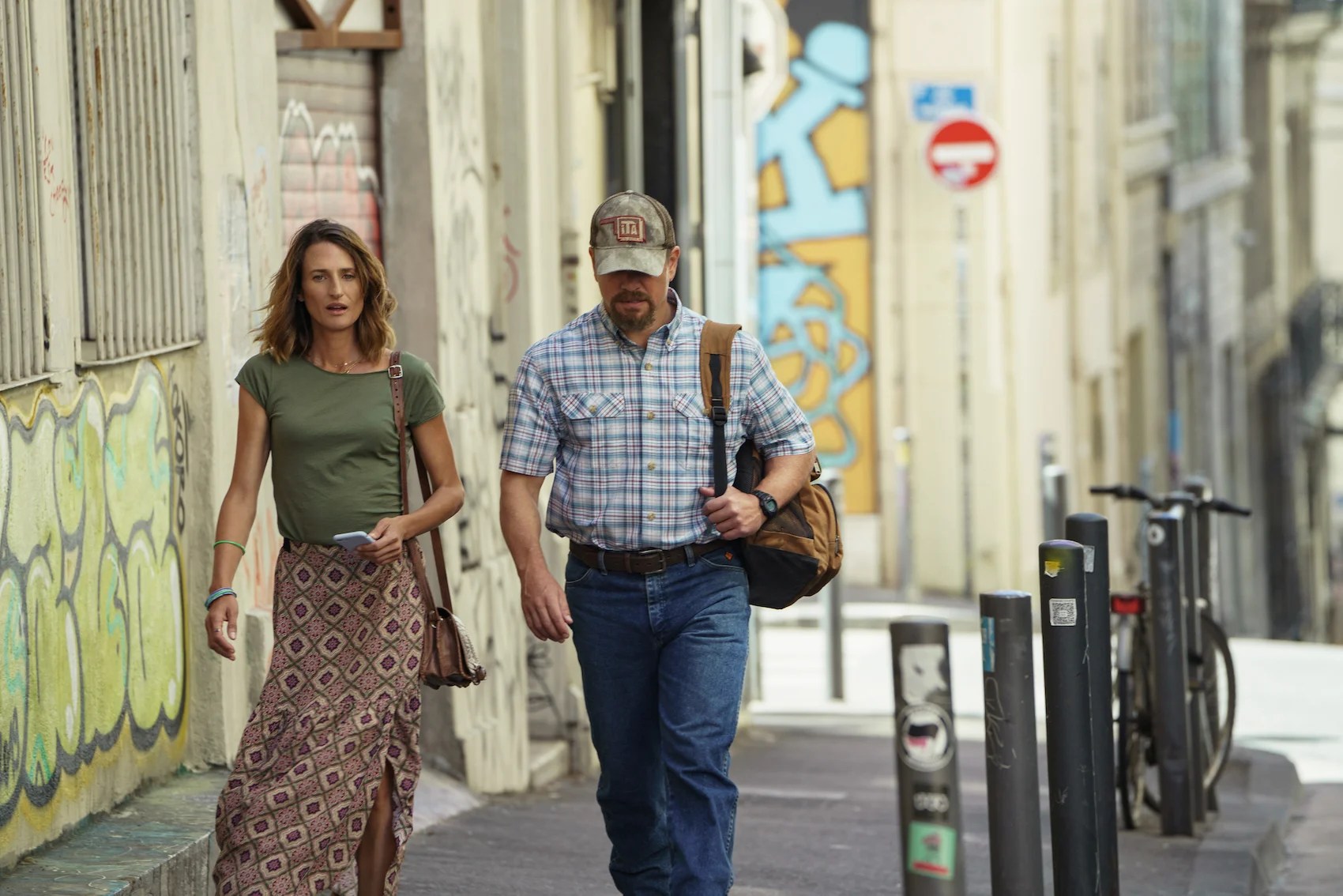
Well, not quite alone. He doesn’t speak French, so he needs an interpreter. He only has a few acquaintances in France, but Virginie (Camille Cottin), an erstwhile fellow hotel guest, seems friendly, and she owes him a favour for looking after her daughter, Maya (Lilou Siauvaud). The trouble is, she was only at the hotel for a couple of nights, while repairs were being done on her apartment, so first he has to track her down… Luckily for Bill, the hotel staff aren’t exactly big on protecting their guests’ privacy, and anyway, Virginie doesn’t mind. She collects causes and campaigns, and she’s only too pleased to help. In fact, she offers him a room. He babysits and, well, fixes things (taps, toilets, sockets), because that’s what he does, while she reads everything she can and talks to potential witnesses.

If this all sounds familiar, don’t be fooled: McCarthy shies away from the tried-and-tested path. Bill and Virginie face real obstacles, and there isn’t always a way around them. Dogged determination doesn’t always win the day, and anyway, the last thing Alli wants is for Bill to get involved…

It’s great to see Cottin in a big-screen role. Obviously, she has an illustrious career behind her, but we’ve only recently become aware of her, via the rather marvellous TV series, Call My Agent (Netflix). She has a real presence here, inhabiting her character completely, and oozing charisma. But she’s not the only one: Siauvaud is a delight, and, of course, Breslin and Damon both have real acting chops too. Damon’s depiction of the monosyllabic, fish-out-of-water American is wonderfully understated: he’s inarticulate, humble, quietly resolved – a million miles away from the brash confidence of a typical ‘hero.’

This is a very realistic film, and cinematographer Masanobu Takayanagi shows us a realistic vision of Marseilles too. We see the gorgeous white cliffs and blue waters of the Mediterranean; the romantic rooftop view from Virginie’s apartment; the glorious tumble of shuttered Provençal streets. But we also see the seamier districts – the seedy bars and no-go areas – and they’re properly integrated: we are shown the whole city, in all its vibrant contradictions.

There are echoes here of Amanda Knox’s story, but only echoes. Stillwater draws on that narrative, but it’s very much its own tale – of love and redemption and imperfect endings.

4.1 stars

Susan Singfield

Zombieland: Double Tap

27/10/19

It’s hard to believe that ten years have passed since the first Zombieland film – and, while the original came as a breath of fresh air amidst the unseemly scramble of leaden undead movies that hit the screens around that time, it’s probably fair to say that there weren’t too many punters desperate to see a sequel. But you have to take your hat off to director Ruben Fleischer, who not only persuaded somebody to finance this, but also got the four lead players to reprise their roles.

A decade has passed for the quartet of survivors too, who – when we first encounter them – are moving into their new headquarters: the White House. Columbus (Jesse Eisenberg) and Witchita (Emma Stone) are now a couple, while Tallahassee (Woody Harrelson) has taken on a fatherly role towards Little Rock (Abgail Breslin). But LR’s at a difficult age, starting to long for a little ‘me time’ and, when Columbus rashly proposes marriage to Wichita, she too feels a little hemmed in. So the two women hit the road, looking for new horizons.

Complications occur when LR encounters a wandering hippie (Avan Joggia) with a guitar and a repetoire of popular rock songs, which he claims to have written. She falls promptly under his spell and runs off with him to a hippie community where weapons are banned, dumping Wichita in the process. Wichita returns to the two men but, in her absence, Columbus has hooked up with Madison (Zoey Deutch), an airheaded valley girl, who has improbably managed to stay alive (and meticulously clean) in the midst of all the carnage. Despite the awkward situation, the four of them head out on LR’s trail.

Double Tap is undoubtedly fun – a silly, good-natured addition to what went before – but, like so many sequels, it struggles to add anything new to the mix. Here, there’s an attempt to suggest that the zombies are evolving from the simple shuffling ‘Homers’ of the original story to ‘T-800s,’ leaner, meaner and harder to kill – and there’s a loosely knit story arc about the importance of family – but, ultimately, that’s not really enough to justify this as a film in its own right. And some of the internal logic of the tale really doesn’t stand up to scrutiny.

The laughs come easily enough and there are sly references to things that occurred in episode one. The cartoon violence is unashamedly visceral (unleash these levels of slaughter at human victims and that 15 rating might need to be raised a notch) and there’s an interesting new character in the shape of Rosario Dawson, as a woman with a major Elvis Presley fixation.

So yes, it’s no hardship to watch – but it isn’t destined to linger very long in the memory.

3.6 stars

Philip Caveney

Maggie

MV5BMTkyNzk0MTU2Ml5BMl5BanBnXkFtZTgwNDExNzMyNTE@._V1_SX214_AL_Unknown

24/07/15

– How about a zombie film? Starring Alpha-Republican-hardman Arnold Schwarzenegger, you say.

– Nah, I say. I think I’ll pass. I mean, I do quite like stories of the living dead, but I really can’t be doing with all that boring Mr Macho stuff.

– Go on, you say; it might be good. It’s been plucked from Hollywood’s infamous ‘Black List’ of unproduced scripts and championed by Schwarzenegger himself.

– And that’s supposed to make it better?

– Well, we haven’t got anything else planned for the evening.

And, you know I’m a sucker for the whole cinematic experience, even if I’m not so keen on the movie, so yeah, why not? And off we go.

And, oh, but am I glad we did.

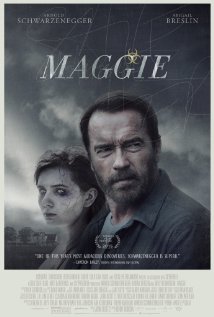
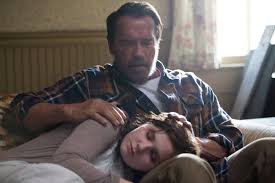
Maggie is a zombie movie unlike any I have ever seen. John A Scott III’s debut screenplay is slow and tender, warm and sad. There’s only minimal lurching and wounding, and the bullets put through the zombies’ heads are shot reluctantly and with compassion. Maggie (Abigail Breslin) is a wayward teen, who, having run off to explore the bright lights of the big city, calls home to ask her father (Schwarzenegger) for help. She has been infected and is in quarantine.

This particular dystopia is more humane than most. Infected people are assessed and then allowed home to live out the remainder of their ‘human’ days. When the time comes, they are supposed to return to quarantine, where they will be dispatched via lethal injection. Police patrols have lists of those on furlough, and round up those whose families struggle to give them up. The focus then is not on survival; it’s not about encountering the slavering hoards and protecting what you have from others who want in. Instead, this is the story of a family learning to let go.

There’s not much in the way of backstory or character development – and I think that’s to the film’s credit. Maggie’s likes and dislikes, dreams and fears are just not that important now. She and her family are living in the present, dealing with the day-to-day. We are trusted to engage with their predicament on this human level; the fripperies we use to label and identify are stripped away and we are left with just the basics: love and empathy and muddling-through. I thought it was wonderful. Even the dragged-out ending (Now? No. Now? Not yet. Now?) served to underline the hardship: how do we know when the time is right; when are we ever ready to accept a loved one’s death?

So this is a zombie movie, yes, but it’s also unlikely to appeal to those in search of frights and thrills. It’s more of an allegory, really, for the way we deal with disease and disaster. (And yes, I know that zombie movies are usually allegorical to some degree, but this is one more so. It’s Allegory Plus.)

It’s definitely worth watching.

4 stars

Susan Singfield