
A Play A Pie and A Pint

Righ Lasgair: The Fisher King

28/10/25

Traverse Theatre, Edinburgh

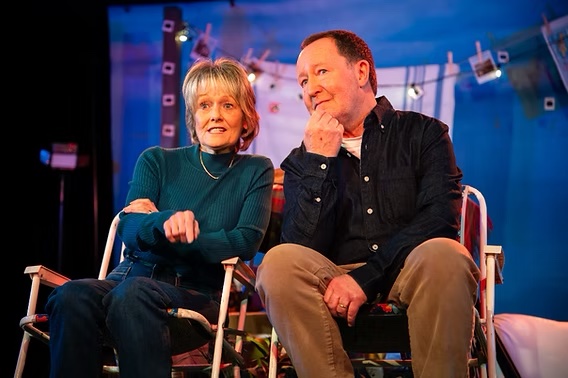
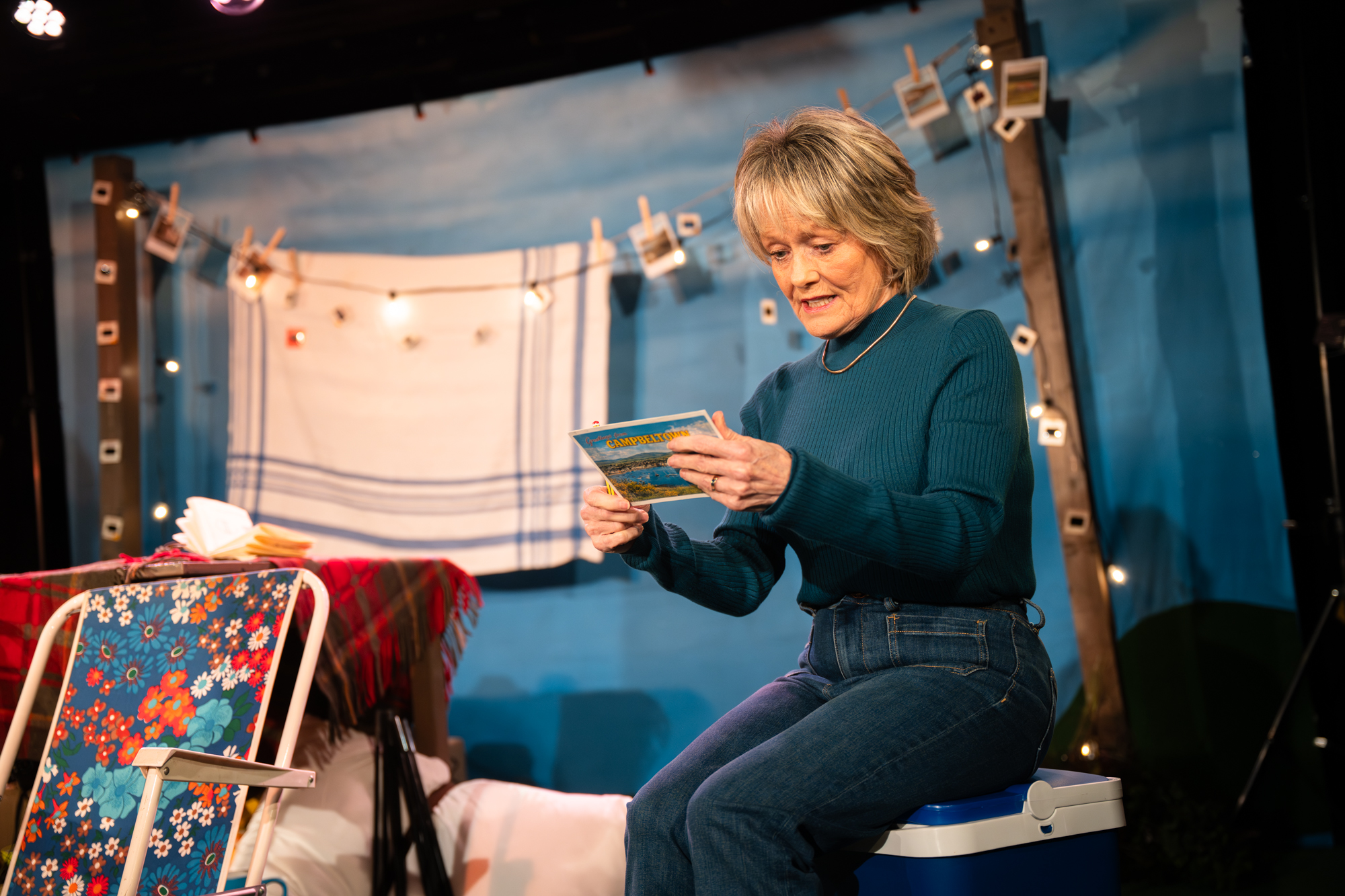
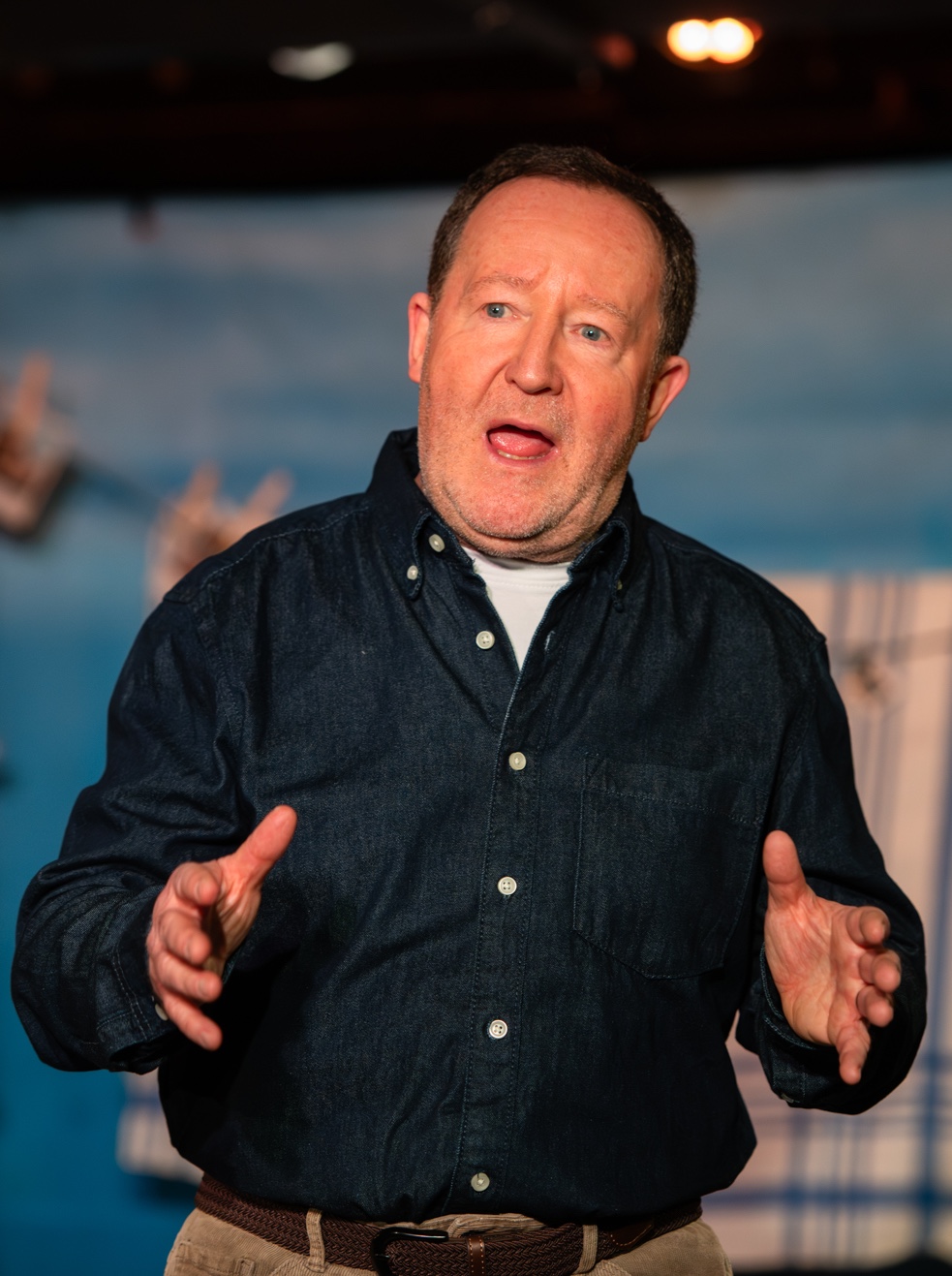
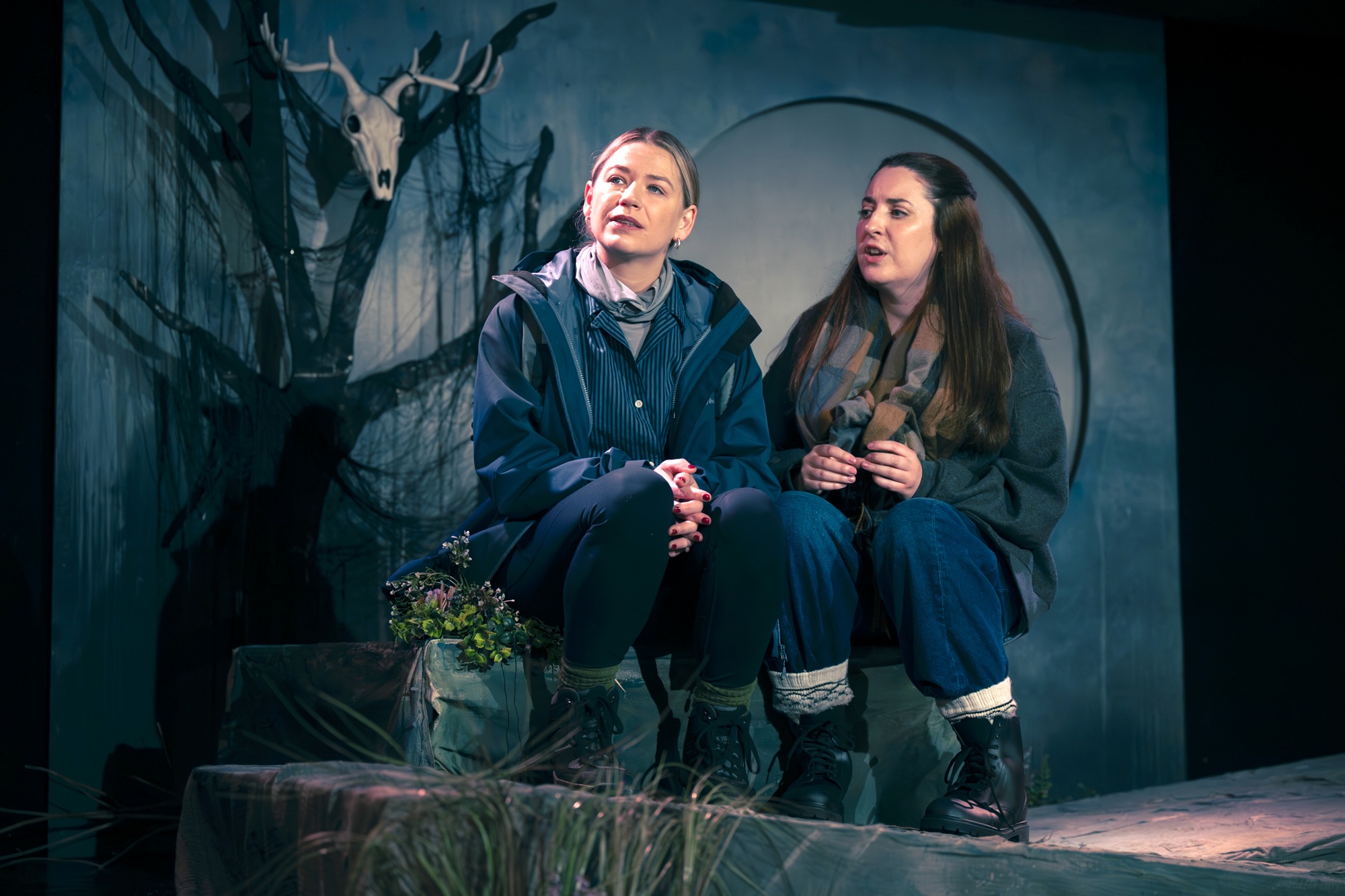
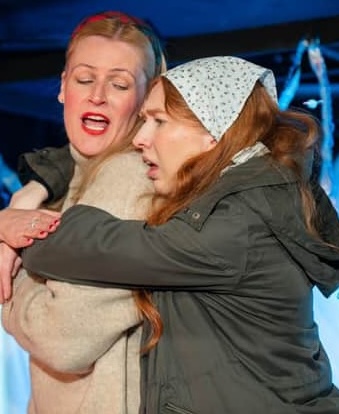
Lexie (Fiona MacNeil) and Effie (MJ Deans) have lived on the Isle of Lewis since childhood. At Lexie’s insistence, they have set off on a fishing trip to the remote Loch that she used to visit with her late father, back when she was wee. Effie has gone along with the idea, but it’s clear from the get-go she’s really not suited to the outdoor life, complaining every step of the way and much more interested in singing and chatting nonsense than pressing on with the hike.

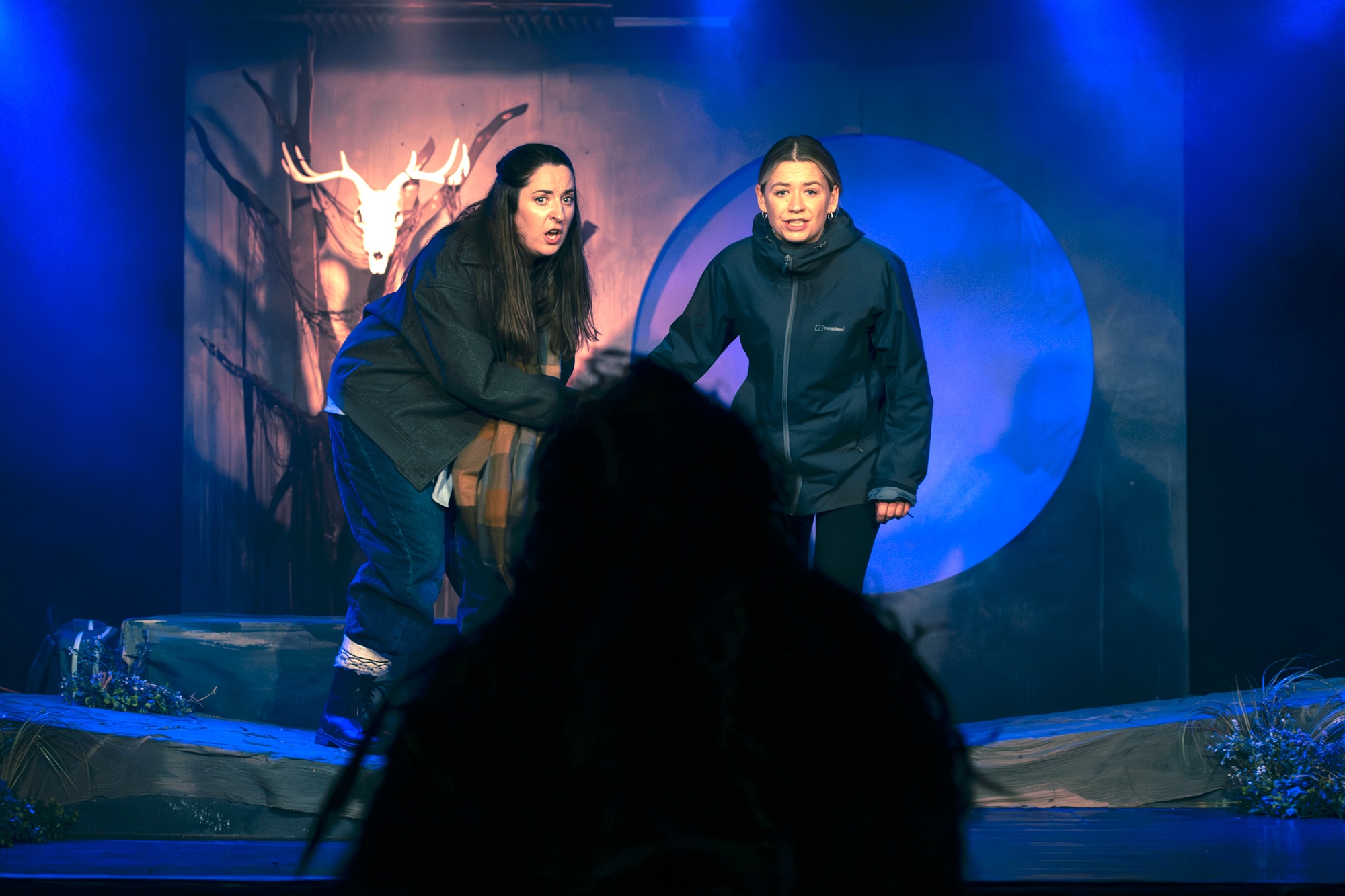
On the long trek to their destination, Lexie spins yarns about some of the mysterious mythological creatures that are connected with this mountainous landscape. Chief among them is the elusive Righ Lasgar: The Fisher King, a creature renowned for luring his victims to their bloody deaths by apparently granting their heart’s desire. Lexie is desperate to catch fish today and, after a distinctly unpromising start, the two women begin to reel them in…

Kenny Boyle’s understated supernatural folk tale would, on the face of it, suggest that it’s an appropriate subject this close to Hallowe’en, but perhaps it’s too understated for its own good: the duo’s bickering is mostly played for laughs, which means that a late-stage attempt to shift the tone abruptly into the realms of terror really doesn’t come off.

There are other issues. While of course it’s commendable to incorporate Gaelic elements into new Scottish writing, reeling off words in the language and then repeating them in English feels ponderous. Non-Gaelic speakers should be able to work out what’s being said from the context. Furthermore, Lexie’s late-stage ‘revelation’ has no impact because it’s something that’s already been announced much earlier in the play.

MacNeil and Deans give this their best shot, and Heather Grace Currie’s set design cleverly evokes the great outdoors in the tiny space of Traverse 2. The costuming of the titular creature (played by Adam Buksh) is also pretty impressive but, sadly, it fails to generate the necessary chills to make that final gear-change work.

2.8 stars

Philip Caveney

Maybe Tomorrow

14/10/25

Traverse Theatre, Edinburgh

Glamour and strife! Bigger than life!”

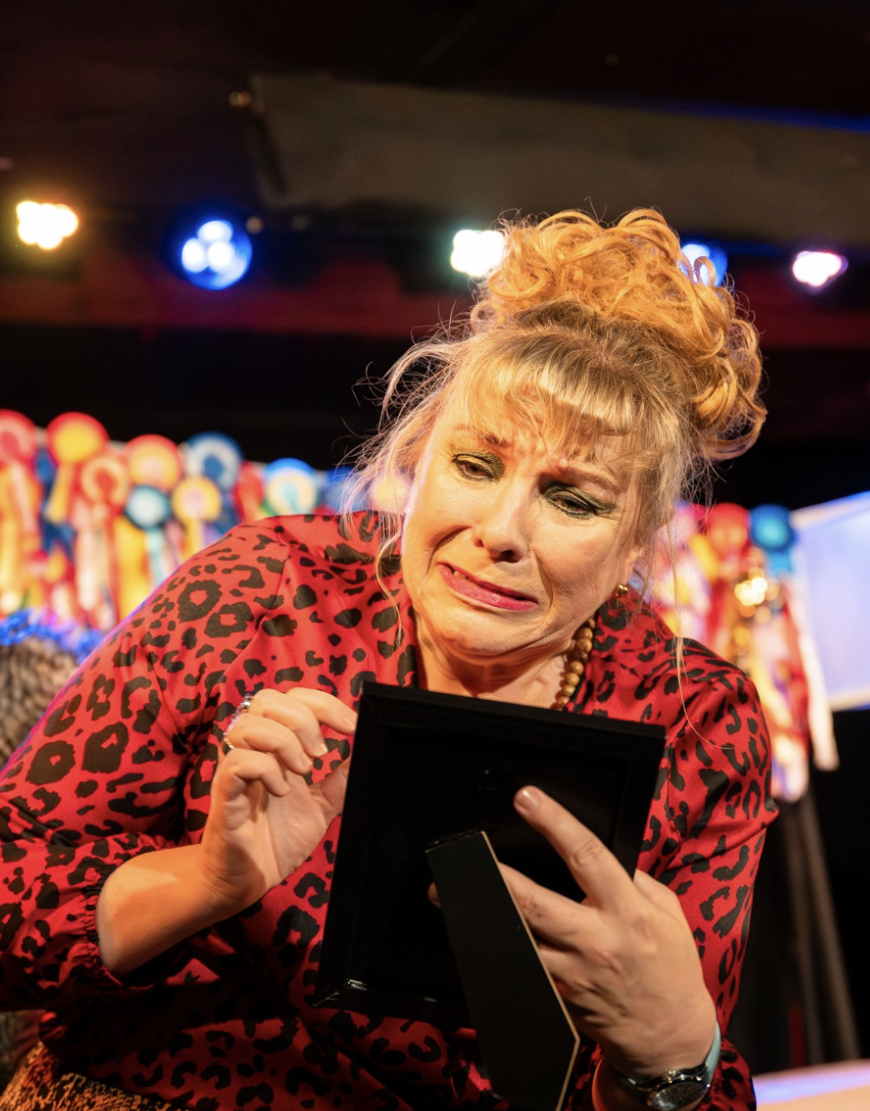
Siân Silver (Liz Ewing)’s showbiz career is careering towards the end of Sunthorpe-on-Sea’s dilapidated pier, where the seventy-five-year-old singer is gamely touting her outmoded razzle-dazzle to ever-smaller audiences for a measly £250 a week. It’s a long way from the stardom she dreamed of, but at least she’s still on stage, performing – until the theatre manager tells her she’s no longer required. Siân doesn’t know who she is if she’s not sparkling in the spotlight. What’s left when even the dregs she’s settled for are so cruelly stripped away?

Forced to confront her failure, Siân is visited by the ghost of Siânny past (Julia Murray). Young Siânny is brimming with hope and vitality, urging her future self to embody the spirit of her long-time heroine, Little Orphan Annie. Instead of bemoaning her hard-knock life, Siânny thinks Siân should focus on making the most of the years she has left. “Maybe now it’s time…”

At first, Siân’s having none of it but she soon realises she has nothing to lose. Why not step into the plucky red-head’s ankle socks and Mary Janes? After all, why should little girls have all the fun? The role of Annie is wasted on a ten-year-old! If she has to bow out, then she’ll do it on her own terms…

Written by Hannah Jarrett-Scott with music and lyrics by Brian James O’Sullivan, Maybe Tomorrow is a decidedly quirky piece of musical theatre, rife with heart and humour. The songs work well, paying homage to Charles Strouse’s original score without allowing it to overwhelm this play. Under Lesley Hart’s direction, Ewing shines as the protagonist (and not just because of her sequinned costumes), imbuing the fading performer with pathos. Siân is talented but unappreciated: of course she’s resentful; of course she’s angry at her producer-ex, who promised her centre-stage but left her in the wings. Murray provides excellent support, not only as the vivacious Siânny, but also as a series of minor male characters, with an impressive range of hats, accents and, um, farts.

An ageing Annie-fan myself, I enjoy this show immensely. It’s undeniably absurd, but somehow rather beautiful. It feels like the start of something that could easily evolve into a full-length musical production, where both themes and characters would have more space to breathe. Why not pop along to the Traverse this week and see for yourself? “You’re gonna have a swell time.”

4 stars

Susan Singfield

Cheapo

07/10/25

Traverse Theatre, Edinburgh

Last time we saw this play – back in December – I was a little confused by the title. This version comes with a strapline that makes things a whole lot clearer – “Cheapo: chess slang for a primitive trap, often set in the hope of swindling a win from a lost position.”

Cheapo‘s previous appearance at the Traverse was part of the annual 4PLAY programme, where four new plays are showcased over four nights. It was our favourite of last year’s quartet, and I’m delighted to have the chance to watch this new iteration.

Katy Nixon’s script still resonates: her writing is spare and succinct, capturing the teenage characters’ raw emotions with devastating precision.

And their emotions are very raw. At a recent party, something dreadful happened to Kyla (Yolanda Mitchell) and she needs Jamie (Testimony Adegbite) to help her deal with the fallout. But Jamie isn’t prepared to renege on what he’s told the police – and he doesn’t understand why Kyla wants him to. In a not-especially-subtle-but-nonetheless-effective metaphor, they play a game of chess, arguing about their possible moves while fighting to avoid checkmate. The mounting tension is expertly undercut by some quirky flights of fancy, as the duo imagine how their lives might have played out in alternate universes – before coming back down to earth with a bump, still mired in the nightmare of their current reality.

The set, by Gillian Argo, is boldly emblematic: a crooked panel of black and white checkered flooring spreads up on to the wall, mirroring the chess board Jamie places on the table. A red carpet appears to signal the dangerous path the pair are on; again, the colour is repeated, this time in the takeaway food cartons that litter the table. It’s cunningly designed, with monochrome stools resembling giant pawns and strip lights that double as, um, light sabres.

Brian Logan is in the director’s chair this time, and the piece is perfectly paced, with long moments of stillness and contemplation punctuating the frenetic teenage energy. The movement is dynamic and I especially enjoy the dance sequences, as well as the way Kyla moves like a chess piece in the imaginary court scene.

Adegbite and Mitchell are perfectly cast: his earnest geek nicely contrasting with her streetwise façade. The exploration of misogyny and racism feels credibly rooted in their characters’ teenage experience, and their respective vulnerabilities and coping mechanisms are skilfully embodied.

Despite dealing with distressing themes, Cheapo is a witty and enjoyable piece of theatre, provocative but ultimately hopeful, that red carpet perhaps signifying something more positive than it first appears: an escape route for our young protagonists.

4.7 stars

Susan Singfield

FEIS

23/09/25

Traverse Theatre, Edinburgh

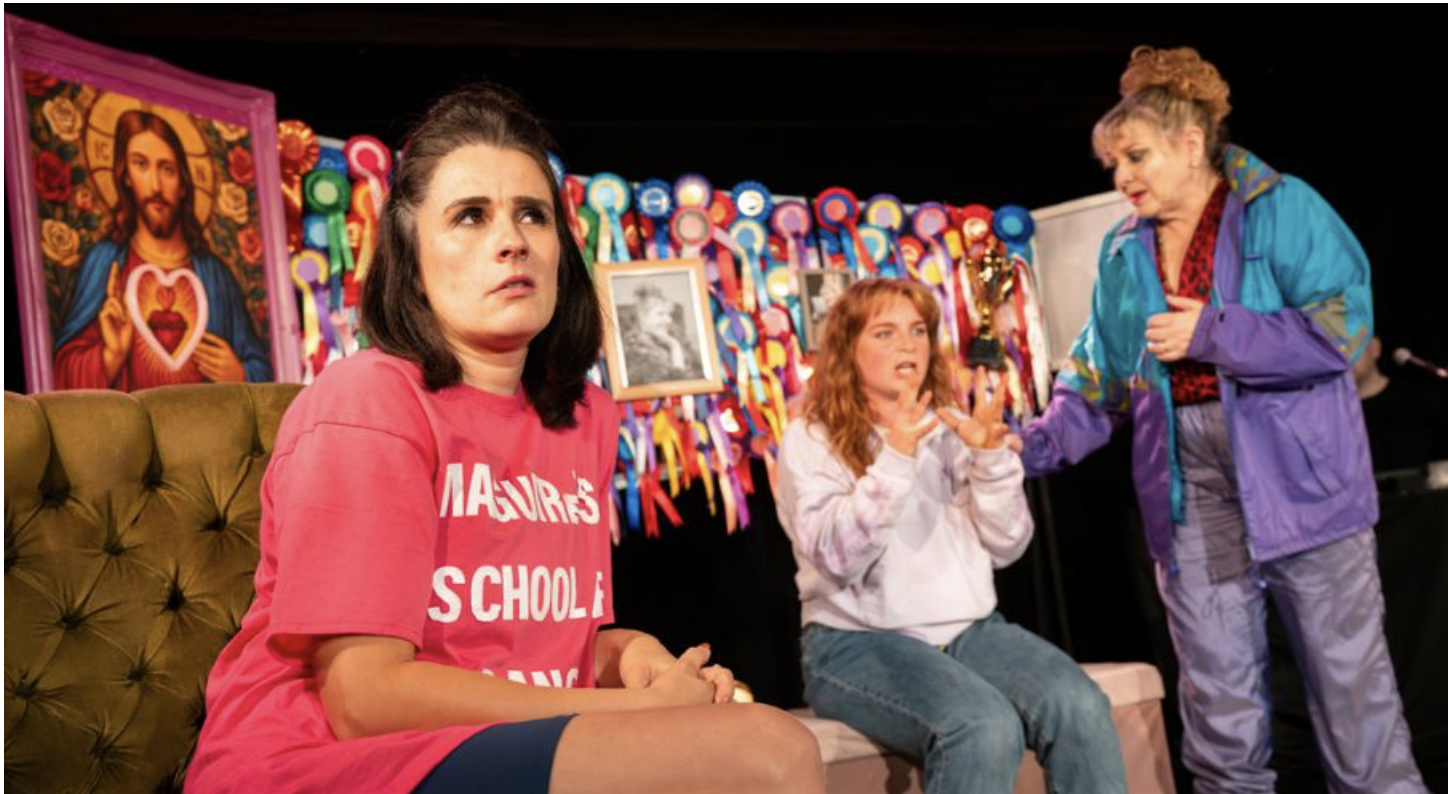
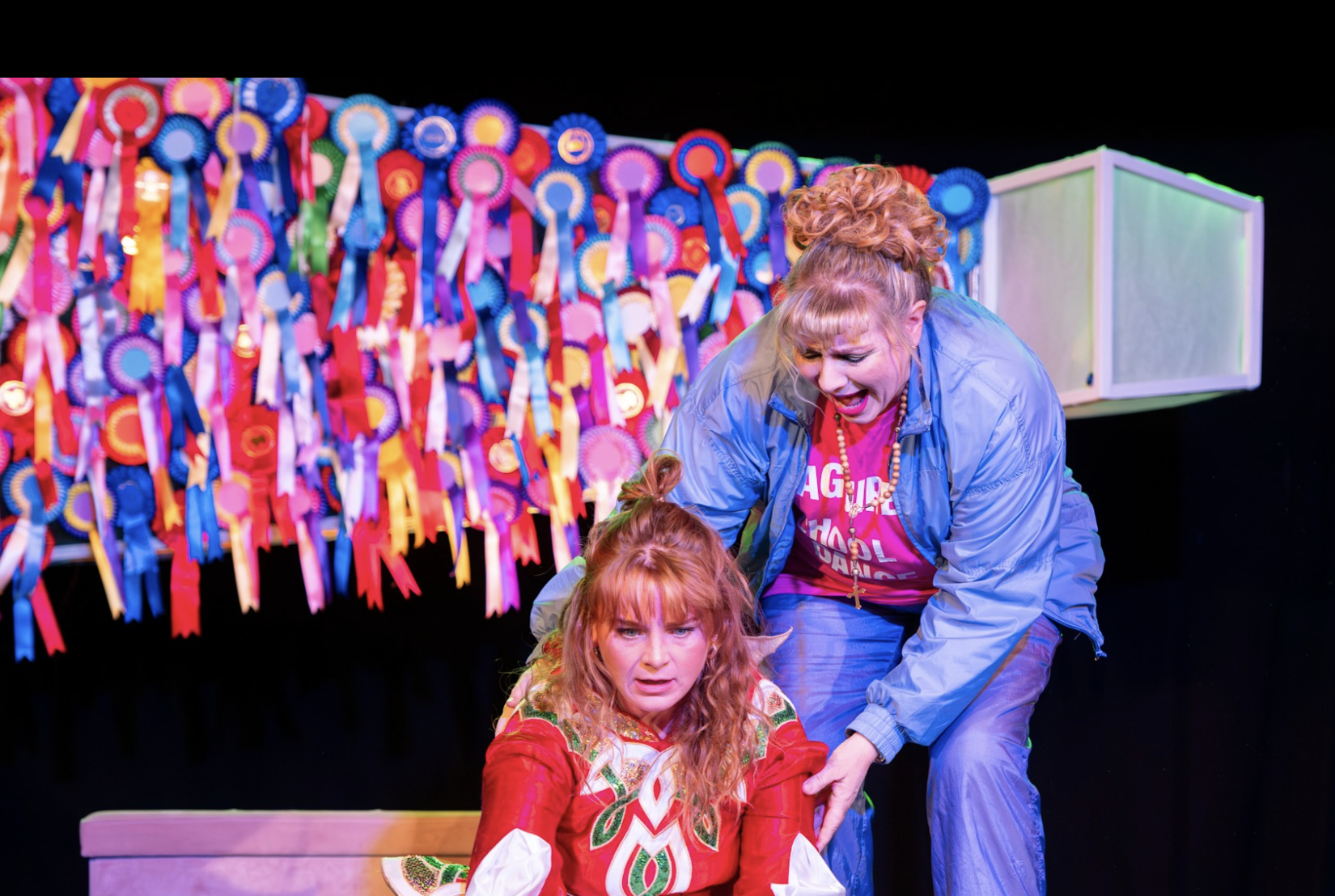
All is not well at Maguire’s School of Irish Dance. Back in the day, this Glasgow-based outfit was seen as a leader in its ghillie-footed field, when Deirdre (Louise Haggerty) won enough rosettes to paper the walls of her teenage bedroom. Decades later, the school’s fortunes are flagging disastrously and she’s been reduced to offering a ‘VIP’ service, performing online for an exclusively male clientele, who are not above offering extra money for her used socks.

Deidre’s mother, Maura (Julie Coombe), is blissfully unaware of these new measures but, when her teenage granddaughter, Aoife (Leah Balmforth), falls flat on her face at the 2023 Irish World Championships, things look pretty grim. Then Maura manages to scare off the school’s only other decent dancer and it’s clear that something has to give…

Billed as a dark comedy – though perhaps the term ‘farce’ might be more appropriate – FEIS (pronounced fesh) is a cautionary tale about ambition and the lengths to which some people are prepared to go to in oder to secure a win.

Writer Anna McGrath pursues the laughs with a vengeance, though it has to be said that the various twists and turns of the story often defy credibility and, in one particular instance, a real-life star of the Irish dance world has a pretty heinous accusation levelled against him.

Haggerty gives the lead role her all, even throwing in what looks to this novice like an impressive bit of Irish-dancing, but I remain unconvinced that anybody would go to the lengths Deidre does in order to attain her objective. Balmforth feels severely underused throughout, while Coombe’s is obliged to deliver a series of fat-shaming comments at an unseen dancer that feel somewhat at odds with contemporary thinking. (This may be the point but it feels ill-judged to me.)

Musician Brian James O’ Sullivan adds some spirited jigs and reels to the proceedings. Michael Flatley, meanwhile, was unavailable for comment.

3 stars

Philip Caveney

Wallace

10/08/25

Traverse Theatre, Edinburgh

“The Scottish can’t rap!”

Thus proclaims one of the three-strong cast of Wallace, shortly before they launch into their opening salvo and prove that – hell, yes – they really can! This intriguing production, which launches the autumn season of A Play a Pie and a Pint, is obviously inspired by the success of Hamilton. It proudly proclaims that Scottish history is just as deserving of a contemporary retelling as anything that ever went on in the USA and, in that ambition, it succeeds big time.

Three friends chatting over drinks in a bar become extra-animated when one of them claims to be an actual descendent of William Wallace – you know, the guy from Braveheart. This is the precursor to a deep dive into the hero’s history, as the three players musically discuss the known facts, the probable myths and even the possibility that (whisper it) WW might not have existed.

Written by Rob Drummond, with music and lyrics by Dave Hook (who also performs alongside Patrica Panther and Manasa Tagica), Wallace offers an audacious exploration of Scotland’s most celebrated warrior, all backed by a pumping four-four beat. The trio of performers switch effortlessly between characters merely by throwing on a jacket or a hat, depicting Wallace’s supporters as well as those who fought against him in his doomed bid for Scottish independence.

Hook stays in the role of Wallace, while Tagica does a splendid job of portraying Edward Longshanks, complete with dark glasses and a red fur coat. Panther, after pointing out that women have been virtually written out of history, takes on the swaggering persona of Robert the Bruce with evident relish.

Whip-smart, caustically funny and actually pretty informative (I come out knowing a lot more about the titular Scot than I previously did), Wallace snaps from song to song and from argument to argument like the proverbial tiger on vaseline, holding the audience spellbound right up to the final triumphant chord. Snappily directed by Orla O’Loughlin, this is a perfect example of how to make history vibrant and compelling enough to dazzle a contemporary audience.

It’s pure dead brilliant.

5 stars

Philip Caveney

Ivor

15/04/25

Traverse Theatre, Edinburgh

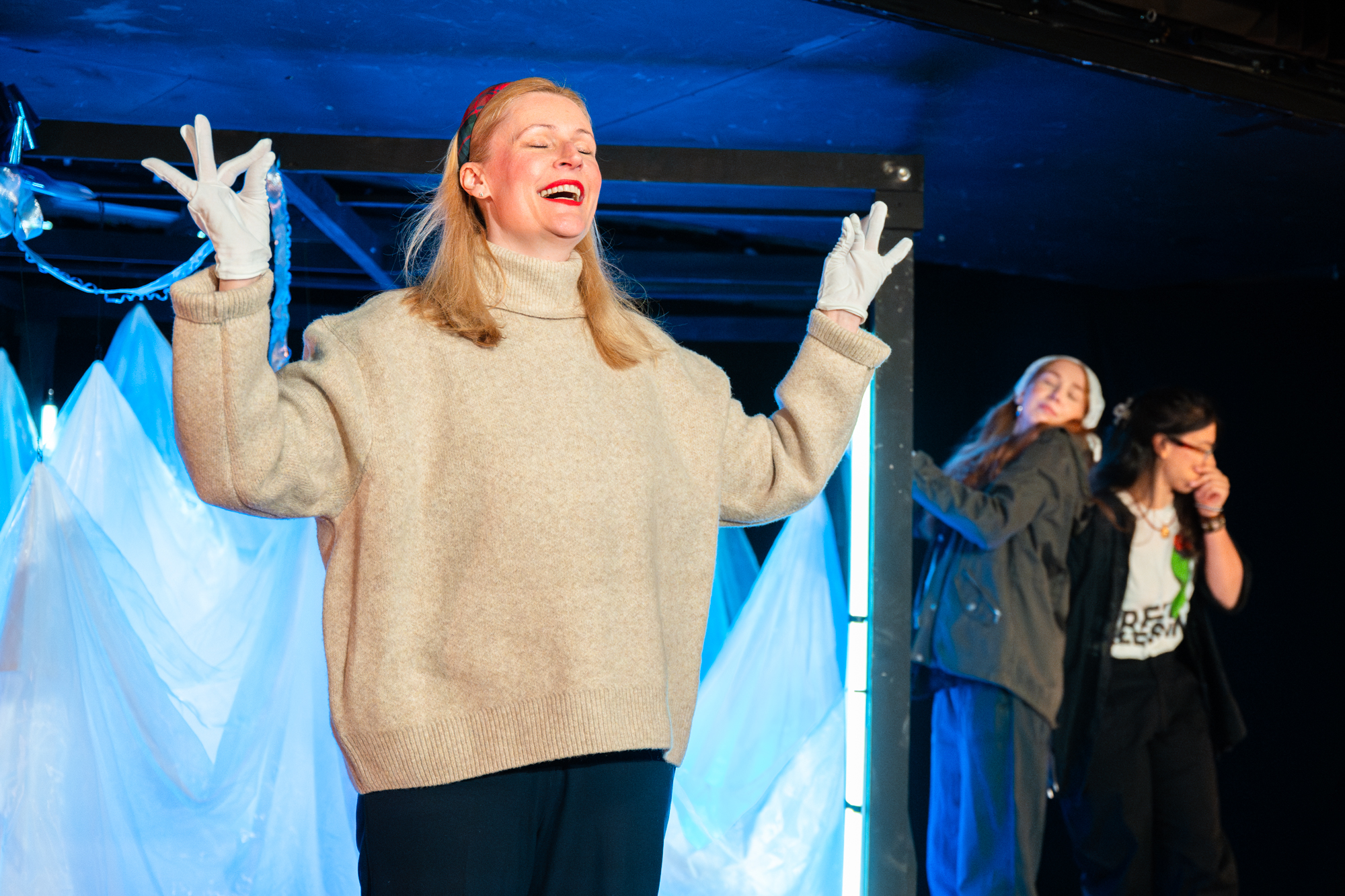
It’s Scarlet’s twenty-first birthday, and she’s promised to spend it with her mum. Single-parent Sarah (Laura Harvey) is beyond excited: she’s not enjoying her empty nest, and is determined to go the extra mile for her student daughter (Alice Glass). A landmark occasion requires a significant gift – and what could be more significant than an actual iceberg?

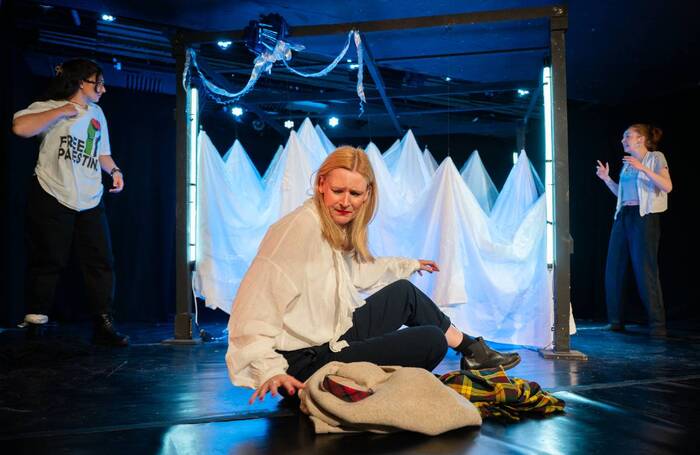
The titular piece of polar glacier – “Ivor” – dominates both the family kitchen and the Traverse 2’s stage: a great big hulking metaphor, displaced and dangerous.

Scarlet’s not exactly delighted by the surprise. Not only is it weird, it’s also way too much. She feels suffocated by her mother’s ridiculous largesse. How now can she break the news that, in fact, she won’t be staying here after all? That she’s planning to go to London with her girlfriend, Jude (Betty Valencia), and has only popped in to collect something…

Jennifer Adam’s sprawling script encompasses ecological disaster, terrorism and helicopter parenting. The creaking, leaking iceberg symbolises more than the melting ice caps: it’s a reminder of the enormity of the task ahead for Jude and Scarlet, young women determined to save the world. Meanwhile, the petty squabbles and hypocrisies between the three loom just as large. It’s a lot to pack in to fifty minutes’ playing time and, although director Catriona MacLeod succeeds in pacing it well, I can’t help wishing there were a little less here. Valencia’s performance is strong, but I think the play would be more compelling without Jude, with a tighter focus on the mother-daughter dynamic, set against the ever-looming climate crisis.

Heather Grace Currie’s clever design almost fills the small stage with an Ivor comprising huge white sheets teased into peaks, which is quite an achievement on a small budget. Unfortunately, this affects the sight-lines, and I wonder if a more abstract construction – an up-lit empty frame, for example – might serve the piece better.

The idea behind Ivor is pleasingly quirky but, in its current form, it doesn’t really suit the PPP running-time. Given longer to develop its themes – Jude’s family’s experiences in Colombia in particular need a lot more attention – this could be a really fascinating play, with much to say about the troubled times we live in.

3 stars

Susan Singfield

Night, Idiot

12/04/25

Traverse Theatre, Edinburgh

Night, Idiot promises to be a breezy comedy of manners, with a strong focus on inter-generational differences. Dani (Zoë Bullock) and her boyfriend, Paul (Andrew Barrett), have just moved into a new flat, and they’ve barely started unpacking when Paul’s mum, Ruth (Pauline Lynch), announces a visit. Zoë’s nervous: she’s only met Ruth once before and that didn’t go well. After all, it’s hardly Zoë’s fault that Paul is still working in a coffee shop, or that his great novel remains a concept rather than anything as concrete as a finished manuscript. So it’s Zoë’s job as a paralegal that pays the rent and bills; so what? That’s up to her and Paul. But Ruth has other ideas: she wants her son to fulfil his potential. And, more importantly, she wants grandchildren. Soon.

The first third is very funny, if sometimes a little far-fetched (surely no one is ever as blunt as Ruth in their criticism of their child’s partner?). But something is clearly troubling Dani…

And then things take a darker turn…

Directed by Shilpa T-Hyland, Night, Idiot is a dynamic piece of theatre: poignant, engaging and full of twists and turns. The script – by Bullock – is clever, offering clear insight into Dani’s mental anguish as she obsessively replays events, dwelling on every Sliding-Doors moment and pondering what might have been. These glimpses into the hypothetical are slick, and I like the fact that Bullock doesn’t offer any easy answers for us or Dani, and nor does she shy away from difficult themes.

Bullock and Lynch make an appealingly-fiery central duo, while Barrett ensures Paul is a sympathetic character, despite his uncommunicative nature and ultimate cowardice. Bullock in particular gets to show off her acting chops: watch out for her so-heavily-signposted-this-isn’t-a-spoiler rendition of Shrek and you’ll see exactly what I mean.

Night, Idiot is an ideal piece for A Play, A Pie and A Pint, with lots packed into the short running time. There’s emotional heft here and I find myself really rooting for the characters. Zoë Bullock is clearly one to watch.

4.3 stars

Susan Singfield
Dancing Shoes

01/04/25

Traverse Theatre, Edinburgh

01/04/25

Traverse Theatre, Edinburgh

Lunchtime theatre generally comes with built-in limitations – small casts, modest sets, humble props. But sometimes a production is so chock-full of joy that it effortlessly transcends all barriers. Dancing Shoes, written by Stephen Christopher and Graeme Smith and directed by Brian Logan, is a perfect example: a ‘little’ play that has a lot to say about male friendship and the pressures of trying to escape the stigma of addiction.

We are at a meeting of a support group somewhere in Edinburgh, where recovering drug addicts Craig (Ross Allan) and Jay (Craig Mclean) are eager to introduce themselves and tell us all about their friend, Donny (Stephen Docherty). He’s an older man, something of a loner, who – left to his own devices for far too long – eventually succumbed to the powerful lure of alcohol. Since his mother’s death, he’s been drinking several bottles of wine a night and has become enveloped by an overpowering sense of shame. 

But after visiting the group, he’s managed to step away from temptation and is determined not to slip back into his former habits. At one meeting, the three men discuss the things that really fire them up. Donny makes a surprising admission: he loves to dance. And when Jay gets out his phone and innocently films Donny, leaping around his apartment to one of his favourite tunes, none of them is quite prepared for what happens next…

From this simple premise, a delightful story emerges – an uplifting and heartwarming tale about the pursuit of personal happiness. The script is fast-paced and acerbic, the men’s conversation often laugh-out-loud-funny, yet utterly authentic.

The story is anchored by three delightful performances. Docherty reveals Donny’s inner self, forever peeking cautiously out from behind a veneer of respectability, but simultaneously compelled to reach for new horizons. Allan is terrific as the deadpan, fatalistic Craig, all too aware of how lives can sometimes go awry. And McLean is wonderfully enthusiastic as Jay, constantly looking for ways to turn the latest events to his own advantage. These are not caricatures but fully-fleshed human beings, who carry the scars of their respective addictions deep within them.

The packed audience at this A Play, A Pie and A Pint event reward the performers with a heartfelt ovation and I’m in total agreement with them. Anybody in search of an uplifting afternoon of theatre should slip on their spangly dancing shoes and quickstep their way to the Traverse.

5 stars

Philip Caveney

Wasps

25/03/25

Traverse Theatre, Edinburgh

Cameron Forbes’ Wasps, the latest offering from A Play, A Pie and A Pint, buzzes along busily, like its  hymenoptera lookalike. Anchored by a gutsy performance from Yolanda Mitchell, this tragic coming-of-age monologue has quite a sting in its tail (sorry, not sorry).

Teenager Rianne (Mitchell) just wants to fit in. At school, she’s perfected the art of invisibility: if she dresses right, wears her make-up exactly so, earns just enough detentions, she can move through the corridors without attracting any attention at all. But there are downsides to never being seen. For one thing, her crush, Oran, doesn’t seem to realise she exists. And for another, not even her best friend notices when her life implodes…

I’m not usually a fan of so-called inspirational quotations but “what doesn’t kill you makes you stronger” serves as a pretty decent précis of Wasps‘ central message. And I mean that in a good way. Rianne faces some really serious problems – including a confrontation with her spheksophobia -which she has to dig deep to face up to. And yes, she emerges battle-scarred, but at least she’s no longer desperate to disappear. She’s bolder, braver and ready to take up space. A bit more… wasp-like.

Director Lesley Hart ensures that the pace never flags, so that the play has a convincingly propulsive teenage energy, and Mitchell does a wonderful job of conveying both Rianne’s turbulent emotions and her evident disdain for many of the people in her life, evinced by her scathing impressions of them.

Gillian Argo’s set is visually arresting. I like the hexagonal construction, suggestive of a wasp’s nest, and the flickering projections of the worker wasps . However, I’m not always fully convinced by the wasp analogy; the comparison is perhaps stretched a little too thin. I’m also left with a couple of nagging questions about the plausibility of some of what occurs. (I can’t elucidate without spoilers but let’s just say that, though social care in the UK is undoubtedly in dire straits, Rianne is a vulnerable child and her situation would surely be flagged up; she wouldn’t be left to deal with it entirely alone.)

Nonetheless, this is a sprightly, engaging piece of drama, with some lively writing and a spirited delivery – a worthy addition to the PPP canon.

4 stars

Susan Singfield
Eilidh, Eilidh, Eilidh

18/03/25

Traverse Theatre, Edinburgh

This three-hander, written and directed by Lana Pheutan, explores the rural housing crisis through the lens of drunken cousins, Eilidh (MJ Deans) and Eilidh Bheag (Chelsea Grace). The two women are in their late twenties, ready to embrace their adult lives but thwarted by the prevalence of AirBNBs on their native island, Skye. “I’m a teacher!” wails Eilidh. “I deserve my dream home…” While her sense of entitlement is quite comical – she’s been working for just a few years and her unemployed boyfriend isn’t even looking for a job – she’s not wrong in her assessment of a broken housing market, where flats are snapped up by remote investors before locals can even get a look in. But living back at her mum’s is starting to wear her down…

Her solution? To persuade Eilidh Bheag to break into a holiday let with her and then… um… Well. She hasn’t really worked out what should happen next. It just seemed like a good idea half an hour ago, when the pub landlord refused them a lock-in.

MJ Deans imbues Eilidh with lots of sass and self-righteousness, while Chelsea Grace’s Eilidh Bheag provides a calmer foil, tempering the former’s outrage with a few gentle home truths. After all, Eilidh Bheag is the one who’s stayed on Skye, while her cousin’s been living the high life in Glasgow for the past eight years. How dare she come back to the island and accuse her of pandering to tourists, being “part of the problem”? “You only care when it directly affects you,” snaps Eilidh Bheag at last, tired of being hectored. 

The altercation is disrupted by the unexpected arrival of Miss Nicille Mhicheil (Annie Grace), an elderly local resident. The dynamic changes, and an inter-generational element is added to the polemic, injecting more nuance. 

Pheutan’s direction is sprightly and the pace never drops, although the dialogue occasionally sounds a little too much like rhetoric, the issues taking precedence over the characters and their immediate situation. On the plus side, the occasional use of Gaelic serves as a reminder of the culture the community stands to lose, and also sounds very authentic (I’m from North Wales, so the pattern is a familiar one: it feels very natural to me to speak English with a smattering of Welsh phrases). 

Eilidh, Eilidh, Eilidh succeeds in raising awareness of an important problem – and even moots an answer, albeit a little simplistic.  All in all, this is a heartfelt and ultimately heartwarming piece of drama. 

4 stars

Susan Singfield