Film

Our Ladies

04/09/21

Cineworld, Edinburgh

Our Ladies is a joyous film, both raucous romp and celebration. It’s a coming-of-age tale, centring on six teenage girls, caught on the cusp between childhood and adulthood. It’s 1996 and they’re straining at the leash during their final few weeks at Our Lady of Perpetual Succour Catholic School in the Scottish Highlands. Fort William is a beautiful town, but it is very remote, and the girls are desperate for new experiences. So, when Sister Condron (Kate Dickie) organises a trip to Edinburgh, they’re eager to go. Okay, so they’ll have to participate in a choir competition, but so what? There will be a few sublime hours in the afternoon when they can do whatever they want: go shopping, go dancing, get pissed, get laid.

Finnoula (Abigail Lawrie), Chell (Rona Morison), Kylah (Marli Sui), Orla (Tallulah Greive) and Manda (Sally Messham) are the cool girls, the natural inhabitants of the coach’s back seat, with vodka in their Coke bottles and cigarettes in their bags. They’re on a mission to take Edinburgh by storm. Finnoula has her own agenda: she wants to experiment a little away from the confines of home, while Kylah has a list of obscure CDs she needs to buy. Chell’s just along for the giggles, and Manda doesn’t care what happens, as long as she’s with Finnoula. Leukaemia survivor Orla has the most specific aims: she wants to buy some thigh high boots and have sex, so that she can stop being the only virgin in the crowd. One thing’s for sure, none of them wants anything to do with straight-laced doctor’s daughter Kay (Eve Austin), with her Head Girl badge and shiny, mapped-out future.

What I like about Michael Caton-Jones’s film (based on Alan Warner’s novel, The Sopranos) is the gloriously realistic and non-judgmental way the teenage girls’ sexuality is portrayed. They’re horny as hell: they’ve all had sex with local hearthrob Dickie Dickinson (Alex Hope), and rumours of sailors coming ashore send them rushing to the town’s one nightclub, on the lookout for fresh meat. On the coach, they flash their bras at passing drivers and hold up signs saying, ‘Shag Me.’ I’ve read reviews that see this as problematic in a post-MeToo world, but I just can’t agree. The girls’ overt sexuality isn’t the problem; the issue is the way some adult men exploit it. And that’s shown here, clearly.

There are only a few false notes. Orla’s light BDSM fantasy doesn’t quite ring true, and I’m never really sure why she’s wearing a headscarf over a perfectly lovely pixie cut. She’s had chemotherapy, but her hair has grown back, and it’s beautifully styled, so the moment of revelation when she removes the scarf to show her new boyfriend, Stephen (Martin Quinn), doesn’t make any sense.

That aside, this is a great little movie. Denis Crossan’s cinematography perfectly captures the majesty of both Edinburgh and Fort William (Loch Linnhe’s singular charm is particularly breathtaking). There is, however, one abiding mystery: how did they manage to film the Edinburgh sequences at the end of my road without me even noticing?

The young cast are wonderful, vivacious and wild, and I’m caught up in their seize-the-day revelling, with its undercurrent of self-knowledge, that this might – for some of them – be as good as it ever gets.

4.1 stars

Susan Singfield

Annette

03/09/21

Cineworld Edinburgh

Director Leos Carax has a reputation for the unusual. Anyone who witnessed Holy Motors (2012) will testify that he loves to embrace the absurd. So Annette would seem like a good fit for him. This surreal rock opera, created by Ron and Russel Mael of Sparks – who themselves are suddenly enjoying some time in the sun after a long sojourn in the ‘whatever happened to?’ file – gives Carax free rein to unleash his bonkers world-view. There are some gorgeous visuals in here, strong performances and several scenes that feel genuinely unique. How ironic then, that what ultimately lets the film down is the songs.

There’s a really upbeat start to proceedings as the cast and crew parade through the streets singing about how excited they are to get this show started. And then it begins…

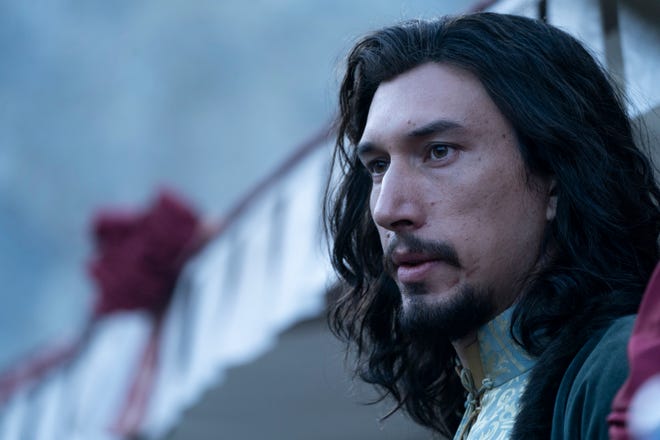
This is the story of Henry McHenry (Adam Driver), a ‘provocative’ stand up comedian who seems to love insulting the poor saps who buy tickets to see his shows. If it’s supposed to be funny, well, it isn’t working for me, but perhaps that’s the point. Henry is in the throes of a passionate love affair with world famous opera singer, Ann Desfranoux (Marion Cotillard), to whom he sings even when they are in the midst of sexual intercourse. Not wanting to be left out, she joins in with him.

But when Henry’s ‘comedy’ career suddenly hits the rocks and Ann’s operatic trajectory continues to soar, in true A Star in Born fashion, Henry becomes ever more Machiavellian in his attempts to bring her down, even after she’s given birth to their daughter, the titular Annette. The child is unusual to say the very least and not just because she appears to be made of wood.

It would perhaps be unfair to give away much more of the plot, but suffice to say that what starts out as very strange becomes increasingly bizarre. So there’s plenty here to keep a viewer entertained.

Which brings me back to the aforementioned songs, too many of which seem to consist of characters singing the same six words over and over again in a minor key. After a while it begins to feel like a particularly irritating ring tone. It also makes me think that the bum-numbing running time of two hours and twenty minutes could easily have been reduced by a good forty minutes, if the Maels had done a bit of judicious trimming.

It’s also doubly bewildering when a final duet between McHenry and his daughter is the film’s undoubted musical highlight, but by that time it feels too late in the day to save it. A shout out is due to the astonishing Devyn McDowell, who kind of steals the film in its closing moments. I think she’ll be a huge star in the future.

Driver also deserves full credit for playing it straight and giving his role total commitment. Cotillard – somewhat underused for reasons that soon become clear – at least gets to sing some classic arias with great skill. (And yes, she does perform them herself.) But the current plethora of four and five star reviews for Annette seem wildly overstated. And much as I enjoyed Edgar Wright’s documentary about Ron and Russell, this is not their finest moment. I fully expected to love this, but in the end, I’m somewhat disappointed by it.

3.2 stars

Philip Caveney

The Nest

31/08/21

Cineworld

Commodities trader Rory O’ Hara (Jude Law) is an outwardly successful businessman. He is happily married to Allison (Carrie Coon), with whom he has two delightful children, his son, Ben (Charlie Shotwell), and stepdaughter, Sam (Oona Roche). The four of them dwell in a lovely home in New York and Allison is working successfully as a riding instructor. All things considered, Rory ought to be content with his life.

But something is bugging him, something he finds hard to deny. He wants…well, more – and he thinks he’s spotted a perfect chance to achieve it back in London, working for his former boss, Arthur (Michael Culkin). After all, it’s the 1980s, an era when any get-rich-quick scheme should be grabbed with both hands and dragged kicking and screaming into submission. This is an opportunity not to be missed!

Before any of his family can utter an objection, Rory has uprooted them and dragged them off to a mouldering mansion in the dark heart of Surrey. Yes, the place is virtually falling down around them, but Led Zeppelin once recorded an album here! Rory sets to work, purchasing a horse for Allison, building a stable for it and doing his utmost to push Arthur towards a lucrative contract with some America buyers he’s encountered. If it comes off, Rory will be rich beyond his wildest dreams. But what he’s clearly lost sight of is the happiness of his own family. Allison is struggling to tame that new horse. Ben is having trouble at the private school he’s been enrolled at. And Sam just feels as though she’s always having to settle for second best.

As Rory’s overpowering drive to be successful at any cost moves into top gear, the O’ Haras start to unravel, and there’s something about the house they’re living in that feels more and more unsettling…

The Nest demonstrates an unusual – perhaps unique – approach to its theme, utilising all the tropes of a contemporary horror movie and applying them to a story about a family in turmoil. The oppressive atmosphere and Richard Reed Parry’s creepy soundtrack continually hint at the possibility of something supernatural lurking in the woodwork, but it gradually becomes clear that the ravenous beast that haunts this home is Rory’s vaulting ambition – that constant yearning for success that he can no longer control.

Rory’s brief visit to his mother (played by the ever-dependable Anne Reid) goes some way to explain how he’s become the venal, boastful creature that he is, but it doesn’t really excuse him, when he can no longer seem to open his mouth without attempting to impress whoever is unfortunate enough to be listening. A horrified Allison witnesses his descent and begins to go off the rails herself.

Both Law and Coon offer superb performances here, capturing the rapid disintegration of the couple’s relationship. Writer/director Sean Durkin helms the piece with great control, gradually racking the tension up another notch as he steers his ship into tragedy. And as for those supernatural possibilities… well, there is one thing here that is never rationally explained – and it will play on your mind after you’ve left the cinema.

4.2 stars

Philip Caveney
Censor

23/08/21

Cineworld, Edinburgh

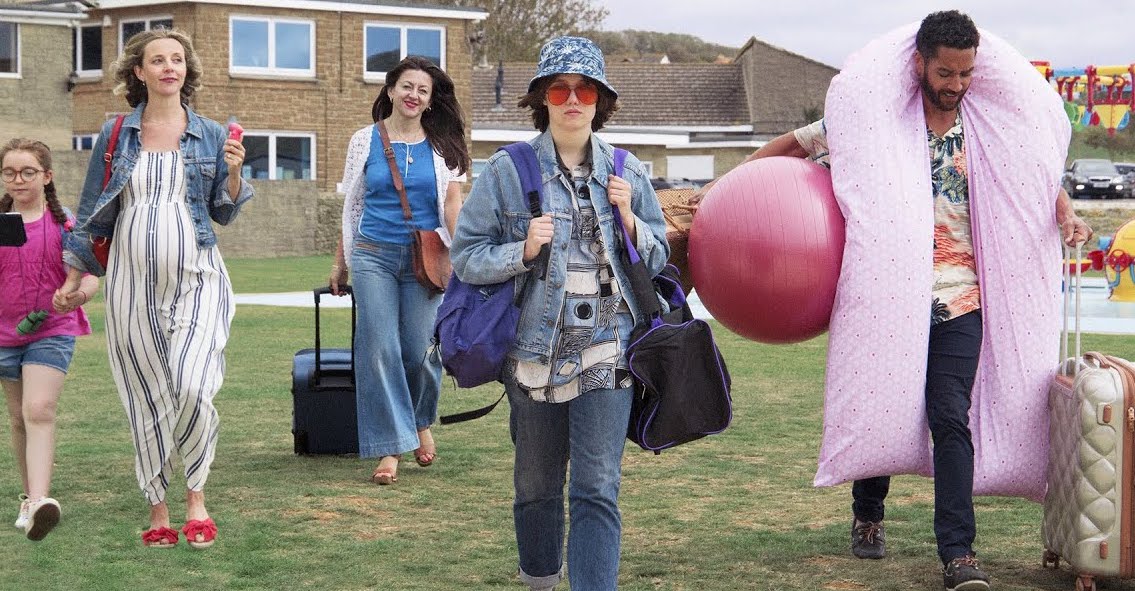
It’s 1985, the UK is in the midst of Thatcherism and the era of the ‘video-nasty’ is casting a pervasive grip on the public imagination. Enid (Niamh Algar) works as a censor – presumably for the British Board of Film Classification, though it’s never spelled out. Enid’s daily routine obliges her to suffer through a seemingly endless supply of filmed rapes, murders and general carnage, occasionally making notes as she does so (such as suggesting that a display of eye-gouging might be cut down a little). Her colleague, Sanderson (Nicholas Burns) tells her she’s too diligent, that if it were down to him, he’d pass the lot without a qualm, but Enid wants to ensure that she takes every care to protect the public. Because such violent images can be harmful, right?

Enid also has something lurking in her past, the mysterious disappearance of her sister, Nina, when they were children, now an unsolved ‘cold case.’ So when Enid is asked to look at a film by mysterious director, Frederick North (Adrian Schiller), she’s deeply disturbed to discover that some of the details in his screenplay seem to eerily recall what actually happened to her and Nina back in the day, details that she has suppressed for years. And then she meets North’s sleazy producer Doug Smart (Michael Smiley), and the memories of her childhood trauma start to crowd in on her consciousness. Soon, she is having trouble differentiating between what she sees on the screen and what’s really happening…

This is writer/director Prano Bailey-Bond’s first full-length feature and she handles it with verve and assurance. My abiding fear was that a twenty-first century feature that clearly references infamous 80s film-makers like Dario Argento and Lucio Fulvi would feel too much like a director trying to have her cinematic cake and eat it – but, while it’s probably fair to say that there is some of that about Censor, it’s to Bailey-Bond’s credit that she manages to navigate those murky X-rated waters without ever getting out of her depth.

Cinematographer Annika Summerson probably deserves much of the praise for managing to uncannily recreate the look of those vintage films, complete with grainy imagery, lens-flare and ever-changing aspect ratios. Algar shines as a woman who has repressed her inner demons for so long, she wears them like a suit of clothes.

Censor is fascinating, both as a memento of an infamous period in cinema history and as a gradually-unfolding mystery with a cleverly handled pay-off.

4.2 stars

Philip Caveney
The Courier

19/08/21

Cineworld, Edinburgh

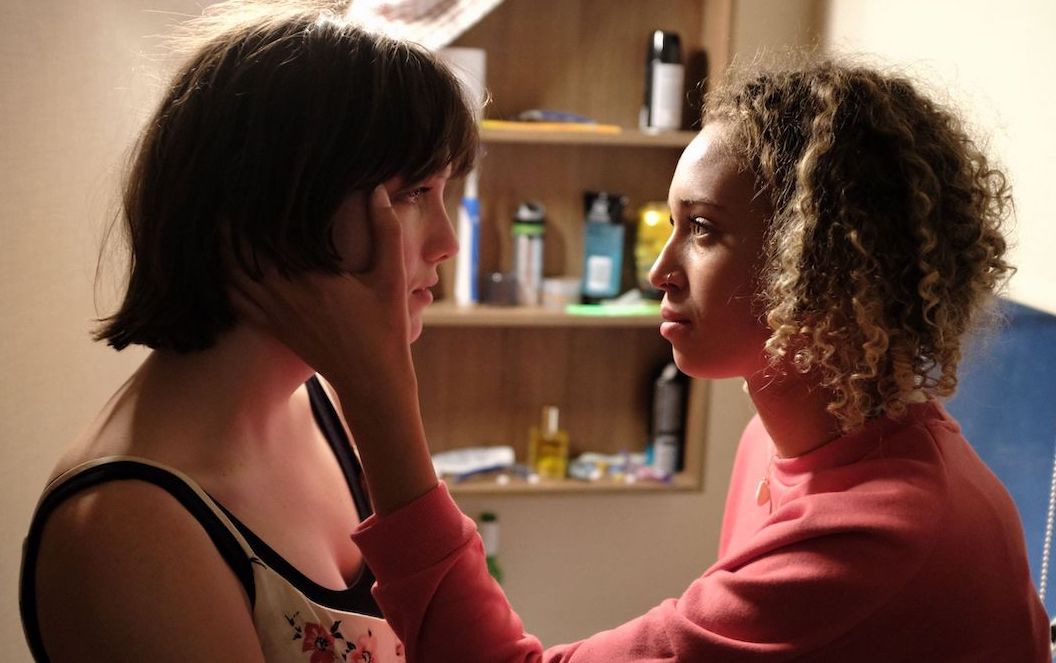
The Courier is a spy movie, so we know what to expect, right? Gun fights, car chases, heart-stopping stunts…

Well no, because this ‘based on a true story’ tale, set in the cinematically-neglected Cold War era, plays it straight and, for the most part, sticks pretty closely to the facts. It’s 1960 and America and the Soviet Union are engaged in the arms race, the two super powers moving inexorably nearer and nearer to nuclear conflict.

High-ranking Soviet intelligence officer Oleg Penskovsky (Merab Ninidze) can see the disaster that lies ahead. He contacts a couple of American tourists and asks them to take a message to the American Embassy, offering to supply the CIA with inside information in exchange for safe passage to the USA for him and his family.

Some time later, CIA agent Emily Donavan (Rachel Brosnahan) approaches MI6, asking if they can suggest somebody who might act as a go-between for them. Agent Dickie Franks (Angus Wright) thinks he may have chanced upon the perfect recruit, innocuous businessman Greville Wynne (Benedict Cumberbatch), who spends most of his time travelling the world, wining and dining potential clients for his various business interests. Wynne would surely be above suspicion? So they ask him if he will be their inside man. At first Wynne is non-plussed, if perhaps a little flattered by their invitation, but, after some prevarication, he accepts their offer. Shortly thereafter, he finds himself making contact with Penskovsky in Moscow and carrying various secret messages back and forth between Russia and Great Britain.

But, of course, while this all might look dreadfully routine on the surface, the dangers of being discovered are just as nerve-wracking and the consequences every bit as deadly.

Director Dominic Cooke ensures that The Courier is strong on period setting: the drab, chain-smoking world of the early 60s is accurately depicted in every shot. Both Cumberbatch and Ninidze nail their roles with aplomb and Tom O’Connor’s script focuses on the developing friendship between the two men, making Wynne’s ultimate actions totally believable. Jessie Buckley takes a thankless role as Wynne’s buttoned-up wife, Sheila, and wrings every ounce of possibility out of it, proving once again what a consummate actor she is.

While the film might be short on action tropes, it never lacks suspense and, as Wynne’s deception begins to unravel, the stakes are increasingly cranked up for maximum tension. Also, this is a film that doesn’t back away from depicting the horrors of Wynn’s subsequent incarceration. (Next time I dine out, I think I’ll skip the soup course.)

Some heroes, it seems, are less showy than the Bonds and the Bournes – and here’s the proof that a spy movie can be thrilling without regular recourse to flashy sports cars and semi-automatic weapons.

4.6 stars

Philip Caveney
Stillwater

12/08/21

Cineworld, Edinburgh

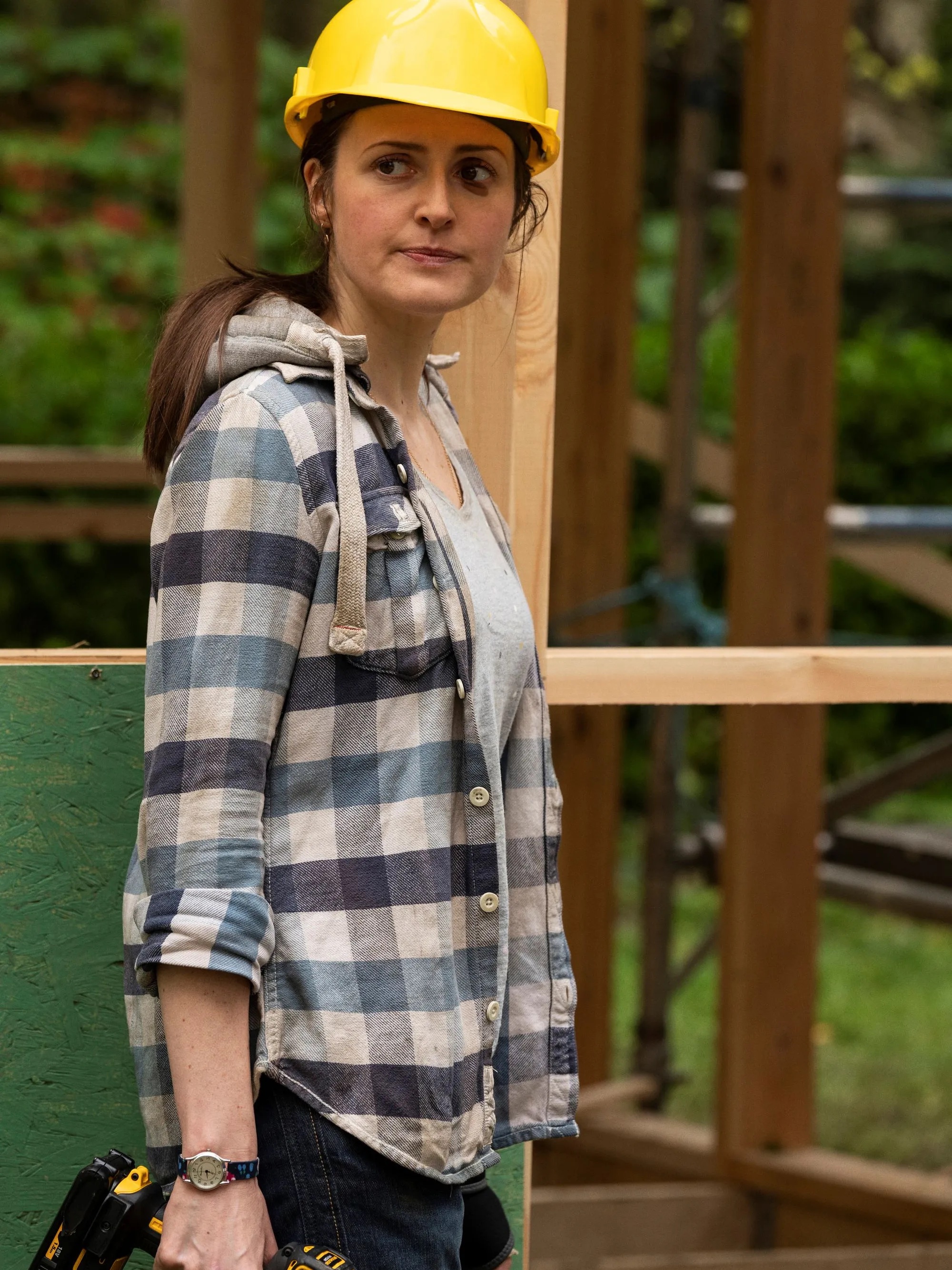
Director Tom McCarthy’s film is a slower, subtler version of the “vigilante-let-down-by-the-system-so-has-to-go-it-alone” genre, and it’s this considered approach that makes the piece both watchable and heartbreaking. Bill Baker (Matt Damon) is a flawed hero, with neither super-strength nor driving passion to propel him forwards. He’s just a guy in a difficult situation, trying his best to put things right. And, a lot of the time, failing.

Bill’s daughter, Allison (Abigail Breslin) is in prison in Marseilles. She’s been found guilty of murdering her girlfriend, fellow uni-student Lina, and has already been incarcerated for five years. Back in Oklahoma, Bill takes on all the casual labouring work he can find, and spends the proceeds making regular visits to France. He hasn’t always been the best dad – he has a history of drug and alcohol abuse – but he’s determined to be there for Alli now.

When the film opens, this is already routine. Bill’s prison visiting card is half-full of stamps; the staff at his hotel in Marseilles know him. This is just the way things are. But then Alli gives him a letter for her lawyer: a key witness, missing from her trial, has been heard bragging about getting away with murder, and Alli wants him found. But the lawyer sorrowfully dismisses her claim: it’s hearsay; it’s too late. So Bill is left with little choice but to investigate alone…

Well, not quite alone. He doesn’t speak French, so he needs an interpreter. He only has a few acquaintances in France, but Virginie (Camille Cottin), an erstwhile fellow hotel guest, seems friendly, and she owes him a favour for looking after her daughter, Maya (Lilou Siauvaud). The trouble is, she was only at the hotel for a couple of nights, while repairs were being done on her apartment, so first he has to track her down… Luckily for Bill, the hotel staff aren’t exactly big on protecting their guests’ privacy, and anyway, Virginie doesn’t mind. She collects causes and campaigns, and she’s only too pleased to help. In fact, she offers him a room. He babysits and, well, fixes things (taps, toilets, sockets), because that’s what he does, while she reads everything she can and talks to potential witnesses.

If this all sounds familiar, don’t be fooled: McCarthy shies away from the tried-and-tested path. Bill and Virginie face real obstacles, and there isn’t always a way around them. Dogged determination doesn’t always win the day, and anyway, the last thing Alli wants is for Bill to get involved…

It’s great to see Cottin in a big-screen role. Obviously, she has an illustrious career behind her, but we’ve only recently become aware of her, via the rather marvellous TV series, Call My Agent (Netflix). She has a real presence here, inhabiting her character completely, and oozing charisma. But she’s not the only one: Siauvaud is a delight, and, of course, Breslin and Damon both have real acting chops too. Damon’s depiction of the monosyllabic, fish-out-of-water American is wonderfully understated: he’s inarticulate, humble, quietly resolved – a million miles away from the brash confidence of a typical ‘hero.’

This is a very realistic film, and cinematographer Masanobu Takayanagi shows us a realistic vision of Marseilles too. We see the gorgeous white cliffs and blue waters of the Mediterranean; the romantic rooftop view from Virginie’s apartment; the glorious tumble of shuttered Provençal streets. But we also see the seamier districts – the seedy bars and no-go areas – and they’re properly integrated: we are shown the whole city, in all its vibrant contradictions.

There are echoes here of Amanda Knox’s story, but only echoes. Stillwater draws on that narrative, but it’s very much its own tale – of love and redemption and imperfect endings.

4.1 stars

Susan Singfield

Limbo

09/08/21

Cameo Cinema, Edinburgh

The opening scene of Limbo is wonderfully absurd. Helga (Sidse Babett Knudsen) and her partner, Boris (Kenneth Collard), are dancing to It Started With a Kiss, watched by a bemused group of young men. It’s all part of the refugees’ training on how they should comport themselves, if their bids for political asylum are successful. As the song heats up, so the dancing becomes ever more frenetic, ever more ridiculous.

In the front row of the audience sits the impassive Omar (Amir El-Masry), who has recently fled from Syria and is now living alongside three other asylum-seekers in a little house on a remote Scottish island. Omar carries an Oud with him everywhere he goes – a stringed instrument rather like a large mandolin. He is, we’re told, a gifted musician, but hasn’t attempted to play since arriving in Scotland.

He claims, the instrument doesn’t sound the same as it used to.

One of Omar’s housemates, Farhad (Vikash Bhai), keeps urging him to play again, even offering to be his agent/manager, to promote a concert in the local community hall. Farhad has recently left Afghanistan and longs to live and work in London. He wants to follow in the footsteps of his hero, Freddie Mercury, with whom he shares a moustache and a religion – if not any talent. The other two housemates are ‘brothers’ Wasef (Ola Orebiyi) and Abedi (Kwabena Ansah), who seem to be constantly arguing. Wasef wants to play football for Chelsea, while Abedi’s ambitions are much more realistic. He’ll be happy to find work as a cleaner.

All four men – and the other refugees they encounter at the community centre – are lost in a kind of limbo. Unable to work, unable to leave, they can only wander aimlessly around the bleak island locations, and occasionally – in scenes that feel like a homage to Bill Forsyth’s Local Hero – use the local phone box to make calls to their loved ones. Omar regularly talks to his parents, who now live in Istanbul. They always mention Omar’s brother Nabil, the ‘hero’ who stayed in Syria to defend his homeland. They ask Omar for money, but he has none to send them, and they repeatedly ask him if he’s playing his Oud…

Director Ben Sharrock has created a mesmerising, slow burn of a story, the bleakness cleverly undercut by moments of humour and genuine poignancy. When Omar is approached by four joy-riding teenagers, I fear the worst, especially when they ask him if he’s a terrorist. But the result is curiously heartwarming – Limbo is a constant surprise, confident enough to take its own sweet time unfolding its story.

Again and again, the camera leaves the action to gaze wistfully along a seemingly endless road leading into the distance, an ambiguous image: does it offer the possibility of escape, or is it just a highway to nowhere?

4.6 stars

Philip Caveney

The Suicide Squad

03/08/21

Cineworld

DC’s increasingly desperate attempts to rival the success of The Marvel Universe seem to be exemplified by this muddled and over-inflated offering from James Gunn. Not to be confused with David Ayers Suicide Squad, this is The Suicide Squad, but, much like its predecessor, it suffers from a bad case of #toomanysuperheroes. While it’s surely a more successful attempt to put those titular antiheroes onscreen, it still feels overlong, overcomplicated and, quite possibly, just over.

It starts well enough with the ruthless Amanda Waller (Viola Davis, playing it straight) recruiting convicted hitman Savant (Michael Rooker) for a dangerous mission. She offers him an opportunity to reduce his prison sentence if he manages to survive, but adds the pesky complication that, if he tries to bail, a device in his head will explode. We then meet the rest of the team, one of whom we know from the first film and the rest of whom seem expendable. The familiar face belongs to Colonel Rick Flag (Joel Kinnaman) and it soon becomes clear that his team only exists to serve as a distraction, while the real squad, led by Bloodsport (Idris Elba), gets on with the actual mission. He’s joined by another character we’ve met before, Harley Quinn (Margot Robbie), and by some very odd newbies, including Peacemaker (John Cena), Polka-Dot Man (David Dastmalchian), King Shark (a man with a shark’s head voiced by Sylvester Stallone) and Ratcatcher 2 (Daniela Melchior) who… well, suffice to say if you suffer from a fear of rodents, this film may not be for you.

There follow two hours and twelve minutes of fights, explosions, stunts and some explicitly bloody dismemberment, sailing very close to the wind considering the film’s 15 certificate. We’re treated to several shots of King Shark eating his opponents, which is probably meant to be comical, but is way too graphic for comfort. There’s also a sort of plot here, though it’s frankly bananas. The squad are sent to a South American country, where – in a ‘secret’ laboratory – scientists, under the supervision of Thinker (Peter Capaldi), are rearing a… giant starfish called Starro the Conqueror… yes, I know, at times it feels like a hyperactive six-year-old wrote the screenplay.

Like many of these big budget spectaculars, it’s a game of diminishing returns. There are too many punch ups, too many silly one-liners and too long a running time. Around the hour and a half mark, I’m starting to glance at my watch. Robbie’s Harley Quinn is by the far the best character, and she gets the film’s finest moment, an extended sequence where she escapes from prison to the tune of Just a Gigalo, the copious blood spatter replaced by flurries of animated flowers. It’s delightful and, if the rest of it were up to this standard, this would be a more positive review.

As it stands, it’s hard to be enthusiastic. A post-credits sequence which appears to offer a spin-off featuring one of the story’s less likeable characters is hardly an alluring prospect. Maybe I’ll give that one a miss.

3.4 stars

Philip Caveney
The Sparks Brothers

02/08/21

Cameo Cinema

Picture this. It’s 1973 and I’m sitting at home watching Top of the Pops, which, when I think about it, is pretty much all I ever did in 1973. And then, quite without warning, up pops a band called Sparks and they’re really, REALLY weird. The keyboard player is a mop-headed energetic hunk, while his older brother sits motionlessly at a keyboard looking like a villain from a Buster Keaton movie. The song, of course, is This Town Ain’t Big Enough for the Both of Us, and it isn’t like anything I’ve ever heard before. The next time I see my mates (we’re in a band, obviously), we’re all like, ‘Did you see those guys on TOTP? What the fuck was that?’

And from there, Sparks pretty much disappeared off my radar. I assumed that they’d packed it in, called it a day, broken up because of ‘musical differences.’ But, as it turned out, they hadn’t.

Over a fifty year career, they kept right on going, creating their idiosyncratic music and releasing new records every so often, some of which were acclaimed, others perceived as abject failures. Though their backing musicians changed, the core duo of Ron and Russell Mael remained intact. Over those years, it turns out, they picked up a legion of fans, many of them musicians themselves and one of whom was the film director Edgar Wright. When Wright asked, ‘Why has there never been a film about Ron and Russell Mael?’ he repeatedly met with a baffled silence. So, eventually, he decided to make one himself.

And here’s the result: a forensic (and, it has to be said, lengthy) study of the Sparks phenomenon, featuring interviews with a whole horde of musicians, writers, comedians and movie makers, all of whom, unlike me, kept watching and listening to Sparks, and many of whom are all too ready to admit that they were greatly influenced by the band. (One of them, Todd Rundgren, who produced their first album when they were known as Half Nelson, is surely a man who deserves this kind of documentary treatment all to himself, but I digress.)

The Sparks Brothers is fascinating in many ways. For one thing, it pretty much eschews the main thrust of your average rock doc, which is to get under the skin of its subject and break down any enigma that might have been there. Somehow, Ron and Russell emerge from this film every bit as enigmatic as they were before. All we really learn about them is that they are workaholics. Wright deals with every single album release over two-hours-and-twenty minutes, and we get to see the two men age as their story unfolds, but Wright’s magpie-like approach (using documentary and newsreel footage, stop frame animation, montage and interviews) means that the film never overstays its welcome. The sad truth about the Maels seems to be that they steadfastly refused to stand still. If they’d made slight variations on their successful third album, Kimono My House, they’d doubtless have been filling stadiums worldwide. But, as Oscar Wilde observed, versatility is a curse, and it is their very need to keep reinventing themselves that has ultimately limited their appeal. But it’s not just about keeping their fans happy. As many musicians admit here, they were a massive influence on their peers, Ron’s synth-based riffs being ‘borrowed’ from everyone from Erasure to Duran Duran.

It seems like an auspicious time to bring the Maels back into the limelight, with their Leos Carax-directed musical Annette due to arrive in cinemas sometime soon – and promising to be every bit as eccentric as the Maels themselves. Until then, The Sparks Brothers is well worth your time.

Of course it will help if you’re already a fan, but really, you don’t have to be.

4.4 stars

Philip Caveney

Old

27/07/21

Cineworld

M. Night Shymalan. There, I’ve uttered the forbidden name.

Mister Night Shymalan is something of an enigma to me. Most people know of his trajectory, making a spectacular debut in 1999 with The Sixth Sense and then working his way steadily downwards ever since. There have been a lot of films over the intervening years, from the halfway-decent to the downright unwatchable. Lady in the Water? The Happening? After Earth? I had reached the point where I vowed I’d never watch another one.

And then I started hearing good things about Old. ‘A surprising return to form.’ That kind of thing. Hmm. Could that be right? So, inevitably, here I am, back at the cinema, giving him one more chance to surprise me.

To be fair this is one of his better efforts, though a five star review in the Guardian seems wildly over-enthusiastic. This sub-Twilight Zone story is all about a bunch of people experiencing the holiday from hell. (We’ve all been there.) Guy (Gael Garcia Bernal) and his wife Prisca (Vicky Krips) have been going through a bad patch, possibly because she’s discovered she has an inoperable tumour, so they’ve gathered up their kids and headed off to a fancy beach resort in search of a little quality time. The resort manager (Gustaf Hammarsten) tells the family about a ‘special’ beach they might like to visit, a place where they won’t feel so crowded, so the following day they climb aboard a mini bus and head for it. (Sadly they fail to notice that the bus is being driven by M. Night Shymalan, which should perhaps have been a warning.)

They arrive to find that there are quite a few other holidaymakers there, all of whom seem to be suffering from one kind of malady or other. A dead woman is found floating in the water. And then Guy and Prisca notice that their two kids appear to be ageing very rapidly…

The Shymalanisms dutifully ensue in mind-bending fashion. There are deaths and a birth, transformations and deteriorations. Charles, a doctor (Rufus Sewell), loses his marbles and runs amok with a knife. Patricia (Nikki Amuka-Bird) has an epileptic fit. People bleed and contort and drown. This film is not short on incident.

And yet… and yet… many of the old problems are still here. Shymalan’s script (based on a graphic novel by Pierre-Oscar Lévy) is clunky, while his characters often speak and act like no human beings on the planet ever would. And then there’s the inevitable ‘twist’ ending where Shymalan tries to explain what’s been going on, but I still cling to my theory that, no matter how weird the goings-on, the internal logic of any story should remain rock solid – and here it really doesn’t. Plus… call me old fashioned but is it really wise in the midst of a global pandemic to point the finger of blame at the devious nature of scientists? I think not.

Maybe the problem is mine. Maybe I just don’t get M. Night Shymalan. But as I said, while this is one of his better efforts, that really isn’t saying very much.

Sorry – and maybe cancel that holiday booking, before it’s too late!

3.2 stars

Philip Caveney