Film

Effi o Blaenau

21/06/26

Cameo Cinema, Edinburgh

Back in April 2020, we saw a production on Digital Theatre, a monologue written by Gary Owen and starring Sophie Melville. The piece rejoiced under the unusual title Iphigenia in Splott, and was loosely based around the Greek myth of Iphigenia, the daughter of Agamemnon, sacrificed to ensure the success of the men who governed her. Set in Splott in South Wales, it was a unflinching reinterpretation of the original tale and one that we both enjoyed.

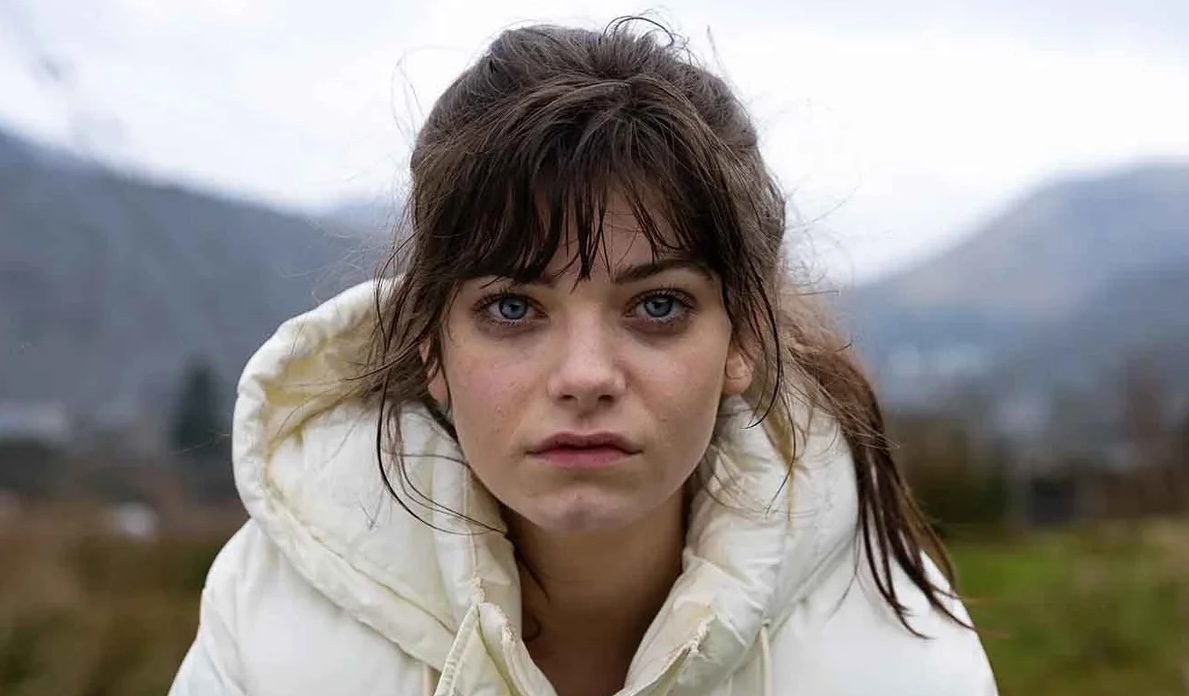
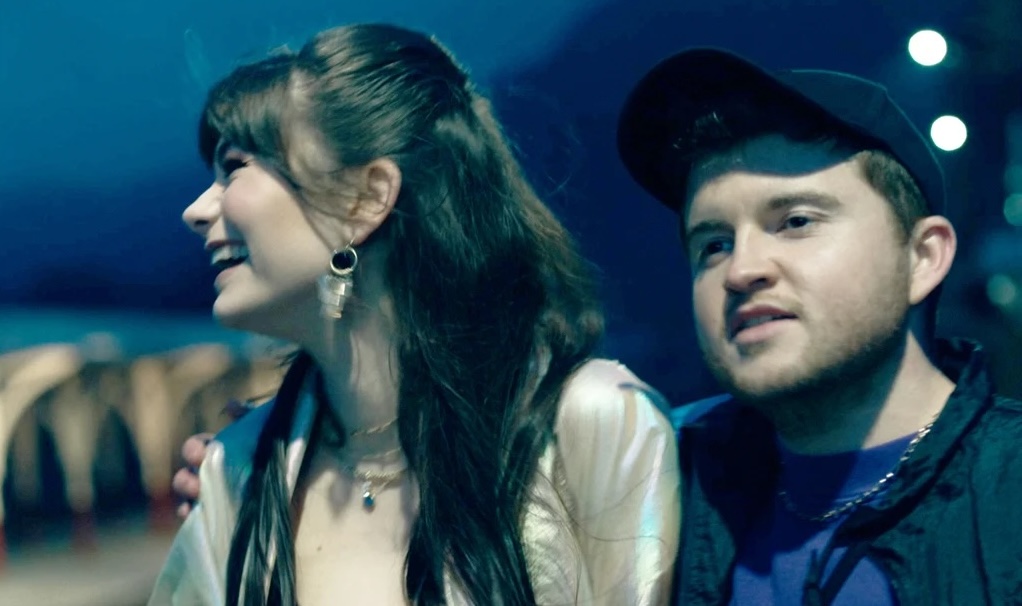
So when the release of Effi o Blenau is announced, we quickly make the connection. Owen has teamed up with Branwen Kennard to adapt the piece for the big screen and the setting has shifted North to Blaenau Ffestiniog. The central role of Effi is played by Leisa Gwenllian and, while it still follows the same central premise, the story (now in Welsh language) has been opened up to include other characters, some of whom were mentioned in the original piece.

Effi is a young woman living a debauched existence in a town stricken by unemployment. She regularly seeks solace at the bottom of a vodka bottle, partying with her best friend, Gemma (Nel Rhys Lewis), and with her ‘sort-of’ boyfriend, Kev (Owen Alun), who can always be relied upon to get his mitts on some drugs. But on a night out in Llandudno, Effi encounters Lee (Tom Rhys Harries), an ex-soldier and she falls in love at first sight. She accompanies him back to his friend’s flat, where she discovers that Lee has lost a limb on active service. A night of passion ensues and she tells herself that this is the real thing.

She settles down to wait for him to get in touch with her…

This is a perfect example of how a simple theatrical piece can be turned into a winning slice of cinema. Though it’s a bleak and hard-hitting story, an excoriating condemnation of contemporary politics, this is thrilling stuff. Gwenllian’s performance in the lead role is fabulous, as her character begins the long and punishing slide into desperation. I also love Alun’s depiction of Kev, a man constantly trying to do the right thing by the woman he loves, even though she simply doesn’t love him back. The drab, run down locations are evocatively captured by cinematographer Eira Wyn Jones, and there’s a long, harrowing sequence in an ambulance hurtling through a snow storm in the dead of night that really cranks up the suspense. There’s also a touch of redemption, when Effi is given support by a very forgiving neighbour.

Clearly, a Welsh language polemic isn’t going to compete with the likes of Toy Story 5 or The World Cup for the public’s attention, but for those who like gritty, hard-hitting drama, this is well worth consideration.

4.4 stars

Philip Caveney

Disclosure Day

12/06/26

Cineworld, Edinburgh

In 1974, I went to the cinema to watch Sugarland Express, the debut movie from new kid on the block, Steven Spielberg. In the review I subsequently wrote, I probably said something to the effect that here was a young man with a bright future ahead of him. I could have had no inkling back then that, in just one year’s time, a film called Jaws would be a complete game-changer and that it would herald the arrival of a cinematic behemoth. Spielberg is now in his eightieth year and, over the decades, has accrued one of the most impressive backlists of all time. Okay, there are a few duds in there (The Kingdom of the Crystal Skull, I’m looking at you) but, happily, the misfires have been few and far between. Having said that, I am quite unprepared for just how good Disclosure Day is.

First things first. It’s pointless to give too much information about the actual plot because, on paper, it does sound faintly preposterous. But part of the film’s strength is the way it flings viewers headlong into what seems like an unfathomable mystery and keeps us guessing as to where the story is headed, a position it maintains until the final furlong. And then, in that last stretch, it somehow manages to create a sense of pure wonder, recalling earlier hits like Close Encounters and ET.

The story begins in 2026, and the world stands poised on the brink of what looks suspiciously like World War 3. (Too close to home?) We are in the audience at a wrestling match, where we witness Dr Daniel Kellner (Josh O’ Connor) being arrested for theft – though at this stage, we have no idea what he’s supposed to have stolen. He is confronted by Noah Scanlon (Colin Firth), the head of a powerful and secretive government organisation called Wardex, and we learn that Scanlon is Daniel’s former employer. Daniel manages to escape and goes on the run with his girlfriend, Jane (Eve Hewson), but even she doesn’t know what he’s accused of.

The action cuts to Kansas, where TV weather girl Margaret Fairchild (Emily Blunt) unexpectedly starts speaking in tongues on live TV – and shortly thereafter, discovers that she has inherited incredible skills. It’s clear that she and Daniel are linked somehow – but it’s quite some time before I begin to suspect that the two of them will be the ones to make the titular disclosure that will resolve decades of lies and subterfuge…

Disclosure Day is a powerful and compelling drama that has about it something of those paranoid 70s Cold War thrillers, where two opposing forces struggle for supremacy. Leading the fight for disclosure is Hugo Wakefield (Colman Domingo), another former Wardex employee, who seems prepared to go to extraordinary lengths to ensure that the truth is handed to the public. Scanlon and his team are the ones who want to keep everybody in the dark, convinced that ordinary people will be unable to accept the truth without losing their collective minds. While all the actors here do exemplary work, Blunt is required to handle most of the heavy lifting, going through a whole range of personas as the various twists and turns of David Keopp’s script – co-written with Spielberg – demands ever more of her. I’ve long been convinced she’s a terrific actor and here she finally gets the chance to really prove it.

And it’s not all talk: there are hair-raising action set pieces (a car/train interface is a particular high point); a scary sequence from Margaret’s childhood that has an eerie prescience; and recreations of key events in UFO folklore (and yes, I’m aware the American government prefers the term UAP – Unidentified Anomalous Phenomenon). Janusz Kaminski’s cinematography looks absolutely exquisite and veteran composer John Williams actually came out of retirement to provide another of his stirring scores. What’s not to like?

Whether this will bring in the punters is yet to be determined. I hope so. It’s proper grown-up filmmaking of the kind we don’t often see these days but it doesn’t help that it arrives in UK cinemas just as World Cup fever erupts. But those who have given up on Spielberg after recent more modest efforts are sure to find much to enjoy here.

And as ever, this is a big concept that deserves to be seen on the biggest screen available.

4.7 stars

Philip Caveney

Savage House

06/06/26

Cineworld, Edinburgh

It’s 1817 and England is beset by both a Jacobite uprising and a massive pox outbreak – and the Savages are in dire straits. Oh sure, they live in a great big mansion, replete with massive oil paintings and fancy gardens, but Sir Chauncy Savage (Richard E Grant) is an utter rake and has somehow managed to gamble away all of the land that surrounds the house. Now his creditors are closing in on him. 

All that’s left of real value are Lady Savage (Claire Foy)’s family jewels. Luckily, despite the couple’s differences – and the fact that they choose to seek sexual gratification with their servants, Dorothy (Bel Powley) and Reginald (Jack Farthing) – the Savages clearly love each other. Meanwhile, their daughter, Fanny (Kila Lord Cassiday), concentrates on tending to the family of mice living in her doll’s house and preparing for an upcoming total eclipse of the sun, which many believe will signal unprecedented changes.

Sir Chauncy, we are told by The Narrator (Robert Bathurst), is something of an imposter, the son of a humble swineherd, while Lady S is from proper aristocracy. (The idea that working-class people aren’t allowed to aspire to nice things is an unpleasant subtext that writer/director Peter Glanz seems to ram home at every opportunity, mostly via the image of a huge pig wandering around the rooms of the Savage’s house.)

Things are beginning to look desperate. Then out of the blue, word arrives that the celebrated Duke and Duchess of Devonshire have requested permission to dine and sleep at Savage House in ten days time. Chauncy spots an all-important opportunity to improve his social standing and persuades his wife that they must not miss out. The aforementioned jewels are sold and Dorothy and Reginald are put to work sprucing the place up – though we soon discover that they have devious plans of their own…

Savage House is something of a mixed bag. Both Grant and Foy are wonderful in their roles, with Grant in particular revelling in the unhinged nature of Chauncy, who invites disaster at every turn. A scene where he performs a drunken dance despite suffering agonising gout is a high point – as is a duelling sequence where Adriano Goldman’s cinematography briefly evokes the grandeur of Kubrick’s Barry Lyndon. There’s also a wonderful orchestral score of classical compositions, though this too reminds me of an earlier (and better) film – Peter Greenaway’s The Draughtsman’s Contract

The film also seems obsessed with focusing on the most unpleasant aspects of life in the 1800s. It never misses the opportunity to focus on piles of steaming excrement, streams of rancid pus, wriggling leeches and acts of lewd sex. A scene where a gangrenous limb is sawn off is shown in such unflinching detail that I almost feel the need to cover my eyes. Those who are squeamish about vermin may find themselves in similar straits at regular intervals. (Susan, I’m looking at you!)

As one disaster after another assails Chauncy’s boundless ambitions, and his unfettered hubris leads him inexorably to a tragic conclusion, I find myself hoping for a single ray of sunshine to pierce the unremitting gloom. But sadly, that isn’t allowed to happen – and the bleak ending feels disappointingly flat as a consequence. 

We leave the cinema discussing potential ways that such illumination might have been achieved, but the film is already in the cinemas where it is sure to divide audiences. Though it occasionally hits the heights, one thing’s for certain. Savage House isn’t short of ambition.

3.4 stars

Philip Caveney

Backrooms

02/06/26

Cineworld, Edinburgh

Contemporary horror films by Gen Z filmmakers seem to be soaring to ever-new heights. Just last week, twenty-six-year-old Curry Barker’s Obsession proved a breakout hit on a budget that was just short of a million dollars, meaning that it was able to move into profit on its release day. More interestingly, the film bucked the usual trend by taking even more on its second week, buoyed by good word of mouth.

Now twenty-year-old Kane Parsons’ Backrooms (developed from one of the ‘creepy pasta’ shorts he’s been posting on YouTube since his teens) scores an even bigger opening. It does boast a budget of ten million (though this is peanuts compared to the excesses of most contemporary Hollywood blockbusters) but once again, premier production company A24 have spotted a filmmaker’s potential and granted them the opportunity to fulfil it. While Obsession has its roots in classic horror story, The Monkey’s Paw, Backrooms‘ closest cousin could arguably be Alice in Wonderland – if that book were transposed to the early 1990s and had moments of absolute terror.

Clark (Chiwetel Ejiofor) is the manager of Cap’n Clark’s Ottoman Empire, a down-at-heel furniture store, which despite Clark’s ramshackle attempts at a promotional video, appears to be struggling to entice any customers over the threshold. After a messy break up with his wife, Clark is actually sleeping in the store. He occasionally drives off for a session with his therapist, Mary (Renate Reinsve), who is trying to explore Clark’s anger issues – but she has some psychological baggage of her own, which she’s been lugging around since childhood.

Meanwhile, Clark is having major problems with the store’s electricity supply and, when investigating some strange noises in the basement, he discovers a portal that takes him to the backrooms of the title, a series of interconnecting sickly-yellow enclosures seemingly designed by Escher and heaped here and there with piles of furniture that defy all logic.

When Clark subsequently tells Mary about his new discovery, she’s understandably worried about his state of mind…

Backrooms is an incredibly immersive and occasionally heart-stopping film, that somehow manages to conjure moments of absolute dread from the smallest things: a muffled noise; a briefly glimpsed figure; a narrow opening a character is required to squeeze through. It’s all I can do not to shout warnings to the luckless fools who wander in there, despite knowing only too well that if I found a wall I could walk through, I’d most surely want to do it, again and again.

Co-written by Parsons with Will Soodik, the film boasts an incisive script which is open to interpretation, but nonetheless utterly affecting. The Jungian ‘Dream House’ metaphor is made frighteningly real, as the terrors herein bubble up from the central characters’ own psyches – and are all the more disturbing because of that. As the film careers confidently onwards, it carries me helplessly along with it.

A final revelation confirms a devastating truth: that we are all prisoners of whatever bad things happened to us back down the line. Parsons would appear to have a promising (and lucrative) film career ahead of him and on the strength of Backrooms, I’ll be first in the queue to see whatever he comes up with next. There’s already talk of a ‘Backrooms 2‘ but I for one hope it’ll be something entirely different.

5 stars

Philip Caveney

Tuner

30/05/26

Cineworld, Edinburgh

Tuner is hard to categorise. Part comedy, part love story, part thriller, it steps confidently from genre to genre but, perhaps more importantly, it works brilliantly in all of them.

Niki (Leo Woodall) is afflicted by the awful condition know as hyperacusis, which means that loud noises are like torture to him. This obliges him to go around New York City wearing ear protectors at all times. Once a promising musician, he still possesses the unerring ability to recognise any musical note and he now works alongside his employer and surrogate father, Harry (Dustin Hoffman), tuning pianos in a whole range of different settings.

When Harry accidentally locks something in his safe and forgets the combination, Niki realises that, if he removes his ear protectors, he can hear the tiniest sounds when he fiddles with the lock, a skill that, after a little practice, gives him the ability to crack safes. In a café, Niki and Harry bump into Ruthie (Havana Rose Liu), an ambitious music student, currently at work on an important piano composition. Harry’s audacious attempt to pair the two of them up is initially unsuccessful, but it’s clear that something is going to happen between them.

And then chance places Niki into the orbit of Uri (Lior Raz) and his criminal gang.

Once aware of Niki’s newfound talent, Uri tells him that, if he ever needs to make some real money, he should give him a call. Niki has no intention of taking him up on the offer… until Harry suddenly falls ill and he and his wife, Marla (Tovah Feldshuh), lack the necessary funds to pay the hospital bill…

Question: how many crimes would be instantly erased in America if they had anything like a National Health Service?

Directed and co-written by Daniel Roher (with Robert Ramsey), Tuner carries me along with it, making me laugh out loud in its earlier sections before piling on the suspense as Niki becomes increasingly embroiled in criminal activity. It’s clear from early on that our protagonist is making some terrible decisions and yet his actions are always believable.

While Niki doesn’t have an awful lot to say for himself, Woodall manages to eloquently convey his inner turmoil as he heads deeper and deeper into the brown stuff and Tuner confirms the actor’s rising status as a leading man. Hoffman may not have an awful lot to do here, but has enough screentime to convey Harry’s utterly loveable character. Feldshuh and Liu are both excellent in their respective roles and even the villains of the piece, though suitably horrible when they want to be, are much more nuanced than we’ve come to expect of film baddies.

And then there’s the sound design, with original compositions by Will Bates, and a whole team of engineers recreating the accentuated sounds that Niki experiences when those ear protectors come off. When an alarm sounds, it’s utterly shocking. In the final stretches there’s an assured build up to a climactic musical scene, which I find genuinely thrilling and the film ends with what’s probably the funniest closing line I’ve heard in a very long time.

As I said earlier, this is hard to categorise, but this note-perfect piece is ridiculously easy to score.

5 stars

Philip Caveney

The Christophers

24/05/26

Cineworld, Edinburgh

Julian Sklar (Ian McKellen) was once a successful and much-revered artist, whose early works exchanged hands for millions of pounds apiece. But after his residency on a TV art show, where he became known for tongue-lashing young wannabes, his star has declined somewhat – and lately he spends more time recording asinine Cameo messages than exploring what’s left of his artistic gifts.

Lori Butler (Michaela Coel) works as an ‘art restorer’ and has a knack for forgery – which is why she’s contacted by Julian’s estranged children, Sallie (Jessica Gunning) and Barnaby (James Corden), who think they may have a job for her. It’s come to their attention that their Dad has a series of unfinished paintings up in his attic – the titular Christophers – and the siblings also have a buyer in Las Vegas who’s ready to pay out an eye-watering sum for them… when they are finished. Sallie and Barnaby are wondering if Lori might be able to get her hands on said paintings and, er, hurry the process along. After all, octogenarian Julian has a life-threatening illness, so time is fast running out. And they’d be more than willing to cut her in for a share of the proceedings.

What’s more, Julian has been advertising for a new assistant…

Director Steven Soderbergh continues with the least convincing retirement in cinema history (this being his second film this year) but, when he’s capable of creating little gems like The Christophers, I’m not going to be the one to suggest he might take his foot off the accelerator. Essentially a two-hander, this has the pacing and eloquence of a piece of theatre, both McKellen and Coel playing roles that were specifically created for them by screenwriter Ed Solomon. McKellen is on exquisite form as the deliciously foul-mouthed, eternally grumpy Sklar, who never hesitates to say exactly what’s on his mind. And Coel handles the arguably trickier role of Lori with considerable skill, saying so much with a sidelong look or a brief gesture. It soon begins to emerge that Lori has her own reasons for having some skin in this particular game.

The Christophers cleverly nails the injustice of the contemporary arts scene – the ways that reputations can be fuelled and cancelled by simple twists of fate. There’s also an overwhelming sadness to the story as it begins to probe into exactly why those paintings were never finished. Both Gunning and Corden provide humour as Sklar’s offspring, or – as he likes to refer to them – his ‘heirs abhorrent.’ And I like that I really do not see where this is headed until we arrive.

It’s hardly the season for Oscar recommendations, but I’ve rarely seen McKellen in a more perfectly suited role than this. And if Soderbergh doesn’t watch out, people are going to get the impression that he’s still a gifted working filmmaker.

4.5 stars

Philip Caveney

Obsession

20/05/26

Cineworld, Edinburgh

Anyone familiar with WW Jacobs’ classic short story, The Monkey’s Paw, will have a fair idea of what to expect going into Curry Barker’s debut feature, Obsession – and if the film’s title is somewhat forgettable, this is nevertheless a nicely-made low-budget chiller, which manages to keep a few surprises tucked up its blood-spattered sleeve. 

Bear (Michael Johnston) lives alone in his late grandma’s house. Despite his dark good looks, he’s a bit of a loner – and the grisly demise of the cat that usually keeps him company suggests that the situation isn’t going to change any time soon. But Bear has a secret crush on Nikki (Inde Navarrette), a co-worker at the lowly musical instrument store where he earns a crust. He’s trying to work up the courage to ask her out, encouraged by another workmate, Ian (Cooper Tomlinson), but somehow Bear lacks the nerve to voice his true feelings to her.

And then, in a local curio shop, he buys a tacky little gizmo called a One-Wish Willow, intending to give it to Nikki as a silly birthday gift. The idea is to break the twig and wish aloud for your heart’s desire. In a moment of weakness, Bear uses the device to further his own aims, impulsively wishing that Nikki will love him more than anyone in the world . He soon comes to understand the old adage, ‘Be careful what you wish for.’  Because quite suddenly, Nicky does love him – obsessively, relentlessly, unpredictably – and she isn’t going to let anything stand in the way of her possessing him, heart and soul…

While it’s a familiar premise, Barker sets out his stall with skill, aided by two strong performances from the leads – particularly from Navarette, who can switch from sweet and shy to downright terrifying in the blink of an eye. Barker shot the film himself (he began his career making short online features) and has a great knack for capturing disturbing silhouettes. There are some adroitly-handled jump scares and I haven’t been so disturbed by a character’s grin since the Smile films.

There are also some interesting issues in the subtext: the way that couples influence each other; the jealousy that can be caused by other friendships; the awful void that can open up when a relationship has run its course and only one person is ready to make the break. Barker – who also wrote the screenplay – unleashes a whole series of tortuous events which build rapidly to carnage. I find myself thoroughly swept up in proceedings and am genuinely surprised when the final credits roll. One hour and forty-eight minutes have sped past seemingly in the blink of an eye.

Obsession makes another valuable addition to the crop of quirky horrors currently dominating the cineplexes – though I still think it would benefit from a more interesting title. One-Wish Willow, maybe?

4.4 stars

Philip Caveney 

Hokum

03/05/26

Cineworld, Edinburgh

I emerge from Hokum thinking that this low-budget horror from Irish director, Damien MaCarthy, is aptly-titled. The term originated in American theatre in the early 20th century and is a combination of Hocus-Pocus and Bunkum. I have to say that the storyline here does not stand up to scrutiny – but nevertheless, I do find the result enjoyable, if occasionally confusing.

Ohm Baumann (Adam Scott, of Severance fame) is a successful author, currently putting the finishing touches to his bestselling ‘Conquistador ‘ trilogy. Indeed, the film begins with a short extract from the book’s planned ending, which could be best described as ‘flat.’ It’s also clear from early on that Ohm is being haunted by something from his past. Pretty soon, he’s left his native America and is driving through a remote part of Ireland, where’s he’s planning to visit the Bilberry Woods Inn, where his parents spent their honeymoon. He carries with him the ashes of said parents, which he is planning to scatter in the place where they were last happy. Next to a tree, apparently.

The hotel is one of those constructions that only exist in the minds of authors: dark, forbidding and peopled by a collection of odd balls that would have most travellers checking out without further delay – but Ohm is on a mission. He dutifully sprinkles the ashes of Mum and Dad, has an encounter in the woods with bearded weirdo, Jerry (David Wilmot), and then drinks a lot of whiskey whilst chatting to friendly bar steward, Fiona (Florence Ordesh). He outlines the ending of his new book to her, whereupon she charmingly tells him she won’t be reading it.

Mind you, Ohm is not the friendliest character himself, openly rude to pretty much everyone he meets and summarily insulting porter and wannabe author, Albie (Will O Connell), when he meekly suggests that Ohm might care to have a quick look at his manuscript. This kind of attitude is generally off-putting in a protagonist but somehow Scott manages to get away with it, eliciting laughs with his sneering comments.

But then there’s a dark development, after which Fiona goes missing – and Ohm becomes obsessed with finding out what happened to her…

Hokum does a decent job of generating an eerie and unsettling sense of dread throughout, though I do occasionally find myself wishing somebody would turn some lights on. The inn, of course, harbours an open secret: the Honeymoon Suite (where Ohm’s parents stayed) is permanently closed to the public, because it’s haunted by ‘a witch’. Naturally, Ohm needs to get in there in his search for Fiona. If you can buy this premise, you’ll have a good chance of enjoying the supernatural shenanigans that ensue, though I do have some trouble with the very complicated geography of the various rooms, corridors and lifts that comprise the suite – and I can’t be the only one who’s puzzled when Ohm suddenly appears to be wearing a set of manacles. A later reference to the fact that his whiskey has been spiked with magic mushrooms feels like an attempt to cover up what is more likely a continuity error after some scenes have been edited out.

And perhaps most damning of all, the incident that has been haunting our antihero from the start – doubtless intended to be something of a revelation – is too broadly signposted to come as a surprise.

Hokum is another addition to the many decent horror films currently gracing the multiplexes, but it’s not really up there with the likes of Weapons, a film which manages to generate real terror without feeling the need to dim the lights at every opportunity.

3.6 stars

Philip Caveney
Undertone

21/04/26

Cineworld, Edinburgh

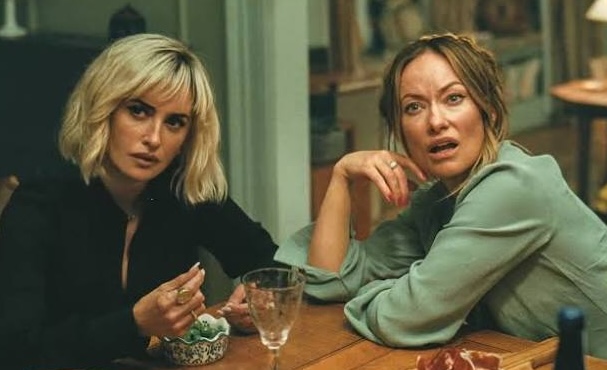
Undertone has been in the cinemas for a week now, but it’s been mostly restricted to a series of late-night showings – and I prefer to do my movie-watching in the daytime. Finally, here’s a rare chance to see it at 12pm and I’m glad to have the opportunity. Written and directed by Ian Tuason, this stripped-back Canadian chiller has been cleverly billed as ‘the scariest film you’ll ever hear’ and certainly what seeps into an audience’s ears is every bit as important as what they actually see onscreen.

Evy (Nina Kiri) is going through a difficult time. She’s trapped in her mother’s house in Toronto, craving alcohol and trying to deal with the discovery that she’s pregnant. Meanwhile, her mother (played by Michéle Duquet) lies in her upstairs bedroom in a comatose condition, nearing the end of her life. Luckily Evy has The Undertone Podcast to think about, which she records and presents with her friend, Justin (voiced by Adam DiMarco), who is based far away in New York. The series is devoted to all things creepy – though Evy, despite being raised a Catholic, is a staunch disbeliever in the supernatural.

Justin reveals that he’s recently received a series of ten audio files from a man called Mike. They feature his wife, Jessa, who has started talking (and sometimes singing) in her sleep. The recordings all feature unsettling details and inexplicable sounds – especially when played in reverse – and, as the podcasters work their way through them, so Evy’s convictions start to crumble…

Made for just $50,000, Undertone has grossed millions in the USA and it’s easy to see why it has notched up yet another win for production company A24, who seem to have an uncanny nose for quality horror projects.

Set entirely in one house, the film starts with a series of tiny unsettling details – a light left on, a tap left running… but, as the story steadily unfolds, so these details become more overt, more sinister, until a sense of palpable dread has me in its tenacious grip. I listen intently to every garbled soundscape that pulses from the cinema’s Dolby speakers. (Unless you have an incredibly sophisticated sound system at home, don’t leave this one for streaming.) Furthermore, Undertone subverts all the usual clichés of the genre. Moments that appear to be building towards an inevitable jump-scare never come to fruition, Tuason preferring to leave viewers in a constant state of anxiety.

As the film’s final scenes build to an almost unbearable tension, I actually find myself holding my breath… and that’s when I’m hit by a revelation that I really don’t see coming. Undertone is an ingenious little movie that makes a big impact, but it’s definitely not for the faint-hearted.

4.4 stars

Philip Caveney
Amélie

17/04/26

Filmhouse, Edinburgh

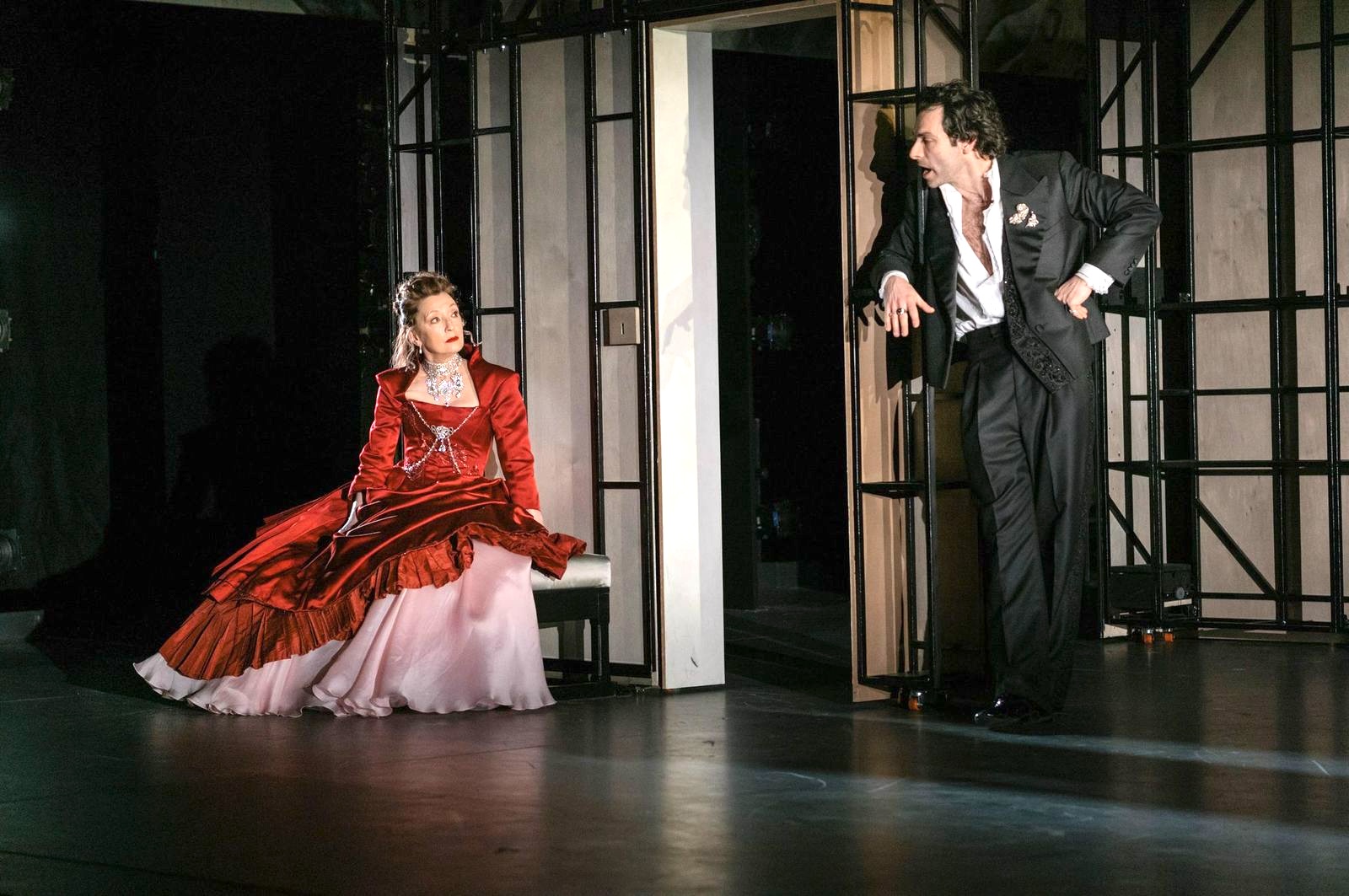
With decent new releases a bit thin on the ground, it seems a propitious time for the re-release of Jean-Pierre Jeunet’s 2001 masterpiece, Amélie, in a stunning 4K restoration. This gorgeous, swooning tale of love and intrigue is unlike any other film I’ve seen. Whimsical, wildly inventive and built around an astonishing lead performance by Audrey Tautou, it exudes charm and wonder in equal measure. It’s every bit as good as I remember and has me leaving like I’m walking on air.

When we first meet Amélie, she’s just being born – and the film speedily takes us into her childhood. She’s a complex creature, who, after the early death of her mother, longs for affection from her distant but well-meaning father, Raphael (Rufus). But the loss of his wife has plunged him into despair and he retreats into a world of his own, unable to give his daughter the affection she craves. Soon Amélie has grown to womanhood. She’s still looking for the love she’s missed out on and is now determined to create opportunities for others who may be in need of that precious commodity. She works as a waitress in a bar in Paris and it’s here that she quietly goes about the business of making magic (and sometimes mayhem) for the various people she encounters, building stories around them and quietly seeking ways to introduce some much-needed romance into their lives.

Her antics are closely observed by her elderly neighbour, Raymond (Serge Merlin), a man with brittle-bone disease, who has devoted his life to reproducing a famous painting, Renoir’s Luncheon of the Boating Party. It’s a task he re-attempts every year, obsessed with getting it right. And what is it about one female character in the picture that so intrigues him?

Co-written by Jeunet and Guillaume Laurant, beautifully filmed by Bruni Delbonnel, this is an object lesson in how to create memorable screen imagery – there are countless iconic shots here that wouldn’t look out of place on the walls of an art gallery. The story is wonderfully labyrinthine and the complex machinations that Amélie goes to in her quest to help friends and neighbours are delightfully offbeat. The protracted ‘will they, won’t they’ courtship she engineers with Nino (Matthew Kassovitz) could so easily be unbearably cute, but somehow Jeunet manages to inject everything with a Gallic edginess that keeps it all on track. Furthermore, not all of Amélie’s elaborate schemes go quite to plan.

Be warned. Watching Amélie comes with the distinct danger of falling hopelessly in love with it. If you didn’t see it first time around, then here’s your chance to catch one of the most original movies ever made. Miss it and weep.

5 stars

Philip Caveney