Film

Emilia Pérez

11/12/24

Netflix

Jacques Audiard has always been an interesting and experimentlal writer/director, seeming to choose his projects at random and rarely sticking to a particular genre, throughout a career that began back in the early 90s. Emilia Pérez deals with the kind of subject matter that would frighten off many respected filmmakers. It’s a bizarre soap opera/fable about crime cartels, gender reassignment and the plight of ‘The Disappeared,’ the millions of people murdered by Mexican cartels. 

Oh, and did I mention that it’s also a musical?

Audiard throws himself headlong into the process with his usual glee and the upshot is that the film is being garlanded with nominations for all the big movie awards – and this at a time when many veteran directors are struggling to get their new projects even funded. If the object of the exercise is to get yourself noticed, Audiard is finally doing it big time. (His last film, The Sisters Brothers, an intriguing offbeat western, came and went with barely a ripple.)

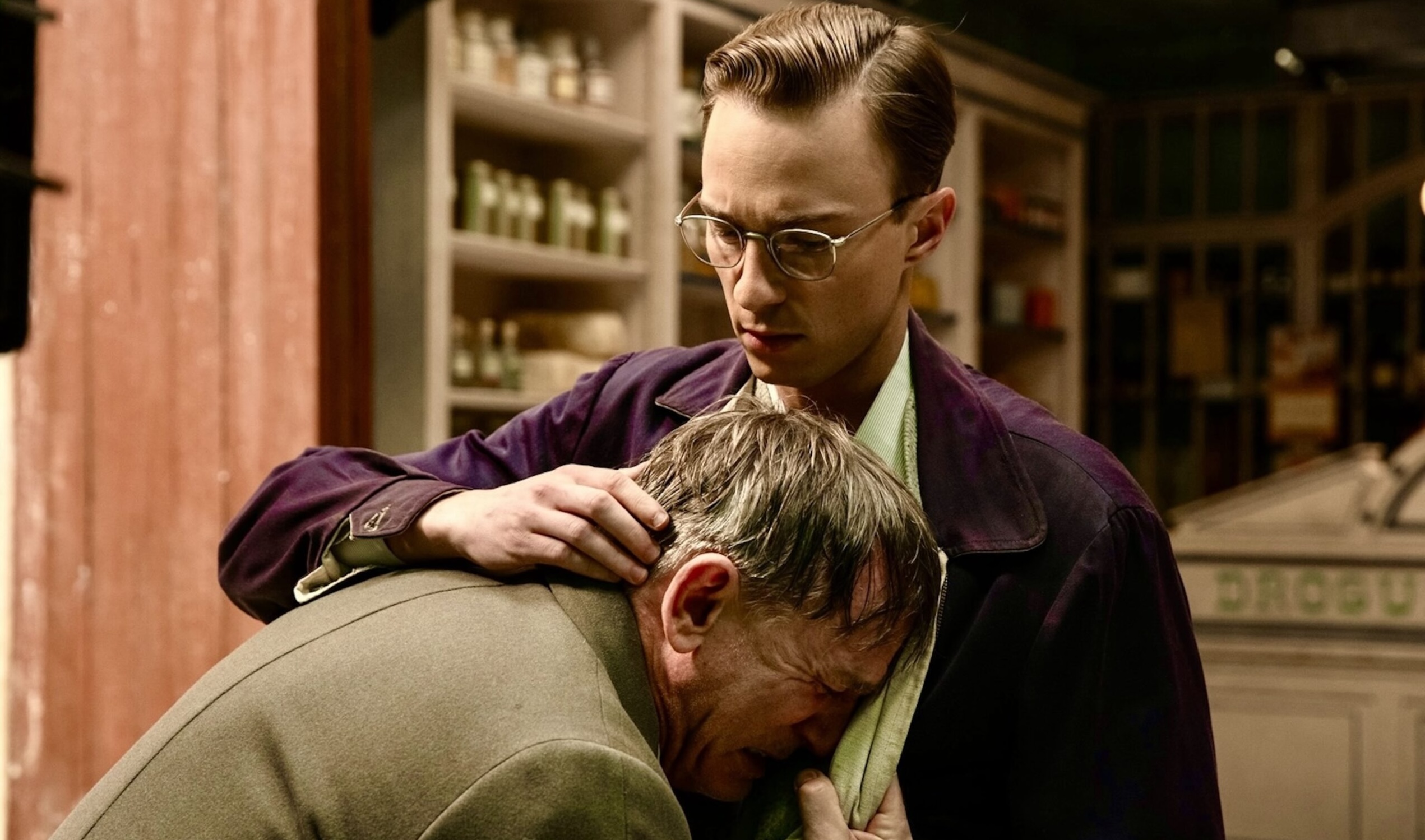
Rita (Zoe Saldana) is an under-appreciated Mexican lawyer, who spends most of her time penning eloquent pleas to get the guilty off the hook. Out of the blue, she is contacted by notorious crime cartel boss. Manitas del Monte (played by trans actor, Karlas Sofia Gascón), a man so steeped in violence he now feels he has only one way of escaping an inevitable fate. He has always longed to be a woman, and wants Rita to secretly arrange gender reassignment for him. In return, he will make her fabulously wealthy and she can choose whatever future she wishes for herself. But Manitas will have to fake his own death and his wife, Jessi (Selena Gomez), and his two young boys can know nothing of their father’s new life.

Four years later, Rita meets Manitas again, but now she’s the titular Emilia, looking to reconnect with her wife and children by posing as the cousin they never knew they had. What’s more, Emilia wishes to atone for all the killing she instigated when she was Manitas…

Is Emilia Pérez a good film? Well, for me it has flashes of brilliance, but there are also some sizeable missteps. The songs, composed by Clément Ducol and Camille range from upbeat dance tunes to quirky half-spoken, half-sung observations about anatomy that sometimes veer close to the absurd. While these serve to highlight the fairytale unreality of the piece, the constant shifting of tone makes the film feel uneven. The ‘Mexican’ locations are pretty convincingly recreated (in France) by cinematographer Paul Guilhaume and I think the elements dealing with The Disappeared are genuinely moving. On the performance front, Saldana is an absolute powerhouse as the very adaptable Rita, singing and dancing up a storm – and it’s great to see her performing as a human being rather than as a green-skinned, spandex-clad alien!

As a cis male, I might have missed some of the nuances around the transgender elements of the story – and Gascón certainly delivers a compelling and heartfelt performance – but the process of transition seems to be used here as a metaphor for wiping the slate clean and beginning a new life, untainted by the past. However, the lesson Emilia ultimately learns is that this is impossible, and she has to do more than change the way she lives if she wants to atone for her earlier crimes. This makes the underlying message a little muddled.

But again, I feel I must tip my hat to Jacques Audiard who, at seventy years of age, is fearlessly going where few other directors would dare to tread. Long may he continue to thrive!

3.6 stars

Philip Caveney

We Live in Time

02/12/24

Cineworld, Edinburgh

Directed by John Crowley, We Live in Time is a superior rom-com/weepie hybrid, anchored by stunning performances by two of Britain’s best actors, Florence Pugh and Andrew Garfield. Tonight’s advance screening – courtesy of Cineworld Unlimited – is extremely busy; in fact, we’ve managed to grab the very last two seats.

Pugh plays gourmet chef Almut Brühl, who hits a dressing-gown clad Tobias (Garfield) with her car while he’s bending down to pick up a piece of chocolate orange that’s fallen into the street. Luckily for the ‘rom’ part of the ‘com’, they’re both single: indeed, Tobias’s poor road-safety skills are the result of his reaction to signing his divorce papers. Before long, they’re in love – but then the ‘weepie’ element comes along, in the form of an ovarian cancer diagnosis, and a whole truckload of difficult decisions.

Nick Payne’s script is a sprightly delight, skipping around in time and tone with absolute assurance. The chronology is disrupted: we start in the middle of the story, then veer back and forth between the early stages of the couple’s relationship and the later trauma of Almut’s illness. It’s laugh-out-loud funny and devastatingly sad, a duality that’s reflected throughout the film.

Because Almut’s not ‘normal’. She’s a fascinatingly complex character: her restaurant serves Anglo-Bavarian fusion food; she’s bisexual; she’s fit and strong (a committed runner) and frail and weak (from the chemo). She’s a loving mother but it’s not enough: “I want to be remembered as more than a dead mum.” Almut treads her own path, and Tobias – softer and more passive than his go-getting partner – is her biggest supporter. Even if her driving force is sometimes hard to bear.

That Pugh makes a convincing chef is perhaps unsurprising as her father is a restaurateur. Naturally, given the couple’s jobs – Tobias is a data analyst for Weetabix – food plays a big part in this movie. Cinematographer Stuart Bentley highlights the seductive pleasure of a whole range of edible wonders, from Almut’s Michelin-starred concoctions to Jaffa Cakes dunked in mugs of tea and eaten in the bath.

We Live in Time is every bit as compelling as its heroine, and certainly worth a trip to your local cinema on New Year’s Day, when it’s out on general release. Just remember to pack your hanky – and maybe a fancy snack or two.

4.4 stars

Susan Singfield

Conclave

01/12/24

Cineworld, Edinburgh

The Pope has died peacefully in his sleep and, following the long-established conventions of the Catholic church, archbishops and cardinals from across the world gather in The Vatican to undertake the complicated ritual of choosing a successor. The task of organising the ensuing (and highly secretive) process falls to Cardinal Lawrence (Ralph Fiennes), the dean of the college of cardinals, who must put aside his personal grief in order to referee the resulting contest. But who will claim the coveted role?

Will it be Italian hardliner (and notorious racist) Tedesco (Sergio Castellitto)? How about the reserved but highly respected African contender, Adayemi (Lucian Msamati)? Might the prime slot fall to the influential and oleaginous American, Tremblay (John Lithgow), whose recent activities seem to suggest he’s not entirely trustworthy? And let’s not forget the wild card, newly arrived from Kabul, Benitez (Carlos Diehz), a bishop that none of the main players even knew existed, until now.

Meanwhile, one of the few women here with any influence, Sister Agnes (Isabella Rosselini), seems to be holding back on some important nuggets of information…

Lawrence is rooting for his old friend, Bellini (Stanley Tucci), a man determined to bring Catholicism into his more liberal worldview but an unexpected rivalry springs up when Lawrence finds himself also emerging as a potential candidate, something he most certainly does not want. After suffering doubts about his own faith, he’s been looking for an excuse to step quietly away from the church of Rome…

After his epic remake of All Quiet on the Western Front, director Edward Berger has turned his skills to a much more intimate story. Conclave, adapted by Peter Straughan from the novel by Robert Harris, generates its own, claustrophobic grip as the conclave moves through vote after vote, the various candidates jockeying for supremacy. This is serious, grown-up filmmaking and has about it all the mystery and intrigue of a superior crime drama. It’s heartening to note that a big crowd has turned out for this Sunday afternoon showing, a situation that these days is too often the preserve of more lightweight family fare.

It’s probably true to say that those who are already familiar with the novel are not going to be quite as blown away as I am by the film’s head-scrambling outcome, which I really, REALLY don’t see coming. (Those in the know, please keep the information to yourselves.)

Conclave is a compelling film, that has something revelatory to say about one of the most powerful and oppressive religions on the planet. It’s a film, moreover, that ingeniously encapsulates its most fundamental premise into a deceptively simple final shot.

4. 4 stars

Philip Caveney

Moana 2

30/11/24

Cineworld, Edinburgh

Moana wasn’t a smash in cinemas when it was released in 2016 (at least not by Disney standards) but it went on to develop a massive following once it started streaming. This belated sequel was itself originally intended to go straight to the small screen, but an executive decision decreed that it should first have a theatrical release and it appears to be doing far better than anyone expected.

It’s three years after the events of the first film and Moana (Auli’i Cravalho) is still a Wayfinder, mounting regular expeditions to try and find other tribes to connect with, but the evil god Nalo remains determined to keep the many nations of Polynesia divided. Pretty soon, Moana reconnects with demi-god, Maui (Dwayne Johnson), and she chooses an odd crew to accompany her on a new quest, a search for the cursed island of Motofetu, which has sunk to the bottom of the ocean. They are: eager young follower, Loti (Rose Matafeo); grumpy farmer, Kele (David Fane); and hunky Maui-worshipper, Moni (Hualalai Chung). Of course, comic relief comes in the form of the chicken and the pig, who are along for the ride – but I have to confess to growing tired of their repeated pratfalls fairly early on.

As with the first film, the animation is utterly spectacular, the evocations of nature incredibly accomplished – and I love the fact that the story is deeply rooted in Polynesian folklore. But the middle section feels strangely cluttered as Moana has to contend with the Kakomora – a tribe of er… coconuts – and she spends a lot of time in the bowels of a giant clam, much of which comes across as a kind of weird, hallucinatory goo-fest. The various goings-on are supposed to be clear to young audiences, but I’m pretty sure I’m not the only adult present, who – at various points – completely fails to understand what’s going on and why the characters are doing what they’re are.

A brief interlude where Moana interacts (and sings) with a malevolent ‘bat-lady’ called Matangi (Awhimai Fraser) is a welcome highlight – it also helps that this antagonist has a face – and I’d like to have seen more of her. (I probably will in the inevitable Part 3.)

Moana 2 has a PG certificate and warns only of ‘mild threat’ but some of the younger viewers at the packed screening I attend are clearly a bit distressed by the darker elements of the story. I’d say this is more suitable for kids aged seven and above but, whatever it’s doing, it seems to be going down a storm and it’s clearly going to generate massive profits for the House of Mouse.

3.8 stars

Philip Caveney
My Old Ass

26/11/24

Amazon Prime

Maybe because it’s lumbered with what must rank as one of the most unprepossessing titles in cinematic history, this charming film failed to make it into UK multiplexes and can only be found lurking amidst the ‘recently added’ section on Amazon Prime. Written and directed by Megan Park, it’s an engaging story, anchored by a tremendously appealing central performance by Maisy Stella.

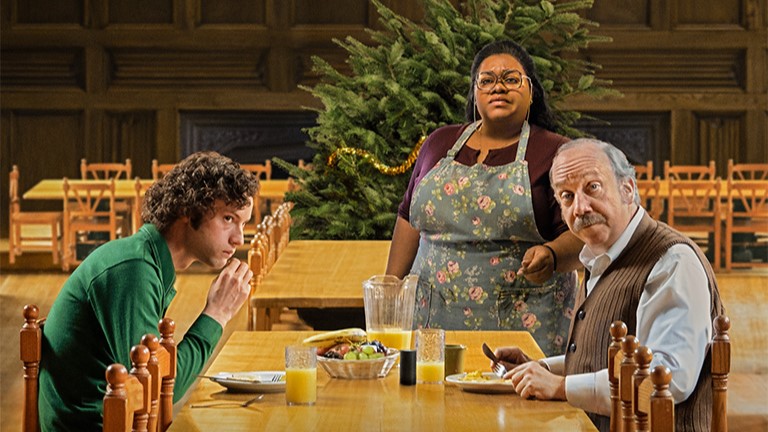
She plays Elliott, a teenage girl living in the wilds of Canada. She’s recently finished school and is preparing to head off to university in Toronto. Meanwhile, she’s intent on enjoying her remaining days at home: making out with an attractive female assistant at her local coffee shop (an ambition that’s quickly ticked off the ‘to do’ list), and then heading off with her two pals, Ruthie (Maggie Ziegler) and Ro (Kerrice Brooks), for an unconventional birthday celebration. The trio have laid their hands on some hallucinogenic mushrooms and plan to spend the night in the local woods, getting utterly wasted. (With typical teenage insensitivity, Elliott is blissfully unaware that her family are waiting at home for her with a birthday cake).

The resulting trip has some unexpected consequences. Elliott encounters a version of herself from the future. Older Elliott (Aubrey Plaza) is thirty-nine, still in college and, judging by the scant information she gives away, living in a dark and unpredictable world. She has only one bit of advice for her younger self. Stay away from somebody called ‘Chad.’ (She refuses to say any more on the subject.)

The following morning, older Elliott has disappeared but she has left her phone number and, it turns out, the two of them can talk to each other across the decades, even exchange text messages. And then young Elliott bumps into a handsome and charming stranger (played by Percy Hynes White) and, despite her previous aversion to boys, she begins to feel powerfully attracted to him.

His name? You guessed it. Chad.

My Old Ass is a charming, bitter-sweet story that celebrates the freedom of youth and, at the same time, points out the futility of trying to deny your inner longings and the inevitability of change. As I said, Stella is tremendous in this and I expect to see her in more movies in the not too distant future. Elliot’s relationship with her mother, Kathy (Maria Dizzla), and her two brothers, Max (Seth Isaac Johnson) and Spencer (Carter Trozzolo), are effectively drawn – I particularly enjoy Spencer’s obsessive preoccupation with the actor, Saoirse Ronan – and the picturesque Canadian settings are beautifully utilised.

Aubrey Plaza makes a welcome addition to any film (she was the best thing about Francis Ford Coppola’s Megalopolis) and my only complaint is that here she’s somewhat underused, popping up only twice in person. But it doesn’t prevent the story from keeping me intrigued and hooked to its charming – and sometimes quirky – worldview.

So, the next time you’re stuck for something new to watch, head to Amazon Prime and give this a whirl. It’s a delight.

4 stars

Philip Caveney
Joy

23/11/24

Netflix

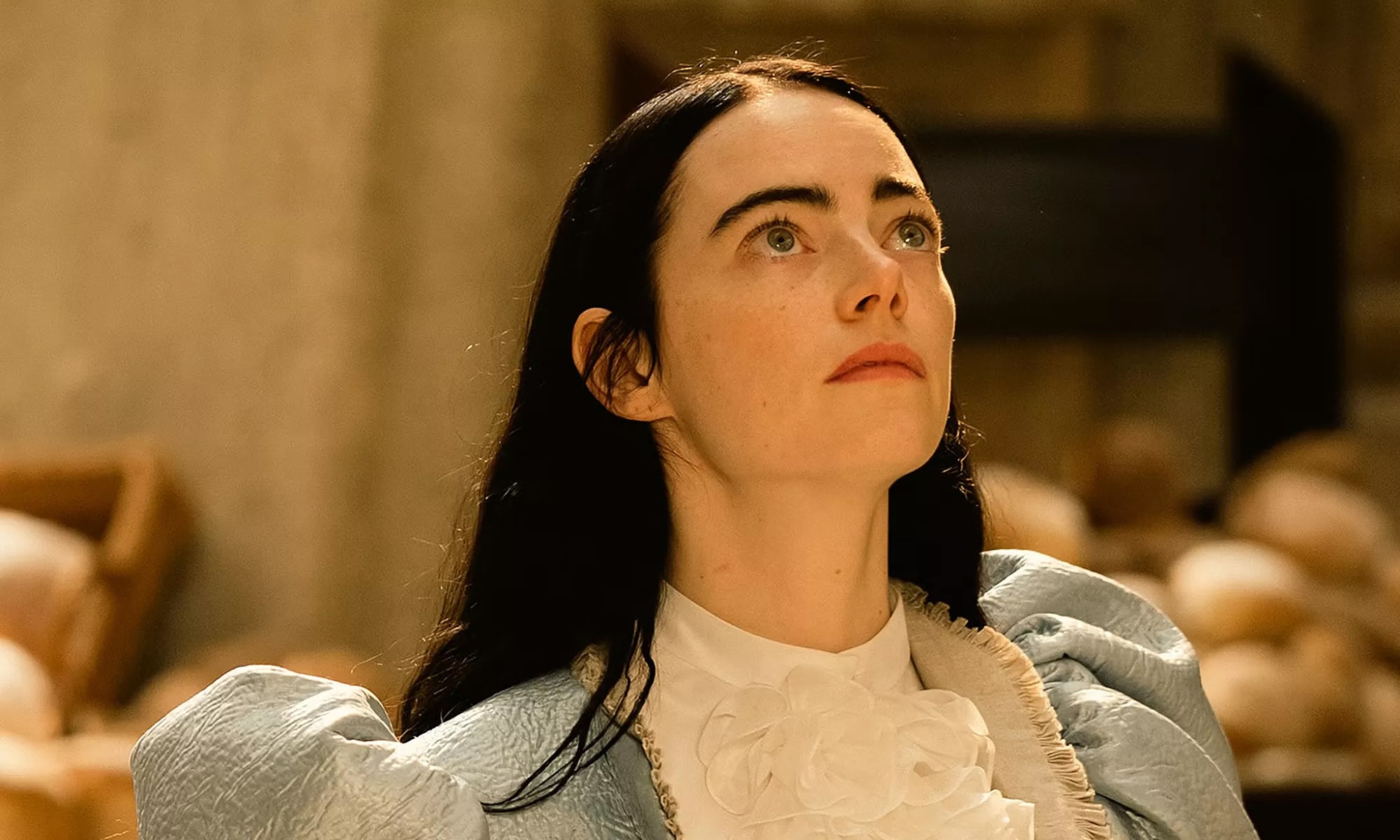
For people of a certain vintage, the name of Bob Edwards might ring a bell. He was, of course, the doctor who came up with the concept of Invitro Fertilisation and who, after years of tireless work, was behind the birth of Louise Brown – the first ‘test-tube baby’ as the press of the era dubbed her. You’ll probably also have heard of Patrick Steptoe, the surgeon whose advances in keyhole surgery made the whole process a possibility.

But the name Jean Purdy is certainly not as familiar. The third member of the team, an embryologist, Purdy worked alongside the two men (and, indeed, as this film suggests, was ultimately the driving force that brought their work to completion). And yet, to a great degree, her contribution has been largely airbrushed from history. She didn’t even merit a mention on the memorial plaque at Oldham General Hospital (Louise Brown’s birthplace) until 2015.

This story begins in 1965 when we meet Purdy (Thomasin McKenzie), freshly graduated from nursing school, being interviewed by Edwards (James Norton), who has recently embarked on the project that will occupy him for many years. His aim is simple: to provide an answer to all those would-be parents who have been prevented from having children because of a simple quirk of nature. Edwards and Purdy quickly become a duo. But their first goal is to enlist the help of Steptoe (Bill Nighy), who – though brusque and dismissive at first – is soon won over, largely by Purdy’s direct, no-nonsense approach.

The trio duly embark on years of experimentation as they work towards their ultimate goal. Underfunded and mocked by the tabloid press (who dub Edwards ‘Doctor Frankenstein’), it’s a long hard road – and it’s not until 1978 that their years of work finally bear fruit. Along the way, Jean’s relationship with her own mother is broken. Gladys (Joanna Scanlon) is deeply religious and sees this whole endeavour as ‘sinful’ and ‘unnatural.’ She cuts her daughter out of her life and even asks her not to attend the church they have both gone to for years. It’s only when Gladys falls ill that an uneasy alliance is finally established.

Purdy also nurtures a secret: she herself suffers from endometriosis and is unable to have the child that she has always longed for…

Jack Thorne’s screenplay is beautifully understated, as is Ben Taylor’s direction, which effortlessly catches the drab look and feel of the 60s and 70s. The three leads handle their roles with considerable aplomb and McKenzie in particular is wonderfully affecting, managing to convey her character’s inner turmoil with little more than a wistful look and a sidelong glance. As somebody who has personal experience of the benefits of IVF in the form of my much-loved daughter (and I fully appreciate how easy it was for me as the male in the relationship), I don’t mind admitting that some of the scenes here have me filling up.

Joy is a ‘small’ film, which probably accounts for the fact that it’s not competing with the likes of Gladiator 2 at your local multiplex and, instead, has gone straight to streaming. But it’s really worth the watch. It tells a fascinating true story of courage and determination.

And in its own quiet way, it’s a remarkable film.

4.3 stars

Philip Caveney

Wicked: Part One

22/11/24

Cineworld, Edinburgh

It’s gratifying to see the cinema so busy on this icy cold November evening. There’s been a lot of speculation recently about movie-goers being averse to musicals – indeed, there was a notable absence of songs in the trailer for this very film. But, if tonight’s showing is anything to go by, there’s plenty of life in the genre yet. Just not, perhaps, when it strays into the DC universe (Joker: Folie a Deux, I’m looking at you).

Oddly, considering how often I’m at the theatre, I’ve never actually seen Wicked on stage, so the movie is my introduction to the tale. This is clearly not the case for most of the audience: there’s an abundance of green clothing and nail varnish, a lot of excited pre-film chatter and groups of women in the loos afterwards discussing where the film diverges from the show they know and love. Thankfully for the industry, the reactions I overhear are universally positive.

For me, there are a couple of negatives. First, I’m not super-happy about the fact that this is just ‘Part One’. I always feel cheated by movies that only tell me half a story and, although the central relationship between Elphaba and Galinda has a satisfying arc, the dark hinterland – the genocidal capture and destruction of speaking animals – is barely developed at all. Second, with the exception of Defying Gravity, none of the songs seems particularly memorable.

For the most part, though, Wicked is great. For those not in the know, it’s the origins story of the opposing magical forces of good and evil from The Wonderful Wizard of Oz, i.e. The Wicked Witch of the West and Glinda, the Good Witch of the North. In this prequel to L Frank Baum’s novel, Elphaba (Cynthia Erivo) and Galinda (Ariana Grande) meet at boarding school, where they are forced to share a room. Initially, they despise one another: Elphaba is powerful, studious and green, while Galinda is rich, popular and, well… blonde. But opposites attract, and over time they learn to see the good in one another, forging a strong friendship – which even survives the strain of their attraction to the same guy, Fiyero (Jonathan Bailey). When their history professor, a goat called Dr Dillamond (Peter Dinklage), is arrested and forcibly removed from their classroom amid nefarious plans to cage all speaking animals, Elphaba’s sorcery teacher, Madame Morrible (Sandra Yeoh), encourages her to go to the Emerald City, to plead with the Wonderful Wizard (Jeff Goldblum). But all is not as it seems…

Erivo and Grande are perfectly cast as the mis-matched pair, both utterly captivating in their roles. While Erivo provides the emotional depth – Elphaba is a study in suppressed yearning – Grande is the comic relief, all fluffy self-absorption and steely sweetness. It’s a delightful pairing.

Thanks to Alice Brooks’ cinematography, the film looks sumptuous. Oz has been gloriously rendered by designer Nathan Crowley: it’s a little bit steam-punk, a little bit Middle Earth, a truly fantastical land. I love the repeated cog motif, in Shiz academy’s library, on the Oz train and – naturally – in the Emerald City’s Royal Palace. Director Jon M Chu has created a superb stage-screen hybrid, combining established musical theatre-style choreography with a very modern filmic sensibility. LGBTQ+ themes are brought to the fore, with many explicitly queer-coded characters, and lots of deliberate ambiguity, so that we – along with the Ozians involved – are made to ponder where the line is drawn between platonic and sexual attraction, between friendship and love. It works well, emphasising the teenage protagonists’ heightened emotions. No wonder young adults love this story so much.

Judging by tonight’s screening, Wicked: Part One looks certain to be a box office success. I just wish I didn’t have to wait a year for Part Two.

4.1 stars

Susan Singfield

,

Gladiator 2

17/11/24

Cineworld, Edinburgh

Back in the year 2000, Gladiator was a significant game-changer. Ridley Scott’s sword and sandal epic, starring a lean, mean Russell Crowe, wowed audiences and critics alike. It was nominated for twelve Oscars and actually won five, including Best Picture and Best Actor for Crowe. Over the intervening years, Scott has often stated his intention of doing a sequel, if only he could find the right story. And finally, nearly twenty-five years later, I’m sitting in front of an IMAX screen, eager to see what he’s come up with.

I seriously doubt that Gladiator 2 will be picking up any awards (except perhaps for special  effects) because I suspect that galley has sailed. And to be honest, in most respects it plays more like a re-run of the original than an honest-to-goodness sequel. But don’t let that put you off.

It’s some thirty years after the death of Maximus when we first meet Lucius (Paul Mescal), a soldier living and working in Numidia, alongside his wife, Arishat (Yuval Gonen.) But it isn’t long before a huge fleet of Roman warships, led by General Marcus Acasius  (Pedro Pascal), appears on the horizon. As ever the Romans are looking to extend their empire and this is just the next step in their bid for world domination. An epic battle ensues, replete with giant trebuchets and fusillades of arrows. In the carnage, Arishat is killed and Lucius taken prisoner and ferried back to Rome. On the long sea voyage he (understandably) nurtures a desire for revenge on Acasius. 

Rome is no longer the glorious empire it once was. Ruled by despotic brothers, Geta (Joseph Quinn) and Caracalla (Fred Hechinger), it’s become a place where corruption holds sway and where cunning players like gladiator-master, Macrinus (Denzel Washington), can rise to positions of influence. Does the latter have bigger ambitions than buying and selling gladiators? Well, naturally he does.

Macrinus quickly spots a quality in Lucius that he feels he can exploit and gets him into the arena at the earliest opportunity. Lucius, it turns out, has the ability to pulverise all who oppose him, even if he does pause every so often to quote Virgil. Could it be that he has some connection to the late Maximus? When we learn that Acasius’s wife is Lucilla (Connie Nielsen – the only major character to return from the original film), it soon becomes clear where this story is headed…

Gladiator 2 could justifiably be criticised for failing to explore new ideas, but this film’s DNA is all about its sheer sense of scale. Scott has always been a master of battle scenes, and lovers of spectacle can hardly complain about being short-changed in that department. Deep into his eighties now, Scott is a director who knows how to capture massive action set-pieces at testosterone-fuelled levels that are rarely even attempted these days. Wherever possible, he utilises real sets and thousands of extras in order to convey their magnitude.

There are some call-backs to the first film – scenes featuring wheat, whole lines of dialogue lifted from Gladiator 1 and that trope of stooping down to pick up a handful of earth, as though such actions can be inherited. And screenwriter David Scarpa even throws in a cheeky ‘I am Spartacus’ moment, which I think is fair enough under the circumstances. A suitably beefed-up Mescal effortlessly places a sandal-clad foot onto the A list while Washington is clearly having a whole ton of fun, camping it up as a devious player, who will seemingly let nothing get in the way of his rise to power.

There are a couple of missteps. An early dust-up in the Colosseum has Lucius and his fellow-captives pitched against a tribe of what appear to be shaved baboons, CGI creations that seem to have wandered in from some kind of demented science-fiction movie – and quite how the skinny, blonde-haired kid from the flashbacks has grown up to be Paul Mescal is one for the geneticists of the world to figure out.

But if the aim of this film was to go bigger and louder than what came before (and I suspect that was exactly the object of the exercise) then it has succeeded in spades. The sequence where a pitched sea battle is enacted in the flooded coliseum is an extraordinary slice of action cinema (and, before you Google it. let me assure you such things did actually happen – though the addition of sharks might be a touch of artistic license). Likewise, Scarpa’s cast of characters is, for the most part, loosely based around real historical figures.

I know I say this a lot but don’t wait for streaming. See this on the biggest screen available and, as you watch, ask yourself that all important question:

“Am I not entertained?” For me, the answer is, most definitely a resounding, “Yes, I am entertained!”

4.5 stars

Philip Caveney
Paddington in Peru

11/11/24

Cineworld, Edinburgh

After the success of Paddingtons 1 and 2, it was perhaps inevitable that a third instalment would eventually amble into view. But previous director Paul King did set a high bar. His films were perfect family-friendly adventures that kept both children and adults thoroughly entertained. King has now transferred his talents to the somewhat under-appreciated Wonka franchise, so this time out, directorial duties fall to Dougal Wilson, while the screenplay is the work of four writers, one of whom is original scribe Simon Farnaby.

As the title suggests, the third film sees Paddington and his adoptive family, the Browns, leaving their London home in search of Paddington’s beloved Aunt Lucy (voiced by Imelda Staunton), who has gone missing from her nun-run retirement village, deep in the jungles of Peru. The alarm has been raised by the Reverend Mother (Olivia Colman, in yet another scene-stealing role). It’s apparent pretty much from the outset that there’s something a bit dodgy about her – though she’s still unmistakably, adorably, Olivia Colman, singing and dancing her socks off. Once in Peru, the Browns – Hugh Bonneville, Emily Mortimer (replacing Sally Hawkins), Madeleine Harris and Samuel Joslin, accompanied as before by Mrs Bird (Julie Walters) – fall in with mysterious riverboat captain, Hunter Cabot (Antonio Banderas) and his daughter, Gina (Carla Tous). Cabot is introduced via an obscure film reference (Werner Herzog’s 1982 jungle odyssey, Fitzcarraldo), that only a few movie buffs are likely to spot.

A convoluted South American adventure dutifully ensues with occasional nods to Indiana Jones and the like, but it must be said that this isn’t quite as sure-footed as the previous offerings. Paddington (Ben Whishaw) is still utterly delightful and just as prone to pratfalls, but the slapstick isn’t as assured and the ‘fish-out-of -water’ premise of the first film doesn’t really work so well in a jungle. Furthermore, with just about every actor that has appeared in the series popping up for an obligatory cameo, plus scenes where Cabot is haunted by no fewer than five of his gold-obsessed ancestors, the film feels too busy and over-stuffed for its own good. There’s also a tendency for the film’s messages to be pounded home with a huge mallet rather than trusting younger audiences to take them on board.

Don’t get me wrong, Paddington in Peru has enough endearing moments to make it worth the watch and I’m sure youngsters will still be suitably entertained by the little bear’s antics but, all things considered, this offering comes in a good distance behind its predecessors.

Make sure you stay in your seats through the lengthy credits for a welcome call-back to (yet another) character from one of the earlier movies. Sadly, although I’m happy to see him, this only serves to emphasise that the latest adventure doesn’t offer anyone else quite as memorable.

3.8 stars

Philip Caveney
Blitz

09/11/24

Cameo Cinema, Edinburgh

Steve McQueen is always a fascinating filmmaker and I love the fact that I never quite know what to expect from him. Blitz is an Apple Original, destined to start streaming soon, but I would urge anyone interested to seek out an independent cinema where it’s showing, because this is a film that deserves to be seen on the big screen. As the name suggests, it’s set in 1940 as London undergoes the Blitzkreig, bombed on an almost nightly basis by the Luftwaffe.

The story is centred around George (Elliott Heffernan), a young mixed-race boy, who lives with his mum, Rita (Saoirse Ronan), and his grandad, Gerald (Paul Weller), in a little terraced house in the city. George has never met his father, who we learn (in flashback) has been deported back to Grenada for entirely nefarious reasons. As the bombing becomes more intense, the government’s plan for the mass evacuation of children from the city is announced. George is reluctant to leave his mum but, together with a bunch of other youngsters, he’s put aboard a train heading for the safety of the countryside.

But George has other plans and, at his first opportunity, he jumps off the train and starts to make his way back along the track in the direction of home…

What ensues repeatedly puts me in mind of a YA adventure as George encounters a whole selection of characters on his way home: kindly Black air-raid warden, Ife (Benjamin Clémentine); callous Fagin-esque thieves, Albert (Stephen Graham) and Beryl (Kathy Burke); and a trio of friendly young boys who keep challenging George to do ever more reckless things. His odyssey is intercut with scenes of what’s happening to Rita: working in a munitions factory; heading out on the town with her friends, Doris (Erin Kellyman) and Tilda (Hayley Squires); even performing a song for the BBC when a live series visits the factory. Episodic it most certainly is but, unlike most of the Sunday evening dramas it might be compared to, the stakes here are perilously high and happy endings are by no means assured. Whenever the story is in any danger of heading towards sentimentality, McQueen (who also wrote the screenplay) finds a way to snatch it back and amp up the jeopardy, never allowing us to forget that these are dangerous, unpredictable times – and not everybody is destined to make it to the end of the line.
The production values are first-class throughout, the depictions of the war-torn city sometimes awe-inspiring, occasionally verging on high art. Blitz also offers a fresh insight into the era, the war seen from the point of view of a boy who suffers from racial slurs on a daily basis. A scene where George wanders through a deserted shopping arcade looking at an exhibition depicting the subjugation of slaves is particularly affecting; so too, an extended sequence at the Café de Paris which depicts a Black orchestra playing for the entertainment of exclusively white, upper-class customers – a frantic, sexually-charged show which is destined to be interrupted in heart-stopping fashion.

Ronan, as ever, portrays her character with absolute assurance and even demonstrates a decent singing voice but it’s Heffernan who is handed the biggest challenge here, carrying this powerful and affecting film with absolute authority. I’ve seen some decidedly lukewarm advance reviews for this, and am at a loss to understand why some critics have failed to appreciate its evident charms. It’s epic filmmaking of the highest order. As I said, it will be on your televisions soon, but it won’t look as awesome as it undoubtedly does on a cinema screen.

4.6 stars

Philip Caveney