Month: January 2025

Babygirl

06/01/25

Cineworld, Edinburgh

It’s ironic to note that while most 18 certificate films released in recent times have been perfectly happy to depict characters being shot, stabbed and bloodily hacked to pieces, when it comes to scenes of a sexual nature, all but the most fearless filmmakers shy away from the subject. Writer/director Halina Reijn’s last film, the enjoyable slice-and-dice romp, Bodies Bodies Bodies belongs squarely in the first camp. Babygirl, on the other hand, sets out its stall in the latter and strides boldly across a landscape where few others dare to tread.

Romy (Nicole Kidman) is to all intents a powerful woman, the CEO of a major company and married to a (presumably successful) theatre director, Jacob (Antonio Banderas). The couple have two teenage daughters to their credit and seem to be blissfully happy. When we first meet them, they’re having sex. Romy appears to achieve an enthusiastic climax – so why does she feel compelled to slip away immediately afterwards and watch porn on her laptop, a submissive woman being sexually dominated by a man? The quiet orgasm she has this time, we feel sure, is more genuine than its noisy predecessor.

On her way to work, Romy chances upon an incident in the street, a young stranger handling an aggressive dog, making it obey him with a single word. This event kindles something within Romy and when, shortly afterwards, she is introduced to a bunch of new interns, she instantly recognises Samuel (Harris Dickinson), as the guy she saw earlier. Something clicks between them and it isn’t very long before the two of them have launched themselves into an intense, secret and potentially dangerous sub-dom affair. As things begin to develop between them, the relationship threatens to cost Romy everything: her family, her job, her sanity…

If this sounds like the plot of some second-rate bodice ripper, don’t be misled. Babygirl is much more nuanced than a plot summary might ever suggest. Kidman launches herself fearlessly into the piece, demonstrating how somebody can be compelled and pushed to the limit by their inner yearnings, how these compulsions can shape and dominate her life, pushing beyond the boundaries of her carefully constructed persona. Dickinson offers the latest chameleon change in his varied career, playing Samuel as an opportunistic hustler: gauche, unpredictable, never entirely in control of his own impulses, but happy enough to take the ride and see where it leads him.

While the film’s intentions are evident, it perhaps pulls too many punches in its second half, when, after a messy confrontation, Romy realises that the real problem is her own sense of shame. If she can embrace her kink, then she can be true to herself – and maybe Jacob can accept her as she really is. But perhaps this is a little too pat to be entirely convincing.

Babygirl is, for the most part, well-handled, but it does feel ultimately like a missed opportunity. I’d like to have seen it take some wilder swings in its latter stages, but I applaud Reijn’s courage for daring to go there in the first place. Anyone hoping for a violent and bloody conclusion will be very disappointed.

3.6 stars

Philip Caveney

The Remarkable Life of Ibelin

07/01/25

Netflix

Mats Steen (1989-2014) was only twenty-five when he died. The young Norwegian’s parents, Robert and Trude, had a lot to mourn: not only their son’s death but also the opportunities that had eluded him in life. Mats was born with Duchenne muscular dystrophy, an inherited disease that causes progressive muscle weakness. Although he could walk unaided as a child, by the time he reached adulthood, he could only move his fingers. Robert and Trude hated how limited Mats’ world was. He just played on his computer all day. He had no friends, had never been in love, rarely ventured beyond the four walls of his basement flat beneath their family home.

Or so they thought…

Reeling from his loss, Robert accessed Mats’ blog and left a message announcing his son’s death.

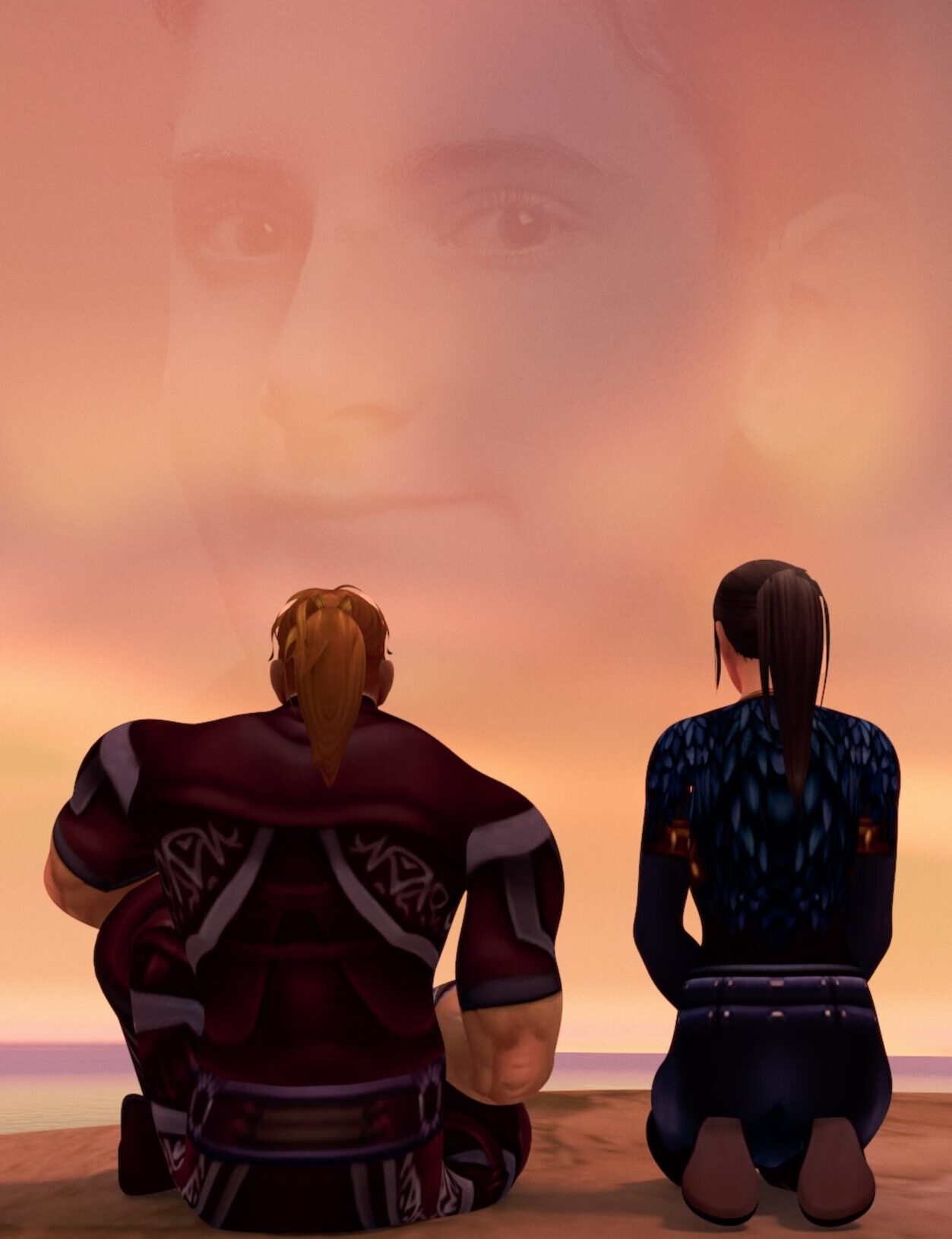
An avalanche of emails followed. And that’s when Robert and Trude discovered that, in fact, Mats had created a rich life for himself – online, within the World of Warcraft game. Here, he was Lord Ibelin Redmoore: a strong, handsome man, who went for a run every morning and socialised happily in the tavern at night. In role, he and his fellow gamers forged friendships, sharing secrets and heartaches, successes and fears. As Ibelin, in the mythical fantasy land of Azeroth, Mats was – ironically – more himself than he ever was in the real world, where too many people made judgements based on what they saw: at best pitying him; at worst assuming he was stupid.

Directed by Benjamin Ree, The Remarkable Life of Ibelin is an eye-opener, illuminating the power of RPGs. If other non-gamers are anything like me – and I suspect I’m fairly typical – they’ll have a vague idea of quests and shoot-’em-ups, but no real understanding of the games’ potency or potential. This documentary changes that.

Animators Rasmus Tukia and Ada Wikdahl bring Azeroth to the big screen, breathing life into Ibelin and the other avatars, including Mats’ first crush, Rumour (Lisette Roovers), and his friends, Reike (Xenia-Anni Neilson) and NikMik (MIkkel Neilson). The film cuts between home videos of Mats, talking heads of his family and friends, and cleverly animated sequences – creating a nuanced, layered biopic of a complex, intelligent young man.

There’s no denying that this is a heartbreaking piece of cinema; only the flintiest of hearts could fail to be moved. But it’s a celebration too – because Mats had many friends and made a lasting impact. Fantasy and reality are not just blurred, they’re inextricably bound.

4.3 stars

Susan Singfield

Kneecap

04/01/25

Amazon Prime

Kneecap, a semi-fictionalised origin story for the titular Irish hip hop band, only had a short theatrical release, despite winning big at Sundance and being shortlisted for two Oscars. We missed it on the big screen, so we are pleased to discover that it has dropped, with barely a splash, onto Amazon Prime.

Liam (Liam Ó Hanneadh) and Naoise (Naoise Ó Cairealláin) are two disaffected teenagers, living in the Gaeltacht (or Irish-speaking) Quarter of West Belfast. At a drug-fuelled party, Liam is picked up by the police and brought into an interrogation room but, true to his father Arlo’s teaching, he refuses to speak any language but his native tongue. Arlo (Michael Fassbender) is a former republican paramilitary, who has been missing-presumed-dead for a decade.

A call for an interpreter is put out and mild-mannered music teacher JJ O’ Dochartaigh reluctantly does the honours but, since the cops can only speak English, JJ and Liam are able run rings around them and report back only a fraction of what they actually say. JJ ends up in possession of Liam’s notebook, which he discovers is full of potential lyrics. By lucky coincidence, JJ just happens to be the proud owner of a ramshackle recording studio in his garage.

He suggests that Liam and Noise might like to lay down some tracks – and, almost before they know it, the three of them are performing in a local working man’s club, stoned to the gizzards on Ketamine with JJ wearing a balaclava in case anybody recognises him. But when a barmaid films a clip of their performance and puts it onto social media, it isn’t long before their foul-mouthed, blatantly political act is reaching the ears of a younger audience…

Kneecap (named after the IRA’s favourite punishment) is a ton of fun, quirky, acerbic and fearlessly provocative, but it does have a more serious subtext about the cultural importance of a country’s native tongue and how it needs to be celebrated and protected. Debut writer/director Richard Peppiatt has created a genuinely funny script, brimming with snarky one-liners, and I love the many comic-book captions and images that pepper the visual storytelling. The three band members do a pretty good job of portraying themselves, while Simone Kirby puts in a great performance as Liam’s agoraphobic mum, Dolores, and Josie Walker is deliciously menacing as local police chief Detective Ellis, enraged when she discovers that her Protestant niece, Georgia (Jessica Reynolds), is having a fling with Naoise – a Catholic!

The songs are mostly an outpouring of curses and boasts, propelled by urgent 4/4 rhythms. I don’t speak Irish, so I’m very grateful for the subtitles (the script is a 50/50 mix of Irish and English), but it’s clear from the concert sequences that Kneecap have already established a fervent following on their home turf and this film is sure to bring their music to a wider audience.

Interested? Head straight to Amazon where the party can be joined at the touch of a button.

4.2 stars

Philip Caveney

The Order

03/01/24

Cineworld, Edinburgh

The geographical landscape of this film is well-known to me – a Fulbright exchange saw me teaching high school in Walla Walla, Washington for a year in the 90s, and I visited many of the Pacific Northwest locations referenced: Spokane, Boise, Couer d’Alene, Whidbey Island. Thankfully, the film’s ideological and political landscape is far less familiar.

Directed by Justin Kurzel, The Order draws on a true story from 1983, when fascist Bob Mathews (Nicholas Hoult) began his violent mission to create an all-white promised land. In Zach Baylin’s script, a fictional FBI agent called Terry Husk (Jude Law) sets out to foil Mathews’ deadly plan. It’s a chilling tale, not least because it’s clear that not much has changed in the forty years since The Order was created. There are still way too many men like Mathews, spouting their twisted doctrines. Heck, one of them has made it all the way to the White House. Twice.

Adam Arkapaw’s bleached out cinematography evokes the feel of 1980s small town America: the vast swathes of uninhabited land; the isolated homesteads. These are the neighbourhoods where cops and criminals have known each other since kindergarten, have dated the same partners, understand each other even when they disagree. So when young police officer Jamie Bowen’s old school pal, Walter, goes missing, of course he wants to help. It doesn’t matter that they’re ethically opposed – Walter (Daniel Doheny) is a white supremacist, while Jamie (Tye Sheridan) is in a mixed-race marriage – Jamie is an Idaho boy through and through; these people are his kin.

Husk, on the other hand, is an Outsider with a capital ‘O’. Haunted by past failures, he is determined to stop the rot, to prevent any more carnage. He recognises the scale of Mathews’ ambition, but it’s hard to convince anyone but Jamie that The Order poses a real danger.

The success of this film is largely due to the contrasting trio at its heart: Law’s hard-bitten desperation; Sheridan’s hopeful naïvety; Hoult’s chilling fanaticism. All three deliver superb performances, and are perfectly cast in their roles.

Kurzel doesn’t hold back from the ugliness and real-world pain. There are the chases and shoot-outs you’d expect from any crime drama, but here they feel all-too believable, the impact evident on everyone involved, from the furrows on Husk’s forehead to the manic ecstasy of Mathews’ laugh.

It’s no accident that The Order feels so timely, as we stand on the precipice of a new era in US politics. Let’s just hope that there are enough Husks and Bowens to see us through.

4.2 stars

Susan Singfield

Nosferatu

02/01/25

Cineworld, Edinburgh

Most cinema fans have a blind spot: a director who has plenty of ardent fans, but who they just don’t get. Mine is the American director, Robert Eggers. Since his debut in 2015 with The Witch, each successive film has been received rapturously by a devoted following, while I remain underwhelmed. I quite enjoyed his fourth effort, The Northman, but was was left cold by its predecessor, The Lighthouse, and sadly I’m in (if you’ll forgive the pun) the same boat with Nosferatu, which has achieved Eggers’ biggest ever opening weekend. An extended director’s cut is already being seriously talked about. I view the film at my earliest opportunity, really wanting to enjoy it, ready to be pleasantly surprised, but sadly, once again, my hopes are confounded.

Nosferatu began life as a silent movie way back in 1922. Directed by FW Murnau, it was an unauthorised adaptation of Bram Stoker’s Dracula (or to put it in modern parlance, a rip-off). It was, understandably, the subject of a court order from Stoker’s heirs, who demanded that all copies of the film should be destroyed. But, against all the odds, a few prints survived the cull and Murnau’s plagiarised brainchild went on to become a much-lauded classic.

High time for a reboot then? Well okay, provided you discount Werner Herzog’s 1979 adaptation, Nosferatu the Vampyre, which cast Klaus Kinski in the role of the evil Count Orlok, and which I thought made a pretty decent job of it.

But since childhood, apparently, Eggers has wanted to film his version, so here it is, weighing in at a ponderous two hours and twelve minutes. It feels pointless to relate the plot, since in all but a few details, it’s Dracula with the names and locations changed. Bill Skarsgård takes the thankless role of the supernatural Count, compelled to lurk in the shadows, sporting an extravagant moustache and croaking risible lines in a subsonic rumble. It sounds like he’s gargling with porridge. Lily-Rose Depp plays Ellen, the unfortunate subject of the Count’s lust, while Nicolas Hoult is her husband, estate agent Thomas Hutter. He has been charged with the task of heading out into the middle of the Carpathians to sort out Count Orlok’s plans to up-sticks and move to Thomas’s home town of Wisborg, Germany. Of course, there must also be a Van Helsing figure in the mix and that role falls to Eggers’ regular muse Willem Dafoe as Professor Albin Eberhart Von Franz.

To give the film its due, it looks pretty impressive in 35 mm, with many of Murnau’s original scenes recreated in meticulous detail. The costumes and makeup are handsomely done and Depp, Hoult and Dafoe all submit peerless performances, backed up by a cast of dependable actors. But the glacial pace of the proceedings makes me much too aware of how long the film is and, judging by the general restlessness of the audience at tonight’s screening, I’m not the only one suffering. There’s an endless trooping back and forth to the toilets.

What’s more, if the idea of an adaptation is to take the opportunity to offer a fresh perspective, why stick so slavishly to what has gone before? Why retain the misogynistic storyline where a woman, as punishment for her youthful sexual desires, now has to submit to a predatory man’s advances in order to save the husband she really loves? Sure, the story is set in the 1800s but we’re in the 2020s and it’s not some precious relic that can’t be tweaked.

What I mostly can’t forgive is the fact that this is supposed to be a horror film and yet nothing here is in the least bit scary, just occasionally bloody and unpleasant. Those with an aversion to rats might want to give this a swerve as there are moments where the creatures run riot across the streets of the city and, in some scenes, scamper gleefully across the bodies of the actors. I stick it out to the end but frankly, I’m glad when it’s over.

There will no doubt be plenty of devotees queuing up to tell me I’ve got it wrong, but I can do nothing more about it. I’m just not a fan of the Robert Eggers’ style. The news that his next planned film is a reboot of Jim Henson’s muppet/David Bowie crossover, Labyrinth (I promise I’m not making this up), fills me with more terror than Nosferatu ever could.

2.8 stars

Philip Caveney

Better Man

01/01/2025

Cineworld, Edinburgh

Our first cinema trip of 2025 is to see a film that actually came out last year – Boxing Day to be precise. A further complication is that this would certainly have made our list of the best films of 2024 had we managed to squeeze it in a day earlier. No matter. Better Man is brilliant and I have every reason to believe I’ll still feel as strongly about it when it comes time to compile this year’s selection.

Pop biopics can be tricky beasts. You can play it straight like Bohemian Rhapsody, you can evoke a multi-layered fantasia, as in Rocket Man – or you can go for a balls-out, head-scrambling slice of pure invention, which is what Michael Gracey (of Greatest Showman fame) has done with the life story of Robbie Williams. I should probably add here that I’m not a rabid fan of Williams and his music (though Angels has long been a go-to for me on the rare occasions when I get to do a bit of karaoke). Had I not picked up on early rumours of this film’s delights, I would probably have let it slip under my radar.

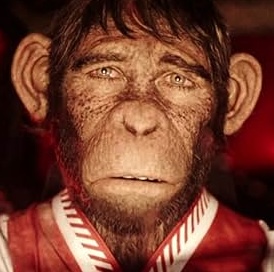
It’s hardly a spoiler to mention that Williams doesn’t even appear in his own biopic, apart from singing his best-known songs, but is instead portrayed by a CGI generated ape, mo-capped by Jonno Davies. This device is a stroke of genius, highlighting Williams’ sense of alienation, while also removing all worries of an actor not looking enough like the real man. Somehow, the metaphor renders many of the resulting scenes incredibly moving.

We first encounter our hero as a cheeky little monkey, living in a humble home with his mum, Janet (Kate Mulvany), his beloved gran, Betty (Alison Steadman), and his fame-obsessed dad, Peter (Steve Pemberton) – a pound shop Frank Sinatra, who heads off to seek his own fortune when Williams is just a boy. His son spends the rest of his life seeking his old man’s approval.

At the ripe old age of fifteen, fame unexpectedly beckons when Robbie auditions for a place in a new boy band being set up by would-be pop impresario Nigel Martin Smith (Damon Herriman). Against all the odds, he makes the cut – though it’s clear from early-on that he and the other band members are merely there to act as backup to Smith’s prodigy, Gary Barlow (Jake Simmance). As Take That embark on a punishing schedule of appearances around the UK’s gay clubs, it soon becomes clear that Robbie is having trouble handling the pressures of fame…

On paper, this may all sound straightforward enough but, as reimagined through Gracey’s mindset, the film is a collection of exhilarating, exuberant and occasionally devastating set pieces: there’s a wonderfully playful dance routine through the streets of London set to Rock DJ; a swooning waltz between Robbie and Nicole Appleton (Raechelle Banno) on the deck of a ship; and, best of all, a raucous rendition of Let Me Entertain You at Knebworth, which quickly escalates into an epic battle between Robbie and hordes of his inner demons. The film never flags but steps deftly into each successive interpretation with perfect timing. I keep having to stop myself from applauding.

Williams has been criticised for dishing the dirt on actual people, but it should be said that the person who comes in for most of the criticism is Robbie himself, often acting up like a spoiled brat with too much money in the bank. Viewers should be warned that the film is unflinching in its treatment of mental illness and self-harm. A funereal sequence set to the aforementioned Angels is particularly affecting and I don’t mind admitting that I view it through floods of tears.

One last thing: I know I say this far too often but, for the full effect, do see this one on the big screen. It’s a fabulous piece of filmmaking that effortlessly oversteps the relative simplicity of its subject to create something genuinely spectacular. And even if you don’t care one jot for Robbie Williams’ music, this one will still hit you in the feels.

5 stars

Philip Caveney

Rebel Ridge

01/01/25

Netflix

Rebel Ridge wrong-foots me. Thanks to the title and blurb, I am anticipating a standard vigilante-revenge flick, but writer-director Jeremy Saulnier has created something far more interesting: a horrifyingly credible tale of police corruption and the suffering it creates.

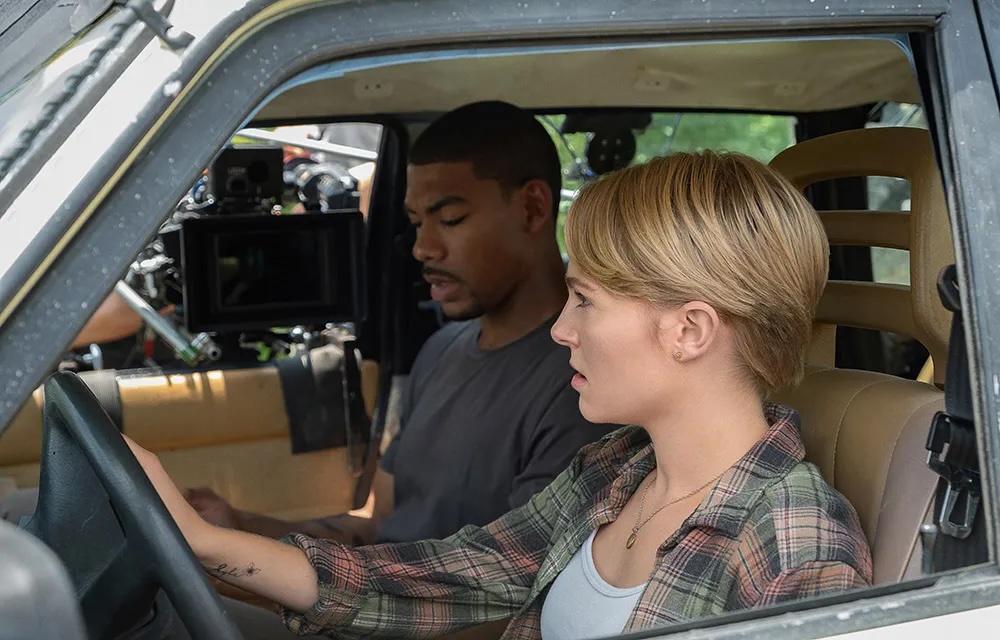
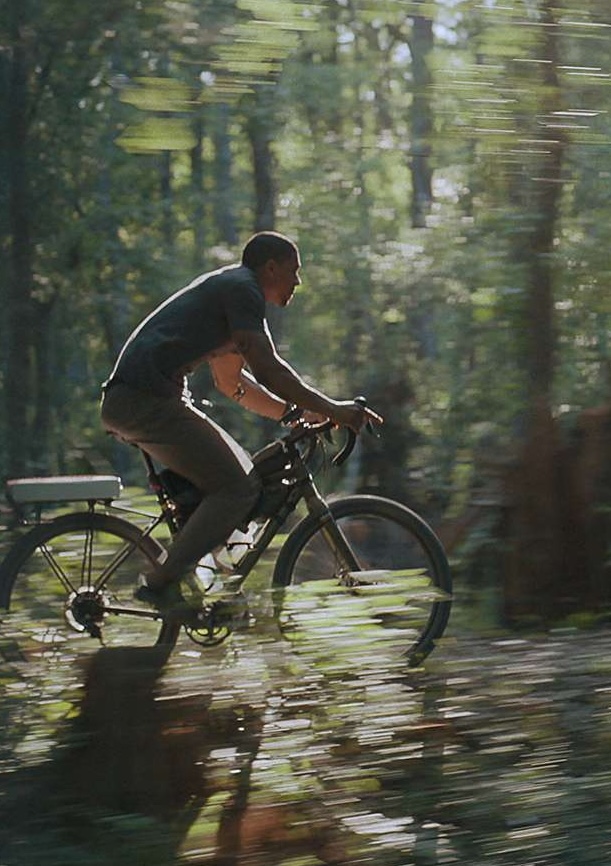
When ex-Marine Terry (Aaron Pierre) cycles into Shelby Springs with a backpack full of cash, local cops Marston and Lann (David Denman and Emory Cohen) spy an opportunity to simultaneously throw their weight around, impress their Chief (Don Johnson) and boost their small town’s coffers. The image is all too familiar: a couple of thuggish white officers initiating a spurious stop and search and threatening an innocent Black man’s life. Only this time they’ve chosen the wrong guy.

Because Terry isn’t just the kind of person who serves as a role model – strong and self-assured, calm and intelligent, driven by a strong sense of right and wrong – he’s also a martial arts expert. He doesn’t want vengeance but he does want his hard-earned money back so that he can bail his hapless cousin out of jail. However, there’s something rotten at the heart of Shelby Springs, and local court clerk Summer (AnnaSophia Robb) needs his help to root it out…

Despite its premise, Rebel Ridge isn’t a very violent film. In fact, Terry actively avoids physical conflict, using his combat skills only when absolutely necessary. Instead, the focus is on the insidious damage caused by a legal system more focused on protecting itself than the public it’s supposed to serve – an exposé of the way that self-interest trumps morality, leaving carnage in its wake.

David Gallego’s cinematography evokes the Wild West, underscoring the sense that Shelby Springs is a tyrannous and untamed place. Meanwhile, Terry is reminiscent of the ‘good cowboy’, the quiet hero who rides into town and restores order. Pierre is perfectly cast in this role, exuding dignity and strength as well as real emotional depth. When it comes, the final battle feels well and truly earned.

A clever hybrid of action movie and social commentary, Rebel Ridge gets 2025’s film viewing off to a flying start.

4 stars

Susan Singfield