Month: September 2024

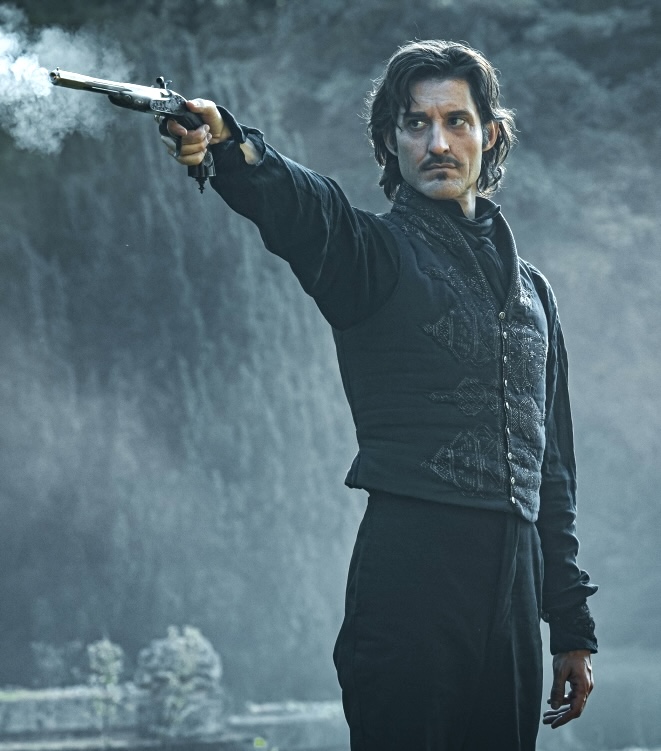
The Count of Monte-Cristo

05/09/24

Cineworld, Edinburgh

This assured adaptation of Alexandre Dumas’ classic tale feels like something of a throwback – a great big swaggering epic, set over decades, featuring lush locations, a selection of fascinating characters and enough action set-pieces to make its nearly three-hour running time positively flash by. Co-directed by Alexandre de La Patilliére and Mattieu Delaporte, who recently delivered an acclaimed version of Dumas’ The Three Musketeers (which I have yet to catch up with), The Count of Monte-Cristo is an unqualified delight from start to finish.

The plot is complex. The chaotic opening has humble sailor, Edmond Dantès (Pierre Niney), rescuing a woman from a sinking ship, much to the chagrin of his Captain, Danglars (Patrick Mille), who has ordered him not to dive in. But Edmond’s valour is rewarded when he finally gets back to port. Danglars is summarily sacked by the ship’s owner and Edmond is offered the post of Captain, which means he is finally able to propose to the woman he loves. Mercedes (Anaïs Demoustier) comes from an affluent family and her parents would never countenance her marrying a lowly seaman. But a Captain? That’s another matter.

On the couple’s wedding day, Danglars has his revenge, claiming that he has evidence that Edmond is a Napoleonic spy. He conspires with Edmond’s “friend” Fernand de Morcef (Bastien Boullion) and Gérard de Lafitte (Laurent Lafitte), a crooked magistrate, to ensure that the accusation sticks.On what should be the happiest day of his life, Edmond is flung into jail, where he has the prospect of spending the rest of his days.

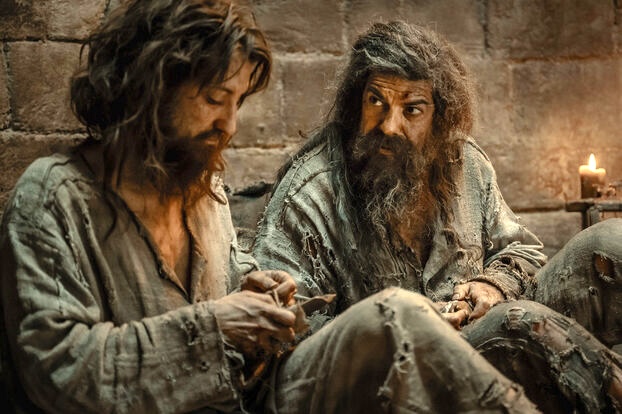
For four years, he has no contact with another human, but one day befriends another prisoner, Abbé Faria (Pierrefrancesco Favino), who claims to be the heir to a fantastic treasure. He explains that all the the two men need to do is dig their way out of the prison and they will share a fortune. But when – ten years later – Edmond finally makes his escape, the treasure is all his for the taking – and he is free to plan his elaborate revenge on Danglars and his co-conspirators…

If that sounds convoluted, fear not, because this beautifully-mounted production never leaves me in any doubt as to who is who and how they all relate to one another. There are some fabulous performances here, not least from Niney, who manages to convey the awful longing for vengeance which he has nurtured for so long – and I fully sympathise with his determination to make his revenge as protracted and heartless as possible. Nicolas Bolduc’s sumptuous cinematography and Jérôme Rebotier’s magnificent score make the whole undertaking even more impressive. I love too that, for once, a story of revenge is so much more nuanced than the usual shoot ’em up nonsense.

The only element here that requires me to suspend my sense of disbelief is when Edmond uses a series of Mission Impossible-style masks to disguise himself as a variety of different characters. It seems unlikely that – in that era – prosthetics could have been brought to quite such a fine art, but it’s a detail I’m happy to accept when every other element is so faultlessly achieved.

The sad truth is that an adaptation of a French classic (with those dreaded subtitles) is probably not going to put an awful lot of bums on cinema seats – a tragic state of affairs, considering how generally brilliant this is. Anyone longing for a slice of old-fashioned adventure will appreciate this wonderful, multilayered saga.

4.8 stars

Philip Caveney
Blink Twice

01/09/24

Cineworld, Edinburgh

Actor Zoë Kravitz’s directorial debut comes with a trigger warning. ‘This story features sexual violence.’ It’s a tale of toxic masculinity and wealth and the ways in which both things can go hand-in-hand. It’s impossible to watch this and not think about certain high-profile sex scandals from recent history. But Blink Twice is also an assured and intriguing thriller with a labyrinthine plot that makes a lot more sense in retrospect than it seems to as it unfolds.

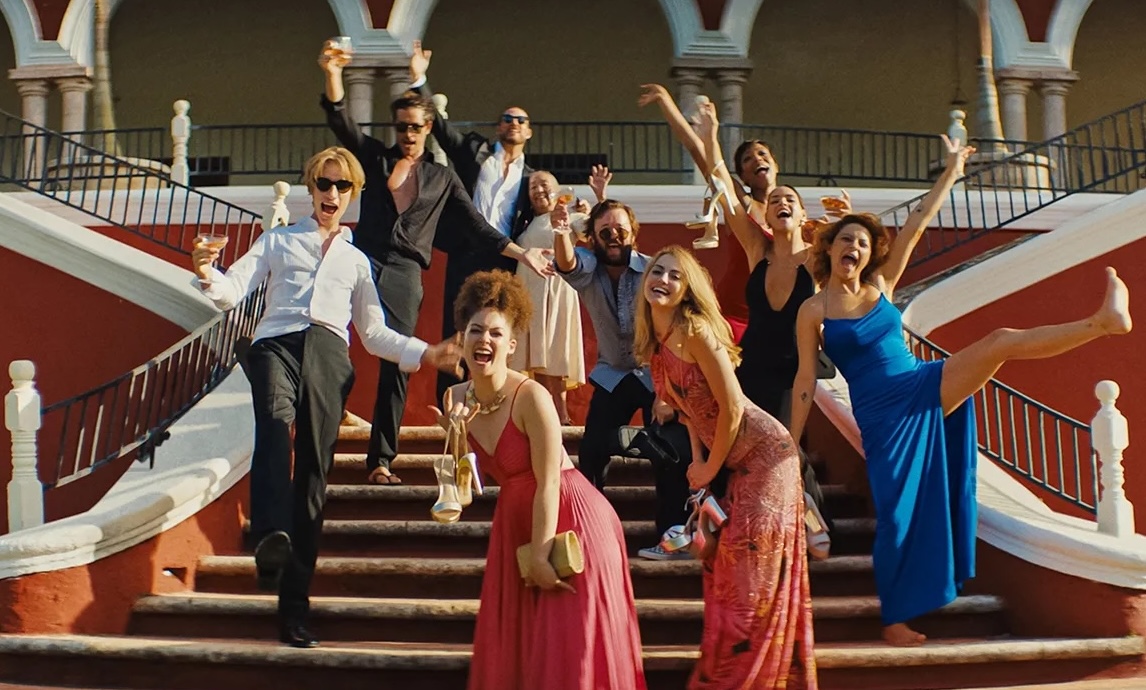
Frida (Naomi Ackie) and her flat mate, Jess (Alia Shawkat), live a hard-scrabble life in New York, working as cocktail waitresses to make ends meet. But a rare ray of sunshine comes with a yearly charity event where they have the opportunity to mingle with the rich and famous, hosted by the reclusive tech billionaire, Slater King (Channing Tatum). After a scandal, a year ago, Slater disappeared from public view and even stepped down as CEO of his own company, but he’s recently been in the news apologising for his bad behaviour. He now lives on his own private island, where he claims to be living a quiet and blameless life.

When Naomi unexpectedly hits it off with the Slater at the event, she and Jess find themselves invited on a trip to his island and, almost before they know it, they – and a bunch of other young women – are living the high life, nights of unfettered hedonism where champagne and drugs flow like water. Naomi seems to be developing a genuine relationship with Slater, much to the annoyance of another female guest, Sarah (Adria Ajona), the star of a survivalist game show. Slater’s male friends, Vic (Christian Slater) and Tom (Haley Joel Osment), seem like nice guys and his private chef, Cody (Simon Rex), creates wonderful feasts for them to enjoy every night. It’s all brilliant… isn’t it?

But it gradually begins to dawn on Naomi that something here is wrong. Why do none of the women know what day of the week it is? Why are her dreams so weird? And, in a rare moment of clarity, an even more troubling question emerges: what’s happened to Jess?

It would be criminal to reveal any more about the plot of this assured psychological thriller, other than to say that, as the tale unfolds, it moves inexorably deeper into the realms of horror. Frida is terrific in the central role and Arjona (who made such a good impression in Hit Man) is clearly destined for stardom. Geena Davis has a small but pivotal role as Stacy, Slater’s right hand woman, generally too stoned to stop and think about what she is complicit in. (Remind you of anyone, Ghislaine?)

The script, by Kravitz and E T Feigenbaum, is cleverly put together, liberally sprinkled with clues that only fully add up in the final scenes. The story takes some wild swings in its latter stages but they are all subtly signalled along the way. Adam Newport-Berra’s dazzling cinematography and Kathryn J Schubert’s slick editing ensure that the film always looks sumptuous, even when what’s happening onscreen is rotten to the core.

As the story sprints into its nerve-shredding conclusion, I find myself holding my breath as the tension steadily mounts – and how you will feel about a late-stage revelation will really depend on your faith in human nature, or your lack of it.

Either way, this signals Kravitz as a director of great promise.

4.4 stars

Philip Caveney

Sing Sing

31/08/24

The Cameo, Edinburgh

It’s National Cinema Day and picture houses across the country are offering tickets for a mere £4. The Cameo is packed to the rafters. Does this mean that cinemas could sell out regularly if they lowered their prices, or is the mass turnout down to the sense of a special occasion?

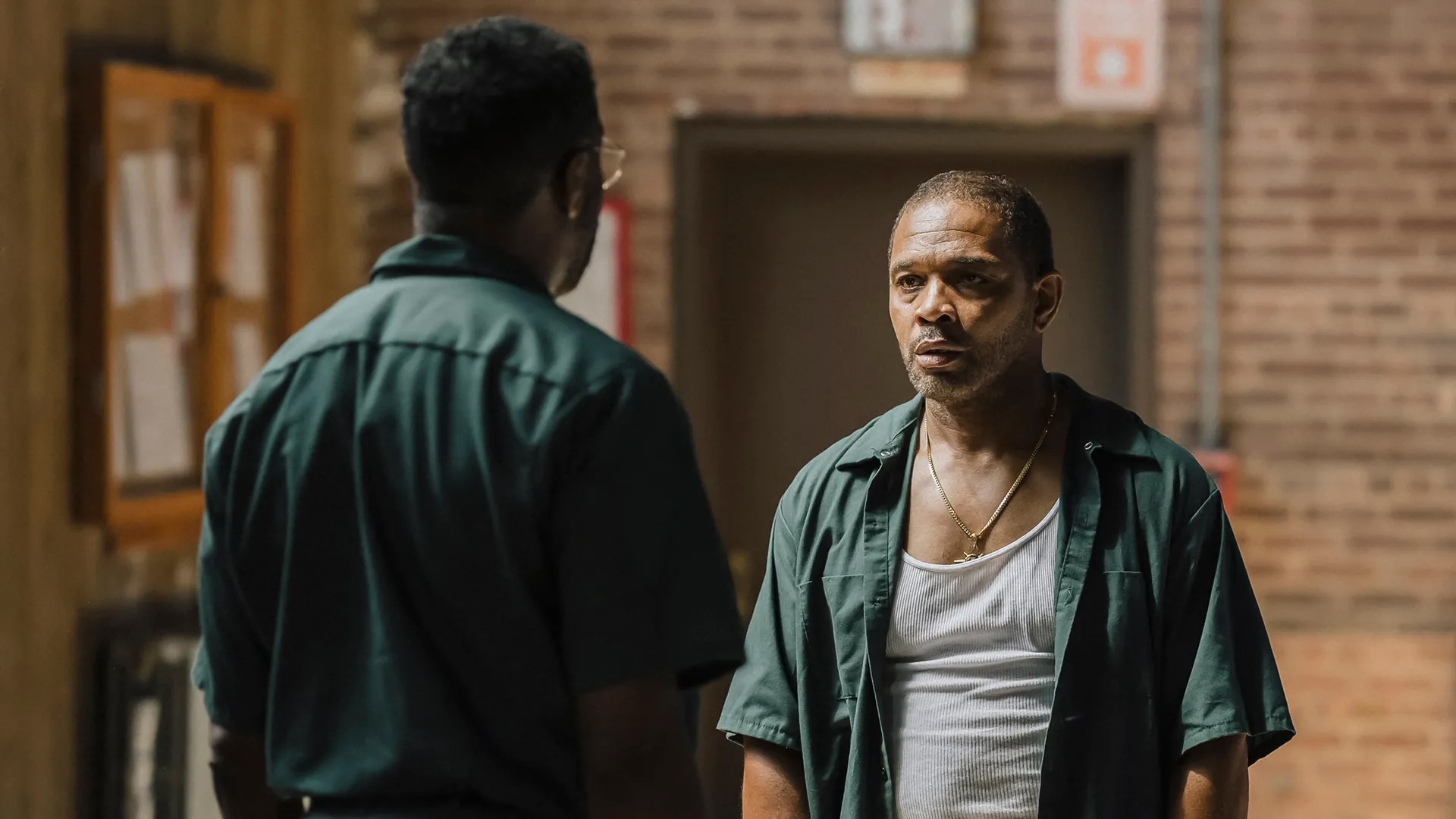
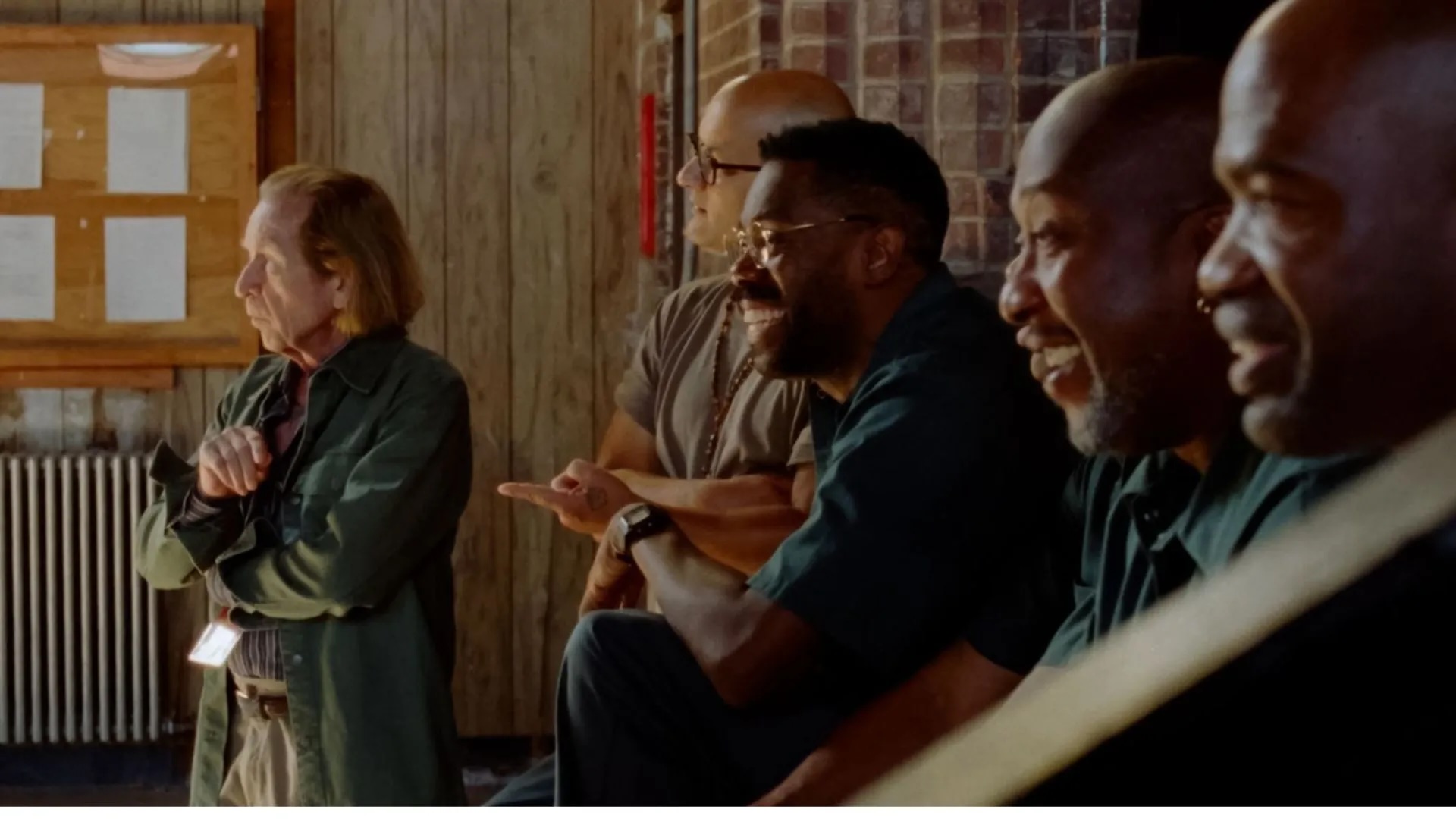
The programming is important too, of course. Sing Sing deserves to draw the crowds, even at full price. It’s a weighty, life-affirming piece of work, humanising the inmates of the titular maximum security prison. It’s also a timely reminder of why the arts are so important.

Based on John H. Richardson’s book, The Sing Sing Follies, Greg Kwedar’s movie is all about the RTA programme (Rehabilitation Through the Arts), which provides customised curricula of theatre, dance, music, etc. in prisons across the USA. Each jail has its own steering committee of prisoners, and external facilitators to help them explore their ideas. The benefits to both inmates and wider society are clear: by offering troubled people hope, allowing them the chance to explore their feelings and develop skills, to improve their self-esteem, the severity of infractions within prisons is reduced – and so is recidivism. The urge to punish, to make correctional facilities as unpleasant as possible, is perhaps understandable but it’s self-defeating. If we want a better world for everyone, we have to accept the evidence and give incarcerated people as many opportunities as possible to improve their circumstances.

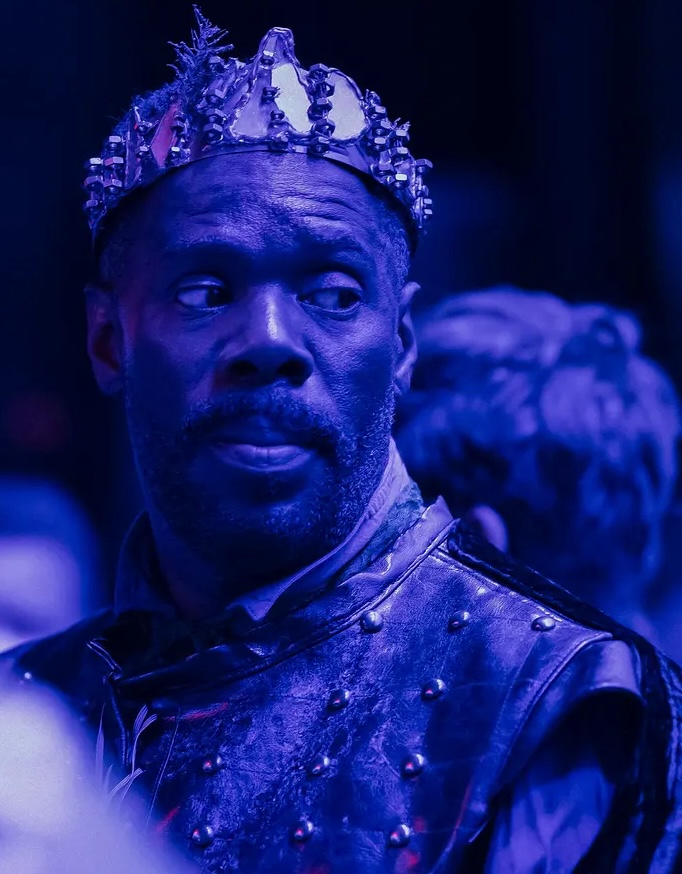
Colman Domingo makes a thoughtful, impressive John “Divine G” Whitfield, a central member of Sing Sing’s RTA group. Divine G – who has a cameo appearance – writes plays as well as performing in them, and also works tirelessly to support other inmates with their appeals. Apart from Paul Raci as volunteer drama leader Brent Buell, the rest of the cast comprises ex-prisoners playing themselves. Co-lead Clarence “Divine Eye” Maclin is especially affecting: his transformative journey from bullish gang member to esteemed performer might be predictable but it’s absolutely compelling.

We shouldn’t need reminding that theatre matters: we’ve known it forever. Thomas Keneally’s The Playmaker and Timberlake Wertenbaker’s Our Country’s Good both immortalise the real-life production of The Recruiting Officer performed by convicts deported to Australia in 1789. Margaret Atwood’s fictional account, Hag-Seed, doesn’t just illuminate The Tempest for a contemporary audience, it also advocates for arts in jail. Bertolt Brecht’s Lehrstücke (1920s and 30s) were created precisely to focus on the process of creating drama and the impact it has on actors. Here, in Clint Bentley’s gentle, often funny screenplay, we see again exactly how life-changing theatre can be.

Kwedar wisely steers clear of the violence we are accustomed to in prison movies: the menace is there, but it’s in the wings. Instead, we get to see the men at their best, when they’re engaged in something they really care about. As Sean “Dino” Johnson points out, “We get to be human in this room.”

And human they are. As a teacher of creative drama (albeit with children, not criminals), I’m not at all fazed by Buell’s bonkers-sounding playscript, Breakin’ the Mummy’s Code, which incorporates everyone’s ideas, including time travel, Freddy Krueger, ancient Egypt and, um, a couple of Hamlet’s soliloquies. That sounds just fine to me! It’s heart-warming to see how much it matters to the men, how seriously they take the acting exercises and the director’s notes, how much fun they have when they’re finally on stage.

Sing Sing is an important film, but it’s a highly entertaining one too. Beautifully crafted, with cinematography by Pat Scola, you’re guaranteed to leave the cinema with a smile on your face and a sense of hope for the future.

4.7 stars

Susan Singfield