

22/12/23
Cameo Cinema, Edinburgh
Priscilla
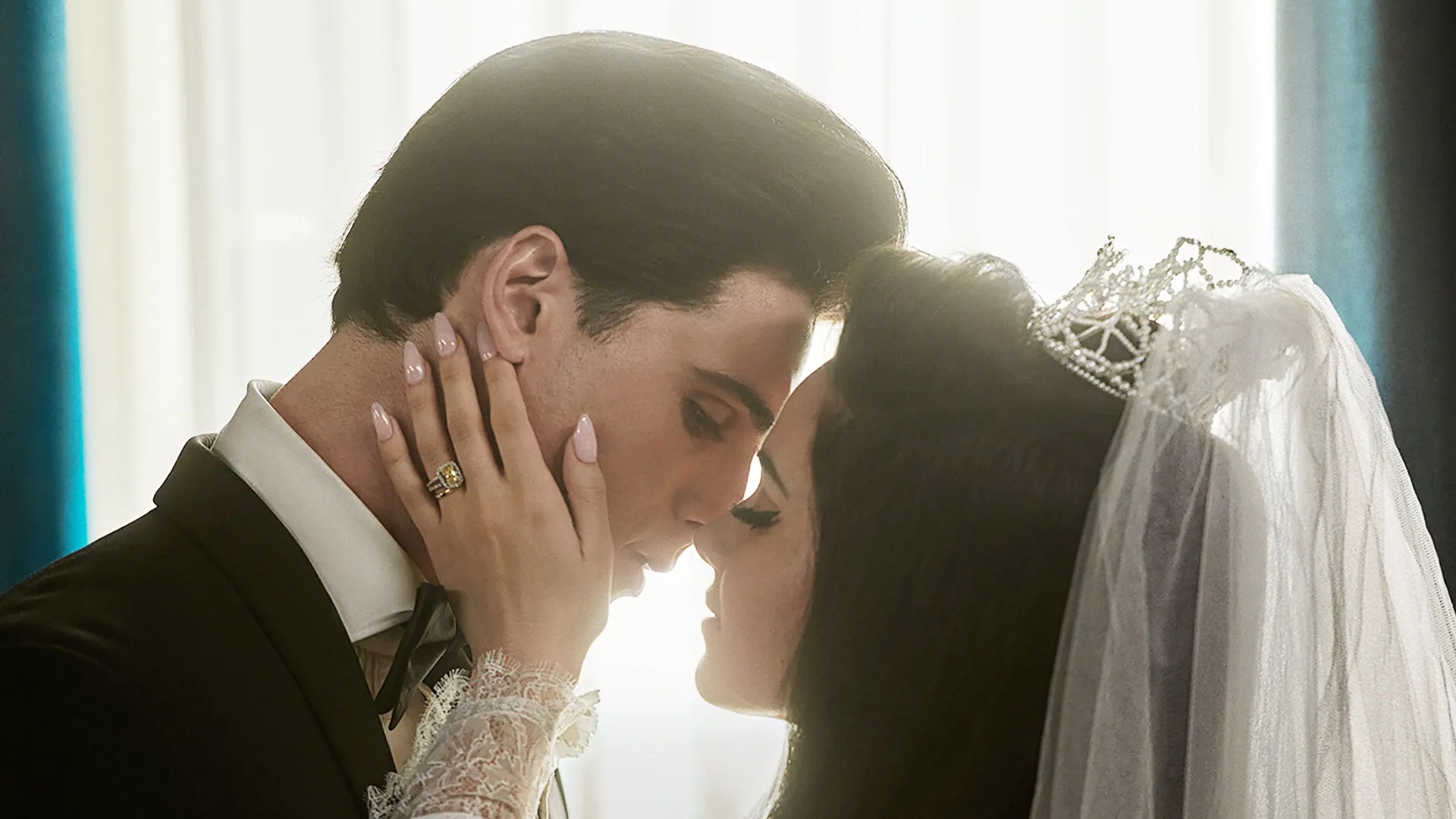
If Baz Luhrmann’s Elvis was a dazzling celebration of the singer’s career, Priscilla offers the polar opposite of that film – a true story with a dark underbelly that, viewed with the gift of hindsight, feels almost shockingly transparent. Presley emerges as a toxic human being, a man who manipulated and exploited a naive fourteen year old girl for his own purposes.
And before you say, “Well that’s just director Sofia Coppola’s interpretation of what happened,” let me add that her screenplay is closely based on Priscilla Presley’s autobiography, Elvis and Me – and that she was one of the executive producers on the film.
We first meet her as a bored teenager on an Army base in Germany. Cailee Spaaeny submits an impressive performance in the title role, managing to convincingly portray her subject from her early teens to her late twenties. When a young officer approaches Priscilla and casually asks her if she’d like to meet Elvis Presley, of course she says yes! Like most other kids in the late 1950s, she is a big fan. And he is arguably the most famous person on the planet.
So, to the understandable consternation of her parents, Priscilla heads off to Elvis’s house and is soon chatting to the man himself, as played by Jacob Elordi, last seen being quintessentially English in Saltburn, but managing to inhabit Presley’s mumbling, brooding persona with considerable skill. The pair hit it off, big time.
When Elvis is posted back to America, a lengthy interval suggests that he may have forgotten about her but, out of the blue (and again, much to her parent’s understandable concern), she’s summoned to his new home, Graceland, where she’s invited to become a permanent fixture. No sex yet, not until she’s of age, but plenty of smooching and much manipulation from Presley, who coaxes her to change her hair, her makeup and her fashions – to become, in effect, his dream girl.
As Presley grooms Priscilla (and there really isn’t a more appropriate term for what he’s doing), so her own identity becomes increasingly erased – and who knows where it’s all going to end?
Coppola’s accomplished film is handsomely mounted, the period detail convincingly evoked over the changing decades and it’s interesting to note how cinematographer Phillippe Le Sourd keeps everything murky and claustrophobic in the film’s early stretches, mirroring young Priscilla’s view of the world she’s obliged to exist in. Le Sourd returns to the gloom in the film’s later scenes, as Presley slips inexorably into addiction to prescription drugs. In between, the screen sizzles and pops as the odd twosome actually begin to enjoy the advantages of being a couple.
Weirdly, I knew about their story from my own childhood. My sister was a member of Presley’s fan club and received a monthly magazine. In the early sixties, I read repeatedly about the man’s developing relationship with Priscilla. Of course, back then, I wasn’t mature enough to fully appreciate how profoundly creepy the whole arrangement was. Priscilla’s age was an open secret to the world but, blinded by Presley’s fame, we just kind of accepted it. Shame on us.
This is a fascinating film, one that digs a lot deeper than Lurhman’s (admittedly very enjoyable) biopic, exposing the ugly bumps and warts that lay beneath the shimmering surface of stardom. To say that it’s an eye-opener would be something of an understatement.
4.3 stars
Philip Caveney
 Bouquets & Brickbats