20/12/23
Cineworld, Edinburgh
At eighty-two years of age, Hayao Miyazaki, the co-founder of Studio Ghibli, has had more comebacks than Frank Sinatra. He’s been talking about retirement ever since Princess Mononoke way back in 1997, but has managed three major releases since then, not to mention a whole bunch of shorts. And now here he is once again, director and writer of The Boy and the Heron, still reaching for those impossible heights on the big screen – and mostly achieving them.
It’s evident at a glance that Ghibli continues to exert a powerful hold on lovers of quality animation. This advance IMAX screening (the film will officially be released in the UK on Boxing Day) is completely sold out, despite being in Japanese with subtitles. (We don’t mind, we prefer it that way but apparently it puts a lot of viewers off.) We’ve managed to secure a couple of seats in the very front row, the giant screen looming above us, making the whole experience incredibly immersive.
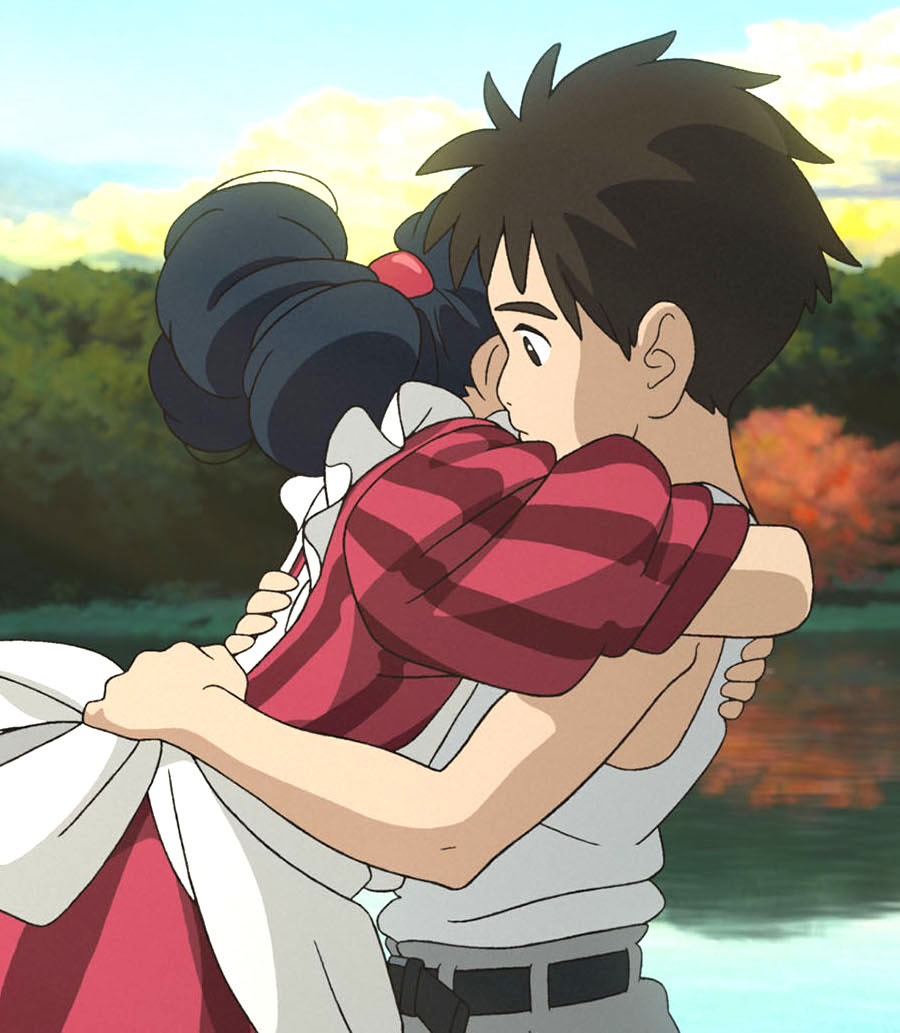
The story is loosely autobiographical, but I can only assume that this applies to the film’s almost hallucinatory opening scenes in World War 2 – otherwise I’m left to conjecture that Mizayaki had a very strange childhood! Tokyo teenager Mahito (Soma Santoni) awakes one night to the sound of an explosion and is told that the local hospital has been firebombed. He’s horrified, because he knows his mother is working there and, in a breathtaking action sequence, he dresses himself and runs frantically through the blazing city, in the desperate hope of rescuing her. But he’s too late.
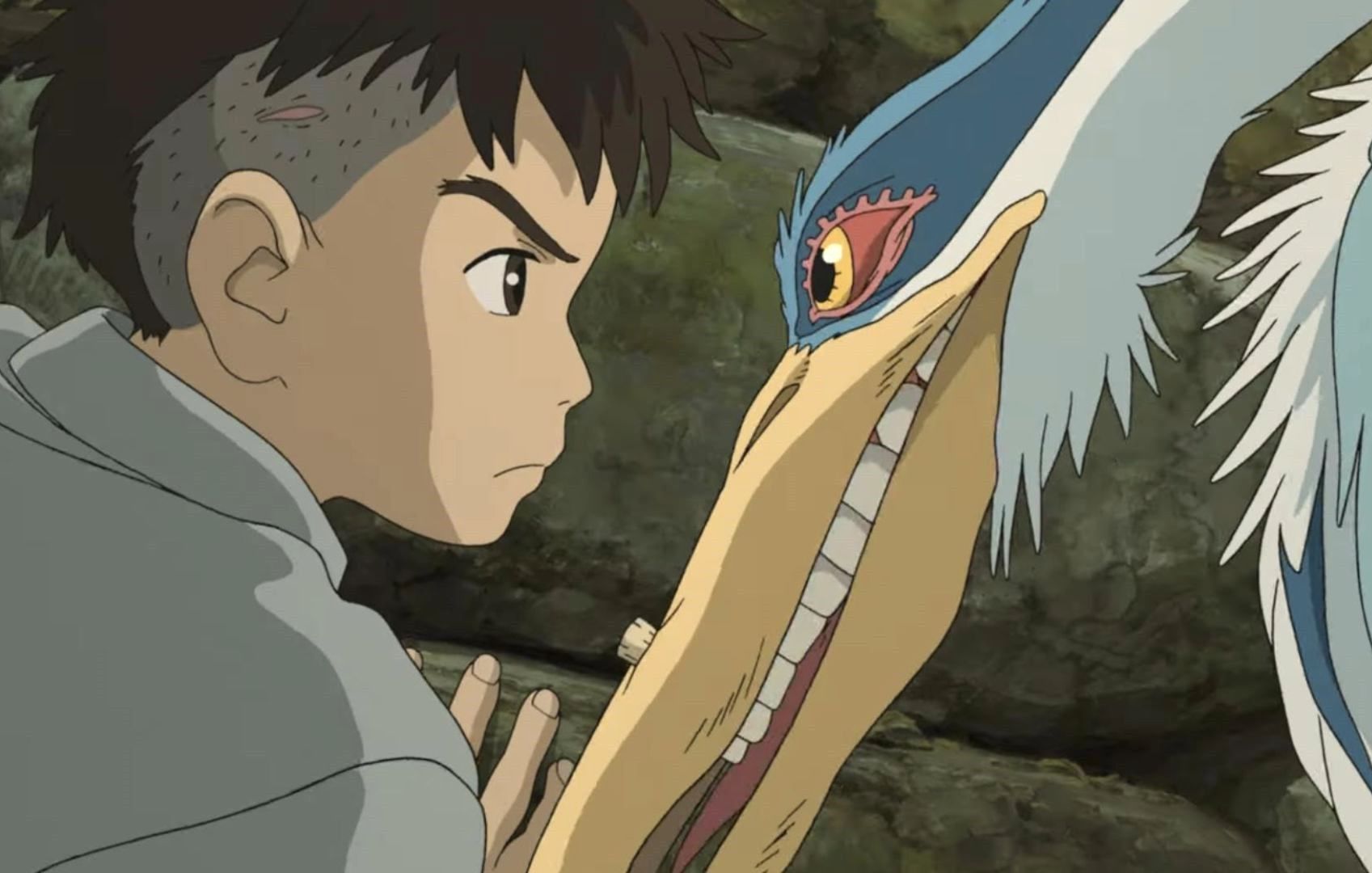
A few years later, Mahito accompanies his father, Shoichi (Takuya Kimura), an aeroplane designer, out to the calm of the countryside. Shoichi is now married to his late wife’s sister, Natsuko (Yoshino Kimura), who is pregnant with what will be Mahito’s little brother or sister. Mahito soon discovers that his stepmother’s country house is a place of mystery and intrigue, serviced by a team of comical-looking… erm… grannies. But things take a darker turn when a sinister grey heron that hangs around the grounds starts talking, telling Mahito that his presence is required elsewhere…
All the hallmarks of Studio Ghibli are present and correct and they’ve arguably never looked more ravishing. There are beautiful shimmering landscapes, ancient mouldering buildings and a succession of weird, dreamlike environments that seem to virtually erupt from the screen. And there’s that brilliant technique they always employ of illustrating food so perfectly, you can actually taste it. (One scene features fish entrails, so this isn’t always a pleasure!)
Aside from the fact that this particular tale focuses on a teenage boy (Ghibli’s lead protagonists are nearly always female), it feels like classic Ghibli dialled up to 11.
If there are some shortcomings, they are in the plot. It’s not that Miyazaki’s screenplay lacks interesting ideas. On the contrary, it’s stuffed with them, so many that they virtually do battle with each other to establish authority. While it’s perfectly fine for a storyline to be complex, it shouldn’t feel over-complicated and, since some of the fantastical goings-on are opaque to say the least, I too often find myself bewildered by what Miyazaki is trying to say. The inevitable questions that arise are left unanswered and, eventually, I decide that this is deliberate.
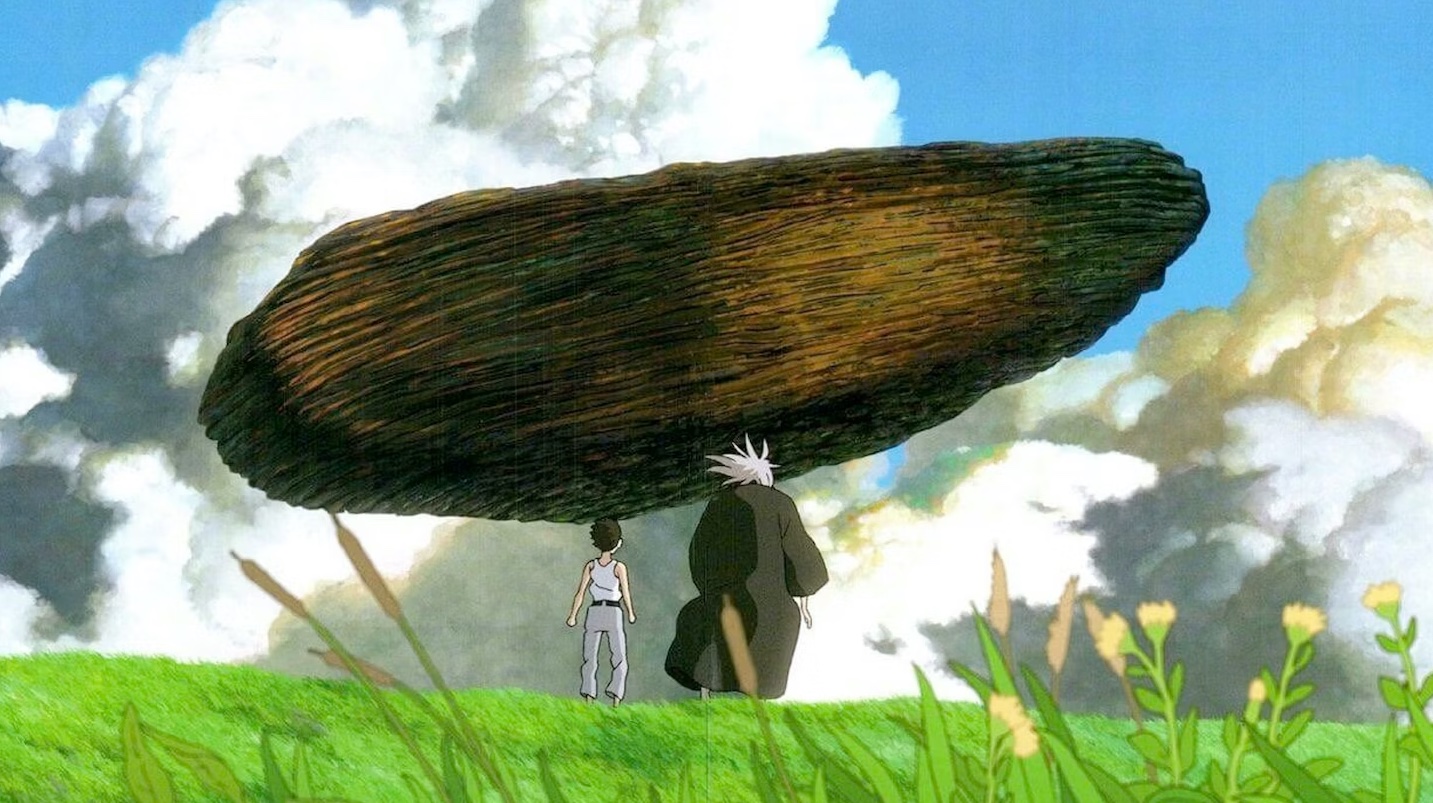
Perhaps it’s simply a case of an elderly man with a lifetime’s experience trying to cram all of it into a couple of hours. It’s hard not to see the mysterious wizard-like figure, obsessed with balancing various pieces of polished stone on top of each other in order to ‘make the world work’, as a version of the great director himself, trying to puzzle out the enormity of his own astonishing career.
As the credits roll, I find myself wondering if I might manage to slot this film in for a second viewing – maybe even the upcoming dubbed version with a host of Hollywood talent providing the voices. The Boy and the Heron is that kind of movie, the sort that has you pondering its various possibilities long after you’ve left the cinema. See it on the big screen, in IMAX if you can. You may be puzzled, but you won’t be disappointed.
4.2 stars
Philip Caveney
 Bouquets & Brickbats