25/11/23
Cineworld, Edinburgh
Over his long career, Ridley Scott has taken on all manner of subjects, in pretty much every genre you can name. It’s interesting to note that his very first feature film, The Duelists, was set during the Napoleonic era, so perhaps it was only a matter of time before he returned to the period and took on the story of the little Corsican – a subject that has brought many other directors to their personal Waterloo. In this particular case, it’s taken forty-six years to get there.
Some cinephiles will tell you that the ultimate Napoleon movie has already been realised way back in 1927, when Abel Gance produced a staggering version of the great man’s life under the same title. It was certainly remarkable and I speak as someone who sat through one of Kevin Brownlow’s restorations of the film in the early 80s – all five and a half hours of it (complete with a live symphony orchestra and several judicious toilet breaks). Compared to that, Scott’s two hours and thirty-eight minutes seems relatively jaunty.
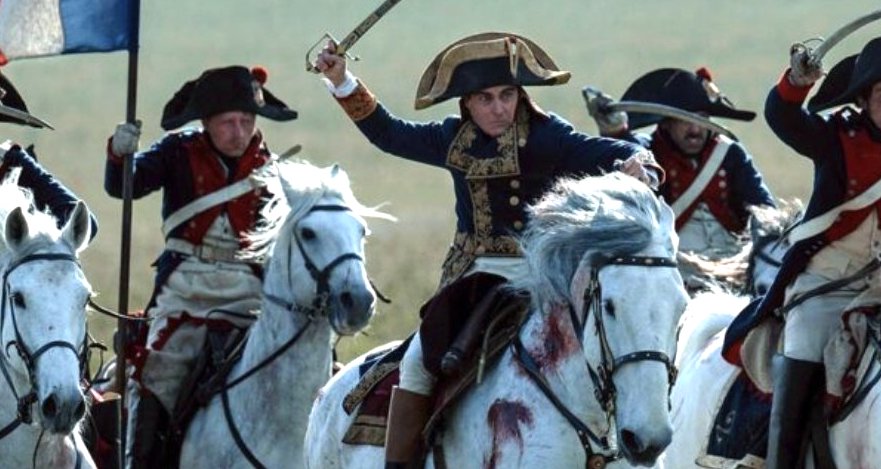
Those who have complained that this version is historically inaccurate may be missing the point. Scott is clearly far more interested in the legend than the reality. It’s a matter of record, for instance, that Napoleon probably owes his defeat at Waterloo to the fact that he suffered from bleeding haemorrhoids and couldn’t sit on his horse – but that’s a film that nobody wants to see.
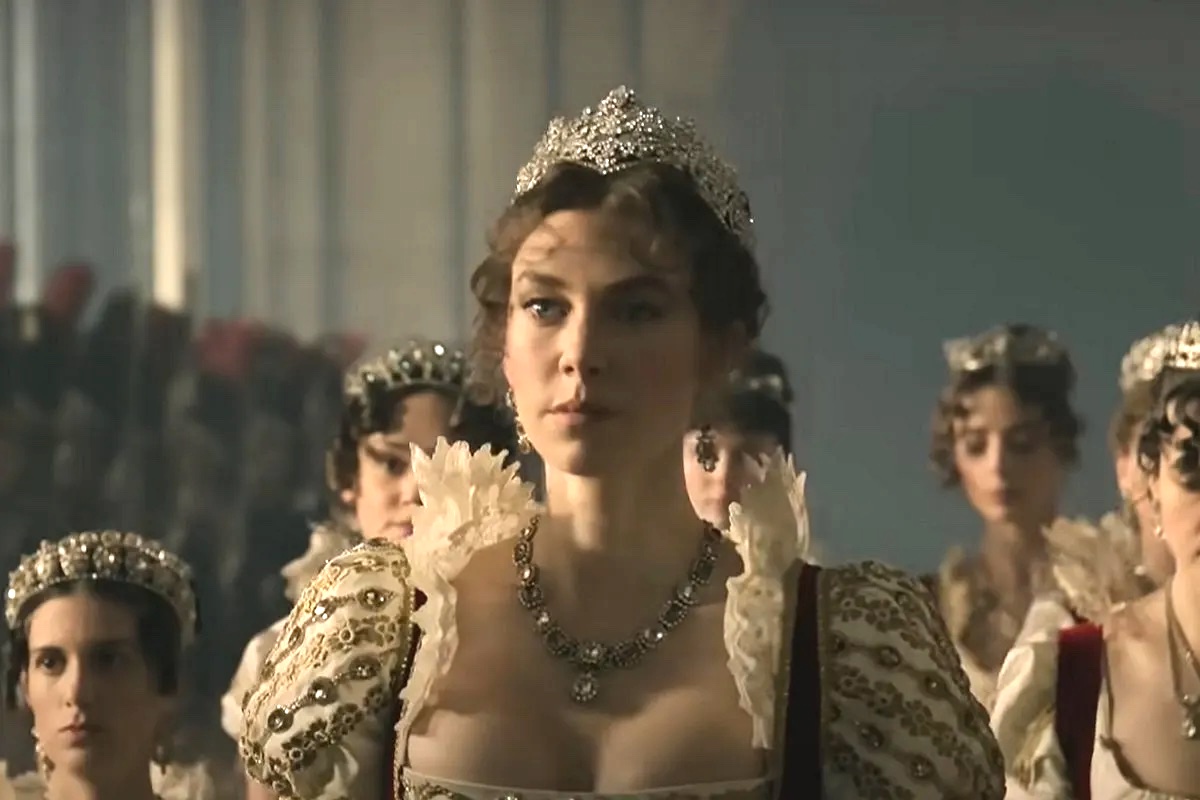
And yes, Joaquin Phoenix may be too old for this role, and surely needed some de-ageing for those early scenes, but he makes a great job of it, mining the man’s hubris and determination to the core, even descending into brattishness when taunted with the spectre of England’s superior navy. Vanessa Kirby offers up a more opaque Josephine, playing everything so close to her bosom that we’re never entirely sure if she actually loves her husband or merely sees him as her personal plaything. Their complex relationship is at the beating heart of this film and perhaps it would have been more fairly titled Napoleon and Josephine.
The inevitable result is that pretty much everybody else in the film is reduced to cameo roles, including Rupert Everett as the Duke of Wellington and an unusually hirsute Mark Bonnar as Napolean’s early confidante, Junot. David Scarpa’s screenplay makes a determined attempt to find some humour amidst all the pomp and misery.
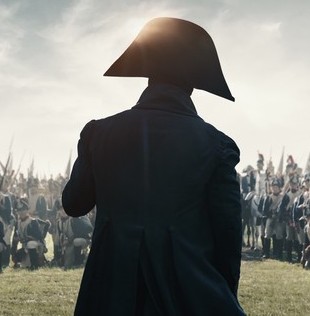
But of course, Scott is the king of spectacle and if it’s battle scenes you’re looking for, there are plenty of them here, so thrillingly recreated that I find myself wincing at every explosion, every visceral thrust of a sabre. Each of the major confrontations is depicted in a different way and I particularly relish the scenes set in the Russian winter, where Napoleon is left bewildered by the fact that his adversaries refuse to meet him on the battlefield, even choosing to torch Moscow rather that surrender it to him. This is stirring stuff, the awful choreography of destruction played with absolute conviction and I cannot think of a director who could have made a better job of it.
Producers Apple Films have already announced that a four hour plus director’s cut of Napoleon is waiting somewhere down the line, and while this has worked for Scott before with Kingdom of Heaven, I’m not convinced that a longer film can hope to add much to the exhilarating theatrical release, which has me gripped pretty much from start to finish.
4.4 stars
Philip Caveney
 Bouquets & Brickbats