17/08/23
Traverse Theatre, Edinburgh
Every Fringe offers at least one production that takes hold of your perception and gives it a thorough kicking. Things Hidden Since the Foundation of the World fits happily – if not exactly comfortably – into that category. Going in, I’m not quite sure what to expect and, coming out, not entirely sure what I’ve just witnessed… but I’m definitely thinking about it. A lot.
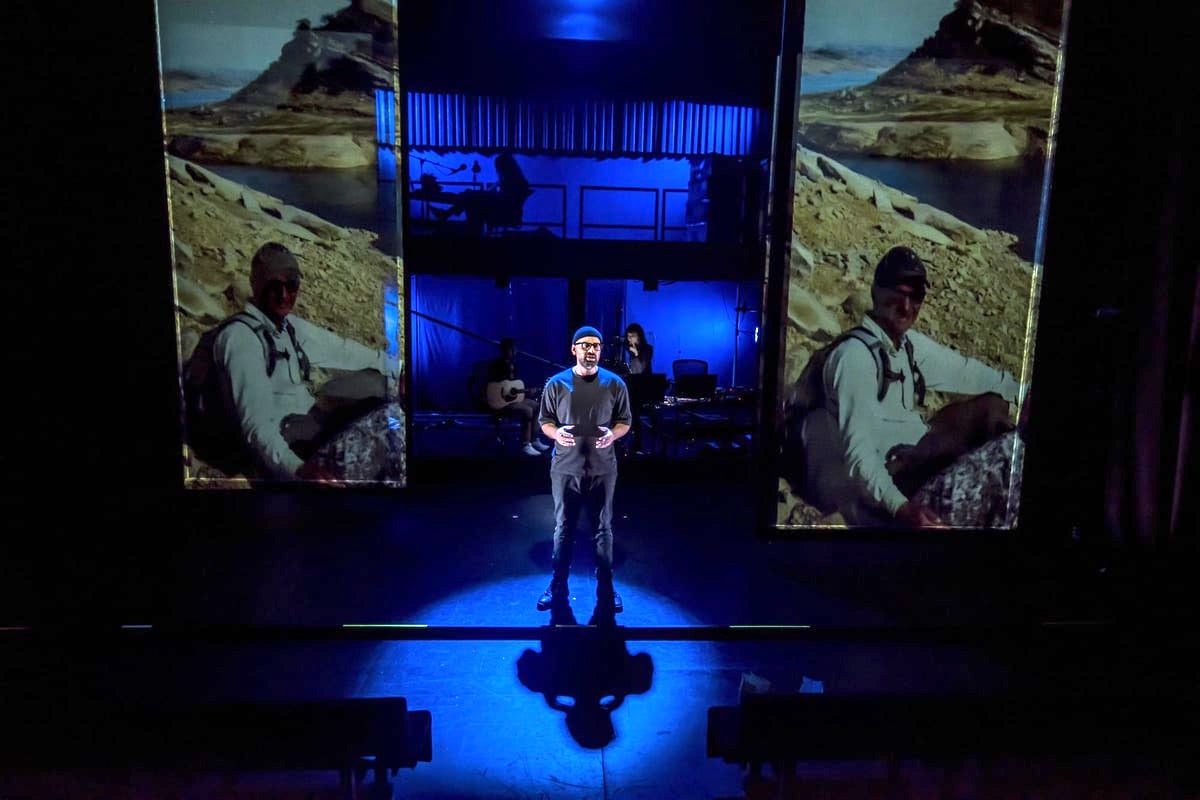
We begin with writer/director Javaad Alipoor walking out to deliver what I assume is a pre-show chat, but which actually turns out to be the beginning of the story. He tells us about the unreliability of Wikipedia searches, the way that everything in the world is subjective, open to different interpretations. He then mentions the unsolved murder of Iranian pop star, Fereydoun Farrokhzad at a flat in Berlin in 1992. Farrokhzad, we are told, was Iran’s answer to Tom Jones – but even that description is open to interpretation. As Alipoor talks, a dark grey wall behind him suddenly lights up with an image, a moustachioed man in a glittery jacket singing a pop song. Then, the walls slide aside and, projected onto a transparent screen, we see the image of another Iranian musician, King Raad (huge in Iran, unknown outside of it and now exiled to Canada). He talks about his own harrowing experiences, including the tragic death of his father.
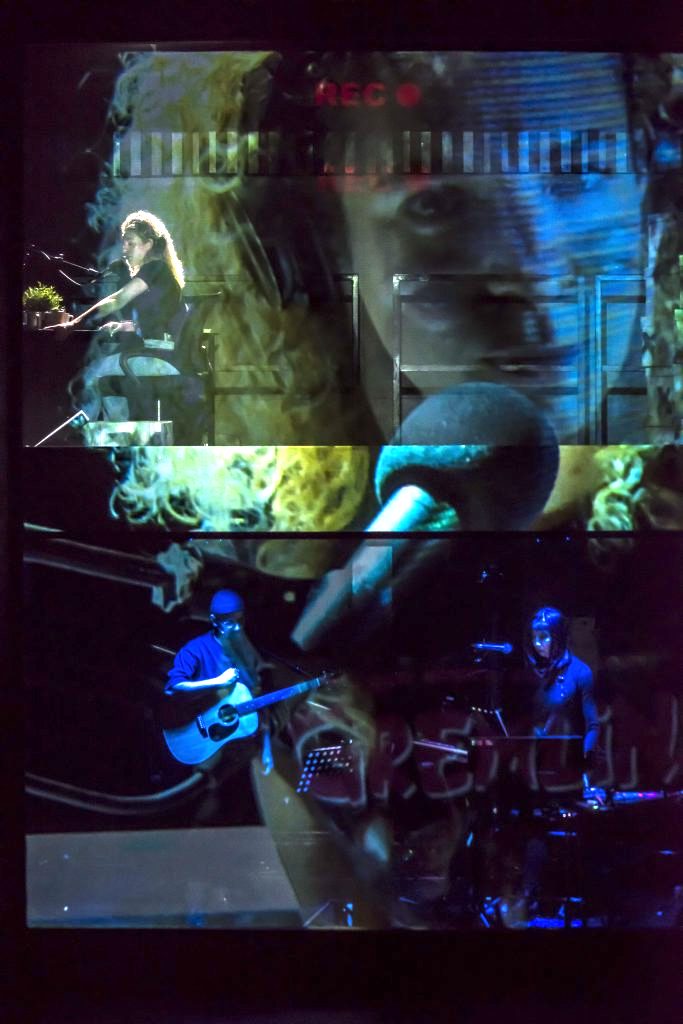
Later, a compartment opens to reveal a room deeper within the set and we see that Raad is actually here in person, creating music with musician Mee-Lee Hay. The moment when he points out that now would be a propitious time to assassinate him is chilling.
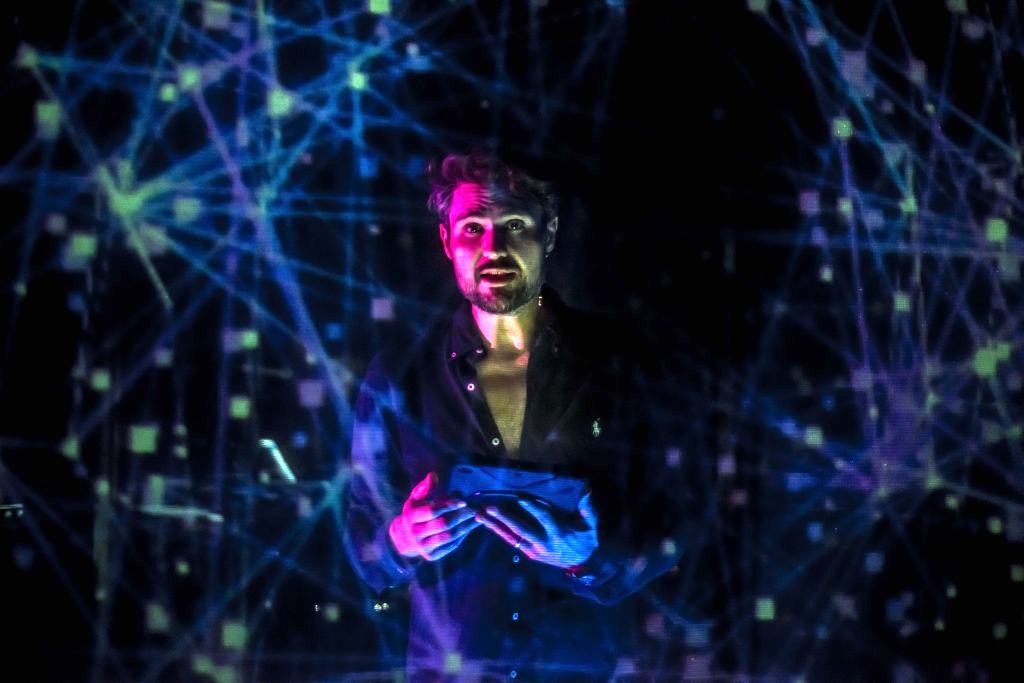
The final piece falls into place as, up on a high platform, Asha Read hosts a podcast, asking questions about Farrokhzad’s murder, suggesting that perhaps the whole thing is a conspiracy, that the reasons for his death might be more complicated than we could possibly imagine. And as all these elements play out, the high-tech screens and various layers of the set begin to blossom into mind-blowing patterns, bursting with vivid colours, everything intermingling as Read’s questions become ever more complicated, ever more unfathomable.
The final sections are probably the closest I’ve ever come to experiencing an acid trip in the theatre. My head seems to be bursting with possibilities, my brain virtually turning itself inside out as it struggles to comprehend what’s happening. Actually, that makes the experience sound unpleasant, but I promise you it’s not. And I find myself falling back on that familiar cliché, that this production is like nothing I’ve ever seen before – but clichés exist for a reason. While I refuse to pretend that I know exactly what’s going on here, I’m happy to admit that I enjoy the cerebral workout it gives me.
If the Edinburgh Fringe is all about experimentation (and it really should be), then this intriguing and strangely compelling production has found its ideal home.
4.2 stars
Philip Caveney
 Bouquets & Brickbats