
06/08/23
Traverse Theatre, Edinburgh
In 1988 I was in sixth form. I was (am) straight, and didn’t think I knew any gay people at all. No one was out. Nonetheless, when Section 28 was introduced – banning the promotion of homosexuality in schools – we all thought it was stupid. Not just cruel and regressive, but thick. We knew we couldn’t be encouraged into being gay, that no amount of advocacy by teachers – teachers! – could ever change who we were. Outlawing any positive mention of queer people though, that could hurt. We were only kids, but even we could see that.
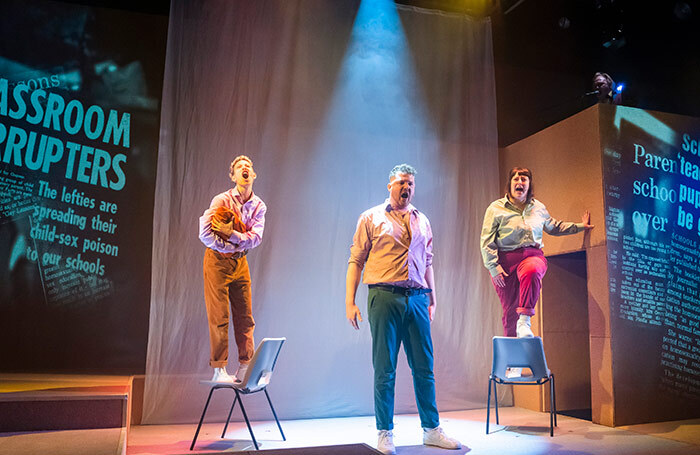
Breach Theatre’s After the Act shows just how much hurt there was. This musical, written by Ellice Stevens and Billy Barrett, with an original score by Frew, is a verbatim piece, relaying the experiences of LGBTQ+ students, teachers and activists who struggled and fought through Section 28’s fifteen-year reign. It’s both shocking and compelling, an object lesson in how to stage a polemic. By turning the words into songs, Breach Theatre give them extra weight and meaning, turning some into plaintive refrains and others into angry protest chants.
There are six performers onstage: two musicians (Ellie Showering and Frew) and four actors (Stevens, Tika Mu’tamir, EM Williams and Zachary Willis. Under Barrett’s direction, this is a lively, insistent piece; indeed, thanks to choreographers Sung-Im Her and Anouk Jouanne, the actors are always in motion, the interweaving stories physicalised into a complex web. Although the production is a serious one, focusing on some very real anguish, there are also moments of humour, of light shining through the darkness.
Much of what we’re shown is shocking. A couple of lesbian protestors disrupt the six o’clock news, and Nicholas Witchell – who wrestles one of them to the ground and puts his hand over her mouth so that Sue Lawley can carry on and read the day’s stories – is lauded as a hero rather than being done for assault. Another particularly striking statement comes from a member of Haringey Council’s Lesbian and Gay Sub-Committee, who notes, “We are at a disadvantage because we can only use rational argument, while the opposition are tapping into irrational fear and bigotry.”
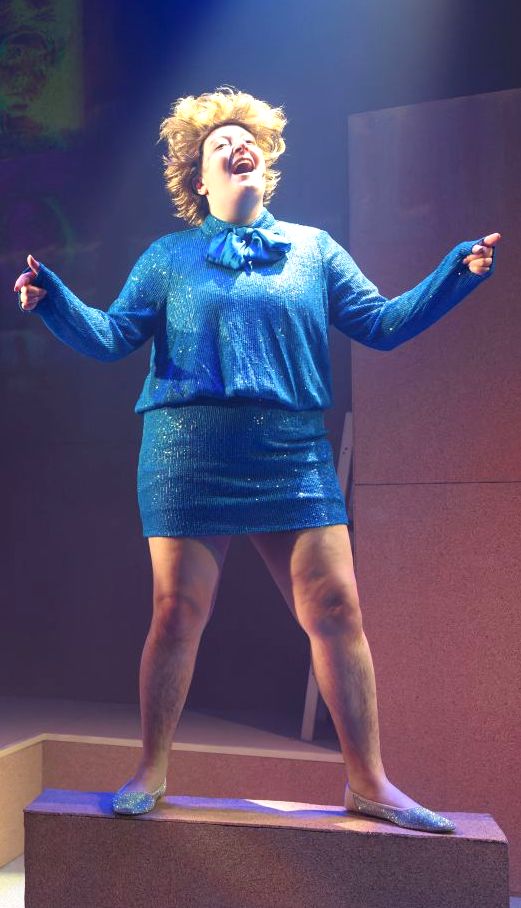
In the end, though, this is a triumphant piece of theatre. Stevens skewers Margaret Thatcher’s self-righteous ignorance in a comical depiction of the ex-PM: if she sounds ridiculous as she defends her nasty law, they’re her own words; she’s hoist by her own petard.
After the Act is vital viewing. Section 28 might have been relegated to the history books, but trans kids are in the middle of the same old battleground. We have to learn from what has gone before.
4.6 stars
Susan Singfield
 Bouquets & Brickbats