

25/06/23
Cineworld, Edinburgh
If you were ever looking for the film director equivalent of Marmite, Wes Anderson might just be your best bet. His detractors delight in pointing out that he always makes the same film, but that’s a ridiculous over-simplification. While I’d be the first to admit that his films do have an unmistakable look – that you can see one frame, taken at random from any one of his many features, and know instantly that it’s his work – we rarely make that complaint about artists who work with paint and canvas.
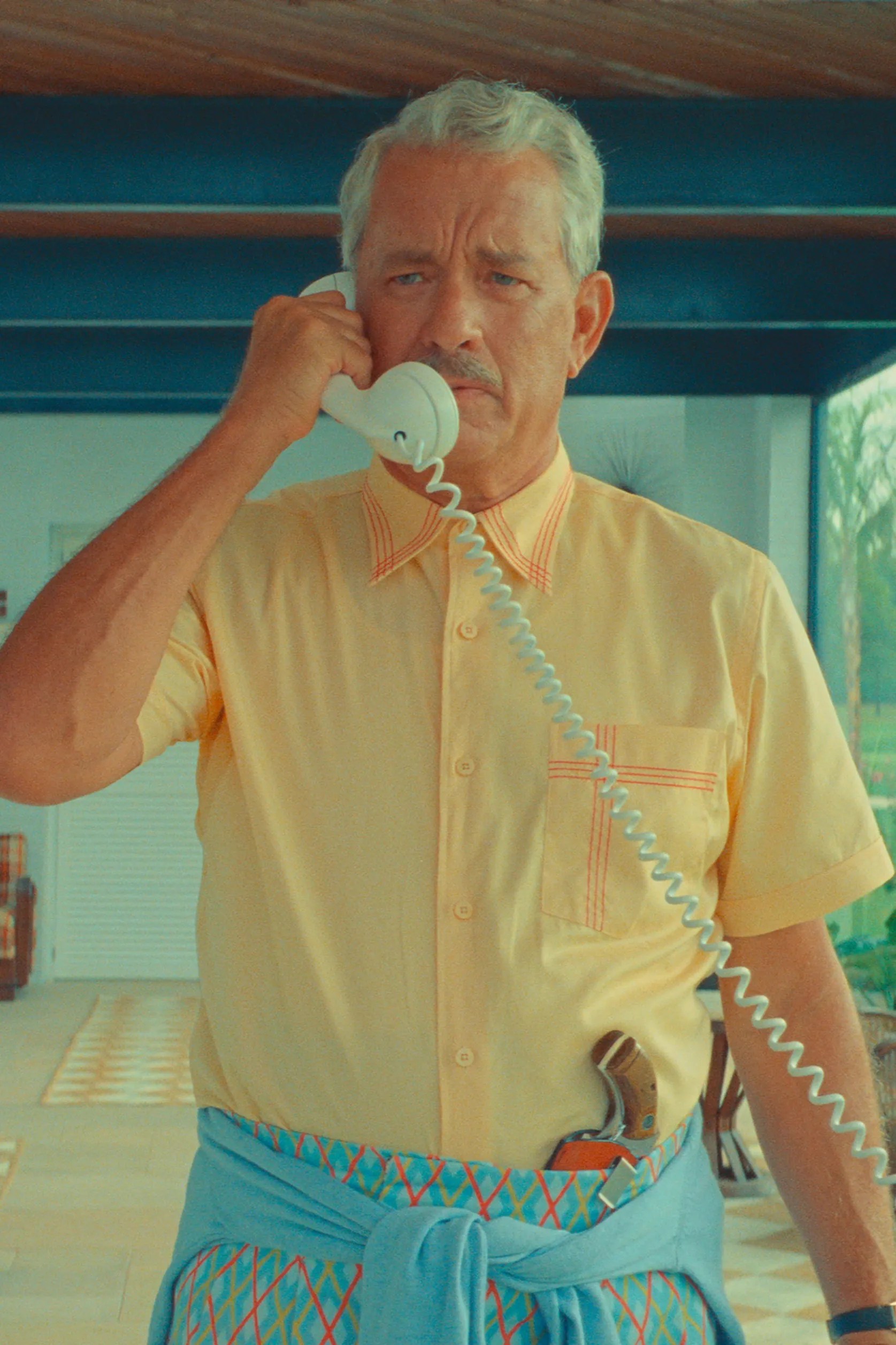
Asteroid City has all of the man’s familiar hallmarks: those sumptuous, vividly-coloured landscapes dotted with unlikely looking ramshackle buildings; a massive roster of A listers, all of them prepared to swallow their pride in return for delivering just a line or two of quirky dialogue; and that weird detachment from reality, those bizarre situations seemingly created to point up the artificiality of the whole undertaking. For me, these are the elements that confirm Anderson as a unique and brilliant filmmaker. But then, I’ve been a fan ever since Rushmore in 1998.
The film opens in stark black and white with an earnest narrator (played by Bryan Cranston) talking about the creation of a new play by hotshot writer, Conrad Earp (Edward Norton), and the play’s tortuous path to production – and then we cut to the full-colour, wide-screen film adaptation of the same story. War photographer Augie Steenbeck (Jason Schwartzman) arrives at the titular desert town with his son, Woodrow (Jake Ryan), who is one of five gifted children invited to attend a ceremony where one of them will be presented with a prize for their latest invention.
Woodrow and his three little sisters have some devastating news to deal with first, but their father seems far more interested in the presence of screen actor, Midge Campbell (Scarlett Johansson), who has her own gifted daughter, Dinah (Grace Edwards), in tow. It’s not long before Dinah and Woodrow begin to develop an interest in each other…
But this is about as far as any rational plot outline can take us. From this point, madness ensues in the form of a group of singing cowboys, the aforementioned weird childhood inventions and a WTF alien visitation. And, as the tale enfolds, we are treated to regular visits back to the monochrome world of the original theatrical version, where we see the actors in the film actually being the actors and learning to handle their roles, whilst commenting on the artificiality of the whole experience. Meta? Well yes, but clearly that’s the point.
If this sounds hard to get your head around, don’t despair, because the sparky script by Anderson and Roman Coppola keeps the pot bubbling happily away as the story unfolds. I find myself laughing at the wonderful absurdity of some of the situations – and is the director making a comment on cinema’s general inability to handle theatrical material with any sense of conviction?
It’s heartening to see that a sizeable audience has come out for this on a rainy Sunday afternoon and also to read that Asteroid City has enjoyed a bigger opening weekend than the latest Transformers movie. Perhaps a lot more people out there are acquiring a taste for Marmite.
4.6 stars
Philip Caveney
 Bouquets & Brickbats